How to manage loofah during the fruiting period? Keep these methods in mind
How to manage loofah during the fruiting period? Please give guidance. During the fruiting period of loofah, the following methods can be used to manage loofah: Trellis and vine hanging. Trellis and vine hanging, maintaining good air permeability of the trellis. Loofah is most afraid of high-temperature weather, and high temperatures can easily cause fruit abortion, so the trellis should be set up well, the stretching space for stems and vines should be increased as much as possible...
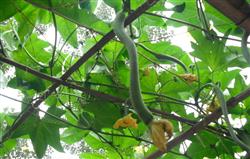 How to manage loofah during the fruiting period? Please give guidance
During the fruiting period of loofah, the following methods can be used to manage loofah:
Trellis and vine hanging
Trellis and vine hanging, maintaining good air permeability of the trellis. Loofah is most afraid of high-temperature weather, and high temperatures can easily cause fruit abortion. Therefore, the trellis should be set up well, the stretching space for stems and vines should be increased as much as possible, the vines should be kept from folding, and good air permeability of the trellis should be increased. This helps the differentiation of female flowers, improves the fruit-setting rate, and maintains the good appearance of the fruit.
Scientifically manage fertilizer and water
After entering the fruiting period, the demand for water and fertilizer is relatively high. Generally, water once every 3-4 days, preferably in the morning and evening. Combined with watering, apply fruit-promoting fertilizer. Decomposed peanut cake and soybean cake can be applied (deeply applied in furrows), together with ternary compound fertilizers such as urea, phosphate fertilizer and potassium sulfate. The amount of topdressing should be determined according to the plant growth and the use of base fertilizer. Fertilization should follow the principle of "small meals more often".
Remove male flowers and tendrils
Loofah is a cross-pollinated crop. Because the male inflorescence flowering period is relatively long, about 30-40 days, during this period it consumes a large amount of nutrients. Therefore, thinning out excess male inflorescences as early as possible can save nutrients and supply them for female flower fruiting. Method of male flower thinning: starting from the appearance of female flower buds, remove 80% of the male inflorescences on each loofah plant, and retain 20% for pollination.
Tendrils play the role of climbing and fixing branches and vines in vining crops. Loofah tendrils take a relatively long time from growing out to vine pulling, consume more nutrients, and are not conducive to bearing more fruit and good fruit. Removing tendrils and using artificial tying to replace their climbing function is conducive to the plant's photosynthesis, nutrient production and accumulation, and pest and disease control, enabling loofah to pollinate and set fruit well, with a bumper harvest.
Method of tendril removal: in the early growth stage of the loofah plant, adopt the method of removing tendrils while tying, guide the vines onto the trellis, and after the vines are evenly distributed and fixed on the trellis, remove the tendrils at any time along with vine training.
Timely prevent and control pests and diseases
For Phytophthora blight, spray with 72% Kelu 800-fold solution or 70% mancozeb 800-fold solution; for downy mildew, spray with 58% metalaxyl 600-fold solution or 72% Kelu 750-fold solution; for powdery mildew, spray with 20% triadimefon 2000-fold solution; for aphids, spray with 10% imidacloprid 1500-fold solution; for cotton bollworm, spray with Bacillus thuringiensis preparation, etc.; for melon fruit fly, spray with 48% Lesibao 1000-fold solution.
Click to get more loofah planting techniques
Click to get more vegetable planting techniques