What are the precautions for growing celery seedlings in summer?
What should be noted when growing celery seedlings in summer? Please give a detailed introduction and guidance. Celery likes cool conditions, tolerates cold and fears heat. June and July coincide with high temperature, high humidity and strong light. Under high temperatures, germinating celery seeds is difficult, and combined with pest damage, especially aphids and soil-dwelling insects, it is very easy for missing seedlings and dead plants to occur. If you want...
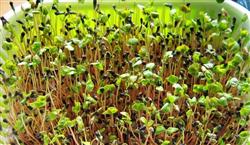 What should be noted when growing celery seedlings in summer? Please give a detailed introduction and guidance.
Celery likes cool conditions, tolerates cold and fears heat. June and July coincide with high temperature, high humidity and strong light. Under high temperatures, germinating celery seeds is difficult, and combined with pest damage, especially aphids and soil-dwelling insects, it is very easy for missing seedlings and dead plants to occur. To grow good celery seedlings, note the following points:
1. Control the germination temperature In summer, because the outside temperature is high, germination is difficult, so adapt measures to local conditions. Keep the ambient temperature for germination at 15 to 20°C, and after about 10 days, the seeds will germinate.
2. Prevent continuous cropping or soil compaction Continuous cropping or soil compaction is often caused by two factors: on the one hand, the seedbed soil texture is poor; on the other hand, the base water is insufficient and the humus content is low. Therefore, choose a plot with loose, fertile soil and rich soil organic matter to build the seedling bed.
3. Use fertilizer scientifically Applying too much nitrogen fertilizer causes leggy seedlings, thin and pale leaves, and few roots. When the temperature is too high, the respiration of the seedlings increases, more nutrients are consumed, and weak seedlings easily appear, causing seedling death.
4. Shade and rain protection The environment of high temperature, strong light and heavy rain in summer is not conducive to celery emergence, so grow seedlings with shading and rain protection.
5. Pay attention to controlling soil-dwelling pests To control soil-dwelling pests such as mole crickets, fry wheat bran in a pan until fragrant, add 90% trichlorfon powder and mix well to make poison bait, then scatter it around the seedling bed.
6. Strengthen seedling-stage management Generally, after sowing, the seedbed temperature should be kept at 15°C-20°C, and the relative humidity of the soil should remain at about 85%. Complete emergence can be achieved in 8-10 days. After complete emergence, first thin out double seedlings. After 10 days, carry out the second thinning, with a seedling spacing of 1-1.5 cm. After one month, carry out the third thinning, with a seedling spacing of 5 cm. The thinned seedlings can be transplanted separately at a plant spacing of 5 cm, and watering after planting can effectively save seeds and seedlings. During the seedling stage, keep the soil moist and maintain a suitable temperature and light environment.
Click to get more celery growing techniques
Click to get more vegetable growing techniques