Cotton Aphid Damage and Control Methods Explained in Detail
What damage do cotton aphids cause? How are they controlled? The cotton aphid uses its piercing-sucking mouthparts to suck sap on the underside of cotton leaves and on tender growing tips, causing the cotton leaves to grow deformed and curl toward the underside. Cotton aphid damage occurs mainly at the seedling stage and the bud and boll stage. Cotton aphids that cause damage at the seedling stage are called seedling aphids, which generally delay the development of cotton seedlings, caus...
 What damage do cotton aphids cause? How are they controlled? An introduction
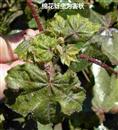
The cotton aphid uses its piercing-sucking mouthparts to suck sap on the underside of cotton leaves and on tender growing tips, causing the cotton leaves to grow deformed and curl toward the underside. Cotton aphid damage occurs mainly at the seedling stage and the bud and boll stage. Cotton aphids that cause damage at the seedling stage are called seedling aphids; their damage generally delays the development of cotton seedlings, causing late maturity and reduced yield, and in severe cases prevents the cotton seedlings from continuing to develop or even kills them.
Cotton aphids that cause damage at the bud and boll stage are called summer aphids; they cause buds and bolls to drop, and in some cases cause defoliation and reduced yield. During the boll-opening stage, cotton aphids sometimes still cause damage and are called autumn aphids, contaminating the lint and lowering cotton quality.
The general control methods for cotton aphids include the following:
1. Agricultural control:Practice cotton-wheat rotation, using the barrier effect of wheat to prevent winged aphids from migrating to cotton fields, and also making it easier for natural enemies on wheat plants to move to cotton plants, strengthening the regulatory and self-control capacity of the cotton field.
2. Use of natural enemies:When controlling aphids in wheat fields, use selective insecticides that do not harm natural enemies, such as pirimicarb, to protect natural enemies so they can move to cotton fields. Interplanting sorghum in cotton fields attracts natural enemies and can effectively control summer aphids. After cotton rows close in mid-July, if continuous rain lasts 5-6 days and the temperature rises above 26°C after the rain, aphid fungi can become epidemic and control aphid damage. The most important part of protecting and using natural enemies is not to apply pesticides indiscriminately; when the ladybug-to-aphid ratio is below 1:150, do not apply pesticides.
3. Chemical control:For seedling aphids, the control threshold is 2,500 aphids per 100 plants on 3 leaves, or the appearance of curled-leaf plants; for summer aphids, the control threshold is an average of 200 aphids on the upper, middle, and lower 3 leaves per plant. When cotton aphid occurrence reaches the control threshold, it is still in the stage of patchy, localized damage, so targeted local spraying should be carried out to avoid large-area pesticide application. Low-toxicity, high-efficiency insecticides such as sushiwei, imidacloprid, and yashiling can be used. Control of the third generation of cotton bollworm can also be combined with simultaneous control of summer aphids.
Click to get more cotton cultivation techniques
Click to get more grain crop cultivation techniques