How to prevent and control loose smut in sorghum?
Loose smut often occurs when growing sorghum. How do you prevent and control sorghum loose smut? Please explain the methods. The symptoms of sorghum loose smut are not very obvious at the seedling stage, but the plants are slightly shorter, darker in color, and head earlier. After heading, the rachis and branches remain intact, the glumes are noticeably enlarged, and the grains of the entire panicle become long oval galls, covered with a layer of...
 Loose smut often occurs when growing sorghum. How do you prevent and control sorghum loose smut? Please explain the methods.
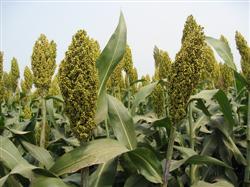
The symptoms of sorghum loose smut are not very obvious at the seedling stage, but the plants are slightly shorter, darker in color, and head earlier. After heading, the rachis and branches remain intact, the glumes are noticeably enlarged, and the grains of the entire panicle become long oval galls, covered with a layer of white membrane, inside which is a large amount of black powder. After the galls mature, the membrane ruptures, the black powder spills out, and the black remnants and glumes are exposed. In some cases only part of the grains become galls, and the rest also fail to set seed.
This disease is carried by both soil and seed, but mainly by seed. The pathogen can survive outdoors for one year, and its virulence decreases after overwintering in the soil. After sowing, the pathogen invades sorghum seedlings through wounds, the epidermis, and young roots, spreads to the growing point of the sorghum, and when the plant heads, the pathogen enters the panicle, destroys the ovary and forms galls. The occurrence of this disease is related to varietal resistance, the amount of pathogen in the soil and seed, and the speed of seedling emergence. Sorghum loose smut can be prevented and controlled by referring to the following methods:
1. Select resistant varieties. Local varieties are generally not resistant. The main resistant or immune varieties are introduced foreign varieties, such as Fanong No. 1, Meihong, Meibai, Early Maturing Hungarian, Hungarian, etc.
2. Sow at the right time and improve sowing quality. Sowing too early, dry soil, poor land preparation, and too thick soil cover all prolong the time for emergence, increase the chance of infection, and worsen the disease. Therefore, in general, sowing should be as late as possible while ensuring maturity; before sowing, soil moisture should be suitable, land preparation should be fine, and soil cover depth should be appropriate, so as to ensure early emergence and strong seedlings, shorten the time during which young shoots are infected, and reduce disease occurrence.
3. Proper crop rotation. Because the pathogen can survive in the soil for only one year, proper crop rotation in affected areas can effectively reduce the degree of damage.
4. Pull out diseased plants to reduce the source of inoculum for the next year.
5. Seed treatment. This mainly means treating seeds with chemicals to eliminate the pathogen on the seeds and in the rhizosphere soil around the seeds.
(1) Mix 350 grams of 50% carboxin powder with 50 kg of seed, or use 16% carboxin emulsifiable concentrate for seed soaking (same method as sorghum head smut).
(2) Mix 300 grams of 50% and 70% quintozene powder with 50 kg of seed.
(3) Mix 350 grams of 50% captan wettable powder with 50 kg of seed.
(4) Mix 350 grams of 50% carbendazim wettable powder with 50 kg of seed.
In addition, seed treatment with antagonistic bacteria 769, 775, and 3013 also has a relatively good disease-prevention effect.
Click to get more sorghum cultivation techniques
Click to get more grain cultivation techniques