How to prevent and control anthracnose in sorghum cultivation?
How to prevent and control anthracnose when growing sorghum? Please explain the methods. Sorghum anthracnose is a common disease of sorghum. After the plant is infected, lesions appear on the leaves, their function is reduced, and grain setting and filling are affected. Yield is generally reduced by 10%, and in severe cases the reduction can reach more than 25%. Sorghum anthracnose can be prevented and controlled by referring to the following methods: 1...
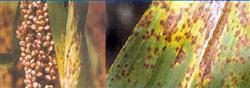 How to prevent and control anthracnose when growing sorghum? Please explain the methods
Sorghum anthracnose is a common disease of sorghum. After the plant is infected, lesions appear on the leaves, their function is reduced, and grain setting and filling are affected. Yield is generally reduced by 10%, and in severe cases the reduction can reach more than 25%. Sorghum anthracnose can be prevented and controlled by referring to the following methods:
1. Seed disinfection: For 100 kg of seed, use 0.05 kg of 50% Tuisuite or 0.1 kg of Xilisheng, add 50 L of water, soak the seed for 12 hours, rinse, and then sow.
2. Seed dressing: For 100 kg of seed, choose 0.7 kg of 50% carbendazim wettable powder; 0.15-0.2 kg of 70% thiophanate-methyl powder; 0.25 kg of 50% thiram wettable powder; 0.2-0.3 kg of 35% phytonquinone powder. Add an appropriate amount of water, dress the seed, pile and cover for more than 6 hours, dry in the shade, and then sow.
3. Spraying: At the early stage of occurrence, use 45% thiabendazole suspension concentrate at 1000 times dilution, spraying 50 L per mu; or use 70% thiophanate-methyl wettable powder at 1000-2000 times dilution, spraying 50-70 L per mu.
4. Crop rotation and elimination of the source of disease: carry out reasonable crop rotation, remove diseased plants, and reduce sources of infection.
Click to get more sorghum cultivation techniques
Click to get more grain cultivation techniques