What is sorghum bacterial red stripe disease? A detailed guide to sorghum cultivation knowledge
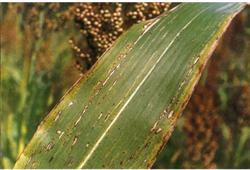
What is sorghum bacterial red stripe disease? Please give an introduction. Red sorghum bacterial red stripe disease mainly harms the leaves. Leaf spots initially appear as water-soaked, narrow, fine small stripes, which after expansion turn light reddish-brown. Some lesions turn brown in the center with red edges, and wide, long-oval lesions appear intermittently on the stripes. Sometimes the lesions can cover...
 What is sorghum bacterial red stripe disease? Please give an introduction
Red sorghum bacterial red stripe disease mainly harms the leaves. Leaf spots initially appear as water-soaked, narrow, fine small stripes, which after expansion turn light reddish-brown. Some lesions turn brown in the center with red edges, and wide, long-oval lesions appear intermittently on the stripes. Sometimes the lesions can cover most of the leaf area. When humidity is high, small granular bacterial ooze can be seen exuding, which dries into a scaly thin layer. It is distributed in Hebei, Henan, Shandong, Jiangsu, Hubei and other provinces. The suitable growth temperature for red sorghum bacterial red stripe disease is 28-30°C, with a maximum of 36-37°C and a minimum of about 4°C. It is killed at 51°C after 1o minutes. In addition to infecting sorghum, this bacterium can also harm foxtail millet.
Control methods:
(1) Select disease-resistant varieties.
(2) Strengthen field management to prevent infection.
Click to get more sorghum cultivation techniques
Click to get more grain cultivation techniques