Pepper Growing Techniques: What to Do About Fusarium Wilt and Bacterial Wilt in Peppers?
What should you do if Fusarium wilt and bacterial wilt occur in peppers? Please provide an introduction and guidance on prevention and control. Pepper Fusarium wilt: it is one of the main diseases of peppers. In the early stage of the disease, a large number of lower leaves drop off, and the cortex at the base of the stem near the soil surface develops water-soaked rot. Sometimes the disease occurs only on one side of the plant, forming longitudinal streak-like necrosis...
 What should you do if Fusarium wilt and bacterial wilt occur in peppers? Please provide an introduction and guidance on prevention and control.
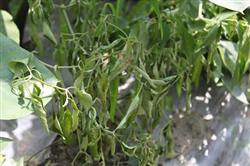
Pepper Fusarium wilt:It is one of the main diseases of peppers. In the early stage of the disease, a large number of lower leaves drop off, and the cortex at the base of the stem near the soil surface develops water-soaked rot. Sometimes the disease occurs only on one side of the plant, forming longitudinal streak-like necrosis; the stems and leaves above ground quickly lose water and become necrotic, appearing wilted and green, and finally the whole plant dies. The root system of the diseased plant, like the stem base, shows water-soaked rot, the cortex peels off easily, the lignified part of the root system turns dark brown, and under humid conditions white mold-like growth appears on the diseased parts.
Control methods for pepper Fusarium wilt:
1. Strengthen field management. Grow strong seedlings, use high-ridge cultivation, prevent flooding irrigation, do not practice continuous cropping, and choose sandy loam soil for planting peppers.
2. Chemical control. In the early stage of the disease, spray 50% carbendazim wettable powder at 500 times dilution, or 40% sulfur-carbendazim suspension concentrate at 600 times dilution, or drench the roots with 14% copper ammonia complex water solution at 300 times dilution, applying an average of 250 g of solution per planting hole, and depending on the severity of the disease, apply continuously 2 to 3 times.
Pepper bacterial wilt:The main affected parts are the branches and leaves. First the branches and leaves of the diseased part wilt, gradually spreading to the whole plant; the color of the entire plant fades, and finally the leaves scorch and turn brown. The most notable feature is that the external appearance of the stem of the diseased plant is not obvious; when the diseased plant is dissected, the vascular bundles can be seen to have turned brown, and when a section is kept moist for culturing, milky white mucus can be seen overflowing from the vascular bundles. This is the difference from Fusarium wilt.
Control methods for pepper bacterial wilt:
1. Agricultural control:Select disease-resistant improved varieties according to local conditions, adjust soil pH, and in conjunction with land preparation, broadcast an appropriate amount of lime, generally applying 50 to 100 kg of lime per mu, so that the soil pH value becomes slightly alkaline and inhibits the growth of the pathogen. Apply more phosphorus and potassium fertilizer, and spray 100 mg/kg boric acid solution to promote the growth of vascular bundles and enhance disease resistance. After rain, pay attention to drainage, check promptly, and immediately pull out and burn diseased plants when found, and sprinkle lime to disinfect the planting holes of diseased plants.
2. Chemical control:In the early stage of the disease, use 100 to 200 mg/kg streptomycin sulfate, or 30% BT wettable powder at 500 times dilution, or 77% copper hydroxide wettable micro-powder at 500 times dilution, or 14% copper ammonia complex water solution at 300 times dilution, spraying once every 7 to 10 days, for 3 consecutive treatments, with good results.
Click to get more pepper growing techniques
Click to get more vegetable growing techniques