Is sweet sorghum easy to grow? Mastering the planting technique is key
Is sweet sorghum easy to grow? Is there any netizen who can provide planting techniques? As a high-quality forage grass, sweet sorghum has the characteristics of high sugar content, high protein content, rich nutritional value, good palatability and strong adaptability. It is a forage grass that herbivorous livestock like to eat, and is deeply loved by the majority of farmers. The following is the sweet sorghum planting...
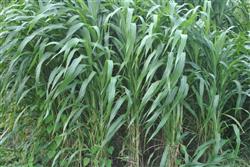 Is sweet sorghum easy to grow? Is there any netizen who can provide planting techniques?
As a high-quality forage grass, sweet sorghum has the characteristics of high sugar content, high protein content, rich nutritional value, good palatability and strong adaptability. It is a forage grass that herbivorous livestock like to eat, and is deeply loved by the majority of farmers. The following is the sweet sorghum planting technique compiled by Zhongdi Wang for netizens' reference.
1. Land leveling and fertilizing. Sweet sorghum seeds are relatively small and have weak soil-breaking ability. It has no strict requirements for soil quality, and can grow in soil with a pH value of 5.0--8.5. Therefore, the land should be finely plowed and harrowed, fine, broken and level. If the land is poor, about 4000 kg of farmyard manure can be applied per 0.067 hectares. If chemical fertilizer is used, 10 kg of ammonium bicarbonate, 10 kg of urea or 50 kg of compound fertilizer can be applied along the furrow per 0.067 hectares.
2. Sowing at the right time. In the northwest region, the best time is when the average outdoor temperature reaches 15°C, that is, from April to July. When sowing, it can be done by machine or by dibbling. The sowing rate per 0.067 hectares is between 250--750 grams, and the sowing depth is generally 3--5 cm. When dibbling, the hole spacing is 15--20 cm. When the soil moisture is high, shallow sowing is needed, and when the humidity is low, deep sowing is needed. After sowing, cover with fine soil or fine sand and press it firmly.
3. Field management. For early thinning of sweet sorghum, in order to avoid seedlings competing with each other for nutrients and water, reduce soil fertility consumption, and help cultivate strong seedlings, at the 2--3 leaf stage, remove weak seedlings in overly dense areas. Final thinning is carried out at the 4--5 leaf stage, requiring uniform plant spacing and keeping strong seedlings.
Due to poor sowing quality or underground pests and other reasons, if missing seedlings or broken rows occur, they should be replanted in time. When replanting, take seedlings from dense areas (note that the roots should be damaged as little as possible, and replant while taking them; to reduce water evaporation, cut off the leaf tips). After replanting, apply extra fertilizer and water to them to promote them to quickly catch up with normal seedlings. Sweet sorghum has the habit of tillering. If there are too many tillers, it will consume a large amount of nutrients and affect the growth speed of the main stem. Therefore, tillers should be removed in time, and it is best to keep 4--6 leaves per plant. If seed is to be kept, all tillers need to be removed.
4. Cultivation and topdressing. For sweet sorghum at the 2--3 leaf stage of seedlings, carry out the first intertillage, which can raise soil temperature, eliminate weeds, and prevent drought and preserve soil moisture.
At the 4--6 leaf stage, carry out the second intertillage together with final thinning, with a depth of about 10 cm, in order to cut off surface roots and promote roots to grow downward.
The third intertillage is generally carried out 10--15 days after the second intertillage, along with small hilling. When the plants grow to 70 cm high and are about to close the rows, carry out hilling, banking the soil between the rows at the base of the sweet sorghum to form furrows and ridges between the rows, promoting the growth of support roots, enhancing absorption capacity, preventing lodging, draining waterlogged areas and facilitating irrigation. At this stage, apply 10--15 kg of urea or ammonium bicarbonate as topdressing, buried at the roots of the sweet sorghum.
5. Timely irrigation. Sweet sorghum is drought-tolerant, but it should be irrigated at least 3 times during the growing period. In different seasons, depending on the temperature, if the climate is hot and there is long-term drought, irrigation should be carried out in time to supplement water and ensure normal growth of sweet sorghum. During the growth process of sweet sorghum, watering before heading is the most important, which is beneficial to later flowering and seed setting and the accumulation of sugar in the stalks.
6. Pest control. (1) Aphids: sweet sorghum has high sugar content and is susceptible to aphid damage. It is prone to occur in hot and dry weather and should be controlled early. Control method: if aphids are found, spray deltamethrin, cypermethrin or pollution-free pesticides in proportion for control.
Note: sweet sorghum varieties are allergic to organophosphorus pesticides and should not be used. (2) Borers: if borers are found damaging the heart leaves, spray deltamethrin in proportion; if borers have already entered the sweet sorghum stalks to cause damage, sprinkle several granules of carbofuran at the heart leaves for control; after sweet sorghum has headed, borers move up to the panicle to cause damage, and deltamethrin can be applied in proportion.
7. Timely harvest. The growth period of sweet sorghum is 45--60 days. Timely harvesting can obtain 2 to 3 cuttings. Harvest in time after maturity to facilitate the growth of the second cutting. Choose sunny days for harvesting to facilitate healing of the cut. When harvesting, cut diagonally with a sharp knife, and keep the stubble neat and uniform at 3--5 cm. If keeping seed, select robust stems and leaves, pay attention to hilling to prevent lodging, and harvest in time after maturity to prevent birds from eating it.
Click to get more sorghum planting techniques
Click to get more grain planting techniques