How to manage sweet sorghum well? A detailed guide to planting techniques
How to manage sweet sorghum well? We also ask fellow growers to share their advice. The planting and management of sweet sorghum can be carried out by referring to the methods listed below. 1. Prepare the soil finely and apply sufficient base fertilizer. Because sweet sorghum seeds are small and their ability to push through the soil is weak, early growth is slow, and water and fertilizer needs are greater in the middle and late stages. Therefore, the land must be tilled deeply...
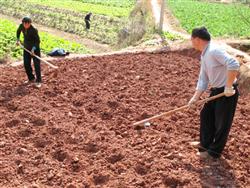 How to manage sweet sorghum well? We also ask fellow growers to share their advice
The planting and management of sweet sorghum can be carried out by referring to the methods listed below.
1. Prepare the soil finely and apply sufficient base fertilizer. Because sweet sorghum seeds are small and their ability to push through the soil is weak, early growth is slow, and water and fertilizer needs are greater in the middle and late stages. Therefore, the land must be tilled deep, level, fine and crumbly, weeds removed, sufficient base fertilizer applied, soil and fertilizer mixed, and then harrowed and rolled to conserve moisture.
2. Sow at the right time to ensure a full stand. Sowing at the right time and controlling depth are key to cultivation. The growth period of sweet sorghum is generally rather long; in the Huaibei spring-sown mid-to-late maturing cultivation area, sowing at the right time and making full use of the frost-free season to reach maturity is crucial. A sowing depth of about 3.3 cm is appropriate.
3. Remove tillers early to promote strong single plants. Sweet sorghum varieties have a fairly strong tillering ability, generally producing more than 2-3 tillers, and the tillers grow vigorously. If they are not removed early, the main stem and branch stems grow together, consuming nutrients and prolonging the growth period of the main stem, causing adverse results such as thin, soft main stalks and late maturity. For this reason, after thinning to a stand, tillers should be removed promptly to promote thick, strong main stems and produce more stalks.
4. Plant at a reasonable density. Sweet sorghum plants are relatively tall with luxuriant stems and leaves, so planting density must not be too high; generally, 5000-6000 plants per mu is appropriate.
5. Strengthen management to promote seedling growth. Sweet sorghum grows slowly at the seedling stage and has a long growth period, so it needs frequent management and more hoeing to keep the soil loose and weed-free and to promote rapid seedling growth.
6. Use water and fertilizer wisely. Sufficient base fertilizer is required, along with additional phosphate fertilizer, to favor sugar accumulation. In the middle and late stages of growing sweet sorghum, too much nitrogen fertilizer should not be applied, lest it cause excessive vegetative growth, affecting sugar accumulation in the stalks and normal ripening of the grain; this is the key to fertilization.
Topdressing nitrogen fertilizer can be done at the jointing stage, with the amount decided according to soil fertility and seedling growth. Generally, applying 30 kg of nitrogen fertilizer per mu is sufficient. After topdressing, water and shallow hoe; in dryland, topdress before rain according to the rainfall situation and cultivate after rain. After heading, cultivate and earth up, and control water use according to drought conditions. If watered too much, plants tend to grow tall, and the soil at the roots becomes wet and soft, causing lodging in windy conditions.
7. Pay attention to pest control:
Sweet sorghum has strong disease resistance but poor insect resistance, because the stems and leaves contain a high sugar content and are susceptible to damage by stem borers and aphids. Stem borer damage can cause stalks to break and the liquid in the pith to discolor and become bitter. Aphid damage to leaves affects the formation of photosynthetic products, causing sugar content to decline. Paying attention to pest control and controlling pests early is an important part of obtaining high stalk yield and high sugar content.
8. Balance grain and stalks, and harvest at the right time. The period of highest sugar content in sweet sorghum stalks coincides with grain maturity; after the grain matures, sugar content also reaches its peak, and if the plant begins to die or encounters frost, the sugar content in the stalks will decline. Therefore, once sweet sorghum matures, it should be harvested promptly; in this way both grain and stalks are taken into account, giving the best benefits.
Click to get more sorghum planting techniques
Click to get more grain planting techniques