How to grow fruit corn? Detailed video guide to cultivation techniques
Fruit corn is a type of sweet corn suitable for eating raw. Compared with ordinary sweet corn, its main characteristics are thin skin, abundant juice, crisp texture and sweetness. It can be eaten directly raw or cooked. There is no essential difference between fruit corn and sweet corn; ordinary sweet corn can all be eaten raw, only the taste varies in quality, and those with good taste...
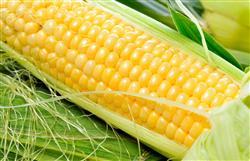 Fruit corn is a type of sweet corn suitable for eating raw. Compared with ordinary sweet corn, its main characteristics are thin skin, abundant juice, crisp texture and sweetness. It can be eaten directly raw or cooked.
There is no essential difference between fruit corn and sweet corn; ordinary sweet corn can all be eaten raw, only the taste varies in quality, and those with good taste are regarded by people as fruit corn, so there is no dedicated fruit corn variety for cultivation.
Below, Zhongdi Web has compiled the key points for growing fruit corn, for the reference of fellow netizens.
Key point one, sowing in stages:
To prevent cross-pollination from lowering quality, fruit corn should be planted in isolation from other types of corn. Isolation can be achieved by planting distance (more than 300 m) or flowering period (more than 30 days), or by using barriers such as hills, forests and houses.
Fruit corn has a short harvest period and is difficult to keep fresh, so sowing in stages allows harvest and marketing in batches. Generally, sowing can be done from late March to early August; with heat-preservation facilities in early spring, it can be appropriately advanced, but sowing between late May and mid-June should be avoided, because corn sown in this period has its flowering and pollination period falling in the summer drought weather of July-August, which easily causes bald tips, missing kernels or empty stalks.
Key point two, sprouting before sowing:
For cultivating fruit corn, plots of sandy loam soil with relatively high fertility and sufficient fertilizer and water should be chosen, and the land should be finely prepared before sowing. Fruit corn seeds are shrivelled, with small endosperm, low germination and seedling emergence rates, and weak seedling vigour. To achieve uniform, complete and strong seedlings, whether by direct sowing or by raising seedlings for transplanting, it is best to sprout the seeds before sowing.
Key point three, scientific fertilization:
Fruit corn has flat leaves and a loose plant type, and the planting density should preferably be 3500-4000 plants per mu. In fertilization, base fertilizer should be applied appropriately, seedling fertilizer early, ear fertilizer heavily, with nitrogen, phosphorus and potassium applied together, and increased application of organic fertilizer is advocated.
For plots of medium fertility, the total amount of chemical fertilizer should be controlled at about 15 kg of pure nitrogen, 6 kg of phosphorus (phosphorus pentoxide) and 6 kg of potassium (potassium oxide).
Key point four, careful management:
Fruit corn grows weakly at the seedling stage and is susceptible to pests later, so field management work must be done in good time. After emergence, check the seedlings and fill gaps promptly, and control weeds; at the seedling and middle stages, remove tillers and surplus small ears, and at the middle and late stages, control pests such as the corn borer.
The harvest period of fruit corn is about 3 days earlier than that of ordinary sweet corn. About 20 days after pollination, the best harvest time can be grasped in good time according to the colour of the silks and tasting in the field.
Click to get more corn cultivation techniques
Click to get more food crop cultivation techniques