Corn Cultivation Techniques: How to Apply Top Dressing to Increase Yield per Mu?
How can top dressing increase corn yield per mu? We also ask netizens to help explain. For top dressing corn, you can refer to the following stages: Skillfully apply corn seedling fertilizer: Seedling fertilizer is a fertilizer applied after corn planting. It is generally applied when the plant has 5~6 visible leaves. After the corn's 3rd leaf unfolds, the nutrients in the seed endosperm...
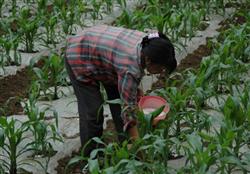 How can top dressing increase corn yield per mu? We also ask netizens to help explain.
For top dressing corn, you can refer to the following stages:
Skillfully apply corn seedling fertilizer:
Seedling fertilizer is a fertilizer applied after corn planting. It is generally applied when the plant has 5~6 visible leaves. After the corn's 3rd leaf unfolds, the nutrients in the seed endosperm have been exhausted, and the root system begins to absorb nutrients from the soil. The corn's vegetative organs grow vigorously. If nutrient supply cannot keep up, it will seriously affect the corn's growth and development. At this time, top dressing can meet the needs of growth and development and form strong seedlings.
The amount of corn seedling fertilizer accounts for about 30% of the nitrogen top dressing amount, and it is generally applied after seedling thinning and before jointing. This lays a good foundation for large ears and more ears. For fields with seed fertilizer at sowing, the amount of seedling fertilizer can be appropriately reduced and the application time delayed. Generally, 3~5 kg of urea per mu, or 10~15 kg of ammonium bicarbonate, can be applied.
Apply corn ear fertilizer heavily:
Ear fertilizer refers to the top dressing applied 10~15 days before the corn tassel emerges, when 12~13 leaves are visible. This period is the key period that determines ear size and grain number. It coincides with the vigorous differentiation stage of corn female ear florets, when vegetative growth and reproductive growth proceed together. The absolute amount and accumulation rate of nutrients absorbed by stems, leaves and female ears reach a peak. The root system needs to absorb a large amount of nutrients from the soil, and nutrients from various organs are rapidly transported to the female ear. Timely application of ear fertilizer can significantly increase corn yield.
For corn ear fertilizer, nitrogen fertilizer is generally applied at 50%~60% of the total fertilization amount. Generally, 18~20 kg of urea per mu is applied in holes or bands, or 45~50 kg of ammonium bicarbonate, and 3~4 kg of potassium sulfate. If soil moisture is poor and there are no irrigation conditions, a 2% urea solution can be used as root irrigation fertilizer, with 80~100 milliliters per plant.
Apply foliar fertilizer appropriately and in a timely manner:
Foliar fertilizer spraying is generally applied at the seedling stage, jointing stage, and grain filling stage. Spraying 0.1%~0.3% zinc sulfate aqueous solution at the seedling stage can prevent the occurrence of corn white seedling mosaic disease. Spraying 0.2%~0.3% monopotassium phosphate 2~3 times at the jointing stage can strengthen stalks, resist lodging, and promote steady growth.
The grain filling stage is the key period that determines the number of grains per corn ear and grain weight. It requires a certain supply of nutrients. Soil fertilization uses more fertilizer and has a slower effect. If foliar spraying is adopted, the effect is fast and remarkable.
The type of fertilizer used can be determined according to the corn growth situation. If nitrogen, phosphorus, and potassium nutrients are insufficient, 1.5 kg of urea and 100 g of monopotassium phosphate can be used, mixed with 50~60 kg of water for spraying; if nitrogen, phosphorus, and potassium are insufficient and zinc is also lacking, 100 g of zinc sulfate can be added to the above solution for spraying; if only nitrogen is needed, foliar spraying with a 2% urea solution is sufficient, generally spraying 2~3 times.
Click to get more corn cultivation techniques
Click to get more grain crop cultivation techniques