How to manage summer corn in the late stage? Detailed explanation of key planting techniques
How should summer corn be managed in the late stage? Please give an introduction to the management methods. For late-stage management of summer corn, you can refer to the following methods: 1. Ensure water during the corn grain-filling stage: The rainy season in the late growth stage of corn is basically over. If drought occurs, it directly affects corn grain filling, so you must overcome the paralyzing mindset of relying on the sky and waiting for rain. Grain-filling water...
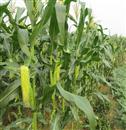 How should summer corn be managed in the late stage? Please give an introduction to the management methods
For late-stage management of summer corn, you can refer to the following methods:
1. Ensure water during the corn grain-filling stage:
The rainy season in the late growth stage of corn is basically over. If drought occurs, it directly affects corn grain filling, so you must overcome the paralyzing mindset of relying on the sky and waiting for rain. Grain-filling water is applied in the middle of the grain-filling stage. Its main role is to promote grain filling and increase grain weight.
2. Supplement nitrogen fertilizer:
Grain fertilizer is generally applied from the tasseling stage to the silking stage, mainly nitrogen fertilizer, with about 10 kg of urea applied per mu. It can promote grain filling and improve the seed-setting rate and grain weight.
3. Remove weeds and diseased or weak plants in the cornfield:
With the spread of mechanized wheat harvesting, the shading of wheat straw and wheat stubble reduces the control effect of herbicides, and the weeds left in the wheat field (Weibo) also increase the difficulty of weed control. For plots where chemical weed control is ineffective and there are many weeds in the field, intertillage and weeding should be carried out promptly.
In combination with weeding, pull out diseased corn plants, small plants, weak plants, mixed plants and tillers. For fields with excessively high plant density, appropriately remove plants to maintain a reasonable and good population structure in the field. In a cornfield, there will always be a certain number of plants that form empty stalks without ears or short, small plants. They not only consume nutrients for nothing, but also affect the photosynthesis of other plants. Such plants must be pulled out, so that the limited nutrients can be supplied in a concentrated way to normal plants.
4. Timely earth up corn to prevent lodging:
Because autumn is windy, corn lodging is often caused. Therefore, after topdressing corn, earth up promptly to prevent lodging. If lodging occurs during the corn growth period, it will seriously affect yield formation, and in severe cases can cause total crop failure. Earthing up can increase the formation of corn aerial roots and enhance corn's lodging resistance.
5. Timely prevent and control corn diseases and insect pests:
The prevention and control of summer corn diseases and insect pests should adopt the principle of "prevention first, integrated control." The main disease in the late growth stage of summer corn is brown spot, and the insect pests are corn borer, red spider and aphid.
For brown spot, before onset or in the early stage of onset, spray 20% triadimefon 3000 times solution, 50% carbendazim 500-800 times solution or 70% thiophanate-methyl 800-1000 times solution for control, spraying once every 7-10 days, for 2-3 consecutive sprays.
For the control of corn borer, generally when the insect-infested plant rate reaches 10%, use 0.5 kg of phoxim or 1605 plus 10 kg of water, mix with 25 kg of sifted stove ash to make granules, and place them into the corn leaf funnel. For the control of red spider and aphid, spray 10% imidacloprid 1500 times solution.
6. Corn should be harvested late at the appropriate time
The technique of appropriately delayed harvesting of corn can ensure that corn has enough time for grain filling, and is an effective measure to increase grain weight and increase yield and income. Strive to delay harvest until the end of September to the beginning of October. The standard for corn maturity is that the ear husk turns white, dries up and becomes loose, the milk line disappears, and the grains are glossy. At this time, grain weight is the highest.
Click to get more corn planting techniques
Click to get more food crop planting techniques