Control Methods for Pinellia Tuber Rot and Key Points of Cultivation Technology
What should be done about Pinellia tuber rot? What methods can effectively control Pinellia tuber rot? I hope a friend can offer some guidance. Generally, once the Pinellia enters the basket stage, tuber rot begins to occur. Below, Zhongdi Web summarizes the harm and control methods of Pinellia tuber rot for netizens' reference. Pinellia tuber...
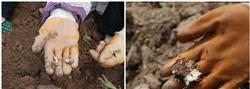 What should be done about Pinellia tuber rot? What methods can effectively control Pinellia tuber rot? I hope a friend can offer some guidance.
Generally, once the Pinellia enters the basket stage, tuber rot begins to occur. Below, Zhongdi Web summarizes the harm and control methods of Pinellia tuber rot for netizens' reference.
The harm of Pinellia tuber rot:
In autumn, there is more rain, and Pinellia is prone to tuber rot at this time. Once this disease occurs, rotting happens within a short time. In mild cases, 80% rots within one week; in severely affected plots, all Pinellia tubers rot within 3 to 5 days, and the soil and air of the entire plot give off a fishy, foul odor.
In the early stage of pathogen infection of Pinellia tubers, irregular black spots appear around the edges of the tubers. These spots spread rapidly in all directions. After 3 to 4 days, numerous pathogen spots connect together and continue to infect the interior of the tuber. At this point, the Pinellia root system begins to shrink, and the aboveground leaves gradually turn from green to yellow and wither.
After one week, the Pinellia tubers become round and blister-like, as if they were overripe grapes. The inside of the tubers is completely black liquid, the whole plant dies, and finally only a thin outer skin remains. The spreading pathogen will rapidly infect other Pinellia tubers, causing the entire Pinellia plot to become infected and rot within a short period. The soil and air where Pinellia is cultivated give off a fishy, foul, unpleasant odor.
Control methods for Pinellia tuber rot:
1. When choosing varieties for planting Pinellia, choose Pinellia varieties with strong disease resistance and vigorous growth, such as excellent varieties with leaf shapes like "narrow three-leaf" and "willow-leaf shape," and select disease-free tubers or bulbils as seed tubers.
2. Seed tuber treatment. Before sowing, the selected seed tubers must be treated and disinfected, such as by sun-drying the seeds and dressing with chemicals, to prevent the seed tubers themselves from carrying pathogens.
3. Land selection. It is necessary to choose loam or sandy loam with a pH value between 6.5 and 7 for planting Pinellia, and the plot must not have previously had root rot or rot disease.
In areas with abundant autumn rain, the selected plot should have a 20% slope. In plain areas and relatively flat plots, during the early planning for Pinellia cultivation, a drainage ditch 30 cm wide and 30 cm deep should be left every other intercropping bed to ensure that during continuous rainy weather, the water in the soil of the Pinellia field can thoroughly seep into the drainage ditch and be drained from the plot in time.
4. Remedial measures. During continuous rainy weather and when the soil is relatively moist, carry out multiple forms and multiple rounds of intertillage and loosening of the soil to break the compacted soil layer, allow harmful gases in the soil to escape, allow fresh oxygen from the air to enter, and increase gas exchange between the soil and the air. This measure can effectively prevent and reduce the occurrence of rot.
5. Emergency harvest of rotting stems. In the middle and late stages of Pinellia growth, if there is continuous rainy weather and relatively high soil moisture, frequently inspect the growth of Pinellia. If some Pinellia plants are found to have rot, regardless of whether it is the harvesting season, they should be harvested promptly without delay. Otherwise, the tubers rot very quickly, with large ones rotting first and small ones afterward, causing reduced yield or even total loss.
At the same time as the emergency harvest, the Pinellia tubers dug out of the wet mud should immediately be peeled and processed, because at this time the fresh tubers are still rotting inside. If not processed, most tubers will rot after 1 to 2 days. Farmers are urged not to be careless.
Click to get more Pinellia cultivation technology
Click to get more medicinal herb cultivation technology