What is corn seedling blight? Detailed explanation of corn planting techniques
What is corn seedling blight? How do you prevent and control corn seedling blight? Please provide an introduction and its control methods. Zhongdiwang has compiled the harm and control of corn seedling blight for readers' reference. Harm of corn seedling blight: Corn seedling blight mainly occurs at the corn seedling stage. In affected plants, browning first occurs at one spot, several spots, or the root tip of the seminal roots,...
 What is corn seedling blight? How do you prevent and control itCorn seedling blight?Please provide an introduction and its control methods
Zhongdiwang has compiled the harm and control of corn seedling blight for readers' reference.
Harm of corn seedling blight:
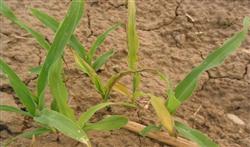
Corn seedling blight mainly occurs at the corn seedling stage. In affected plants, browning first occurs at one spot, several spots, or the root tip of the seminal roots, then spreads to a segment or the entire root system; one or several roots may be affected at the same time, and it then infects the mesocotyl, causing poor root development, reduced root hairs, no secondary roots or only a few secondary roots, aging of primary roots, necrosis of the cortex, and the root system turning blackish brown, with a necrotic ring-shaped spot forming at the first internode; the stem base becomes water-soaked and rots; the basal internode is highly prone to clean breakage under external force;
In the aboveground part of corn, the leaf sheaths turn brown and become torn, the leaves turn yellow, the edges become scorched, and the heart leaf curls and breaks easily; afterward the leaves gradually dry up from the bottom upward; plants with no secondary roots produce dead seedlings, while those with a few secondary roots form weak seedlings; when humidity is high, white mold appears on the part of the dead diseased seedlings near the ground;
When the damage is mild, there are no obvious symptoms in the aboveground part. Generally, starting at the two-leaf-one-heart stage, the leaf tips of the first and second leaves turn yellow and gradually spread toward the middle of the leaf. After aerial roots grow from the aboveground stem nodes, absorption capacity increases, and the plant can continue growing into a healthy plant; however, in severely affected plants, the leaves wither in a fire-like manner, the heart leaf gradually wilts and turns greenish, and the stem base rots, so the plant can be pulled up with a gentle lift by hand.
Causes of corn seedling blight:
1. Causes triggered by climatic conditions: Corn seedling blight generally occurs from early June to early July. The climatic conditions affecting corn seedling blight are mainly temperature and humidity, and prolonged "low temperature and high humidity" favors its occurrence. According to surveys, if moderate to heavy rain occurs suddenly after corn sowing and before rooting, causing soil compaction and creating an environment with low soil temperature and high humidity, the disease is easily contracted, while plots sown after rain with the same variety basically do not develop the disease, indicating that the degree of incidence is greatly related to climatic conditions.
2. Causes related to varieties: According to surveys from 1998 to 2002, corn varieties such as Ludan 50, Nongda 108, and Ludan 981, although highly disease-resistant in the middle and late growth stages, have weak seedling vigor and root systems that are highly susceptible to seedling blight. The expansion of the area planted with varieties using inbred lines 178 or Qi 319 as parents is the main reason for the relatively large area affected by seedling blight in recent years.
3. Soil and management measures: The disease is more severe in low-lying areas, poor soil, clay soil, saline-alkali land, and plots where corn herbicides have been applied; in addition, sowing too deep also makes the disease more likely.
4. Rotation pattern: Wheat/corn is the main rotation pattern in our province. In recent years, wheat root diseases have occurred severely, leading to the accumulation of pathogens such as Fusarium moniliforme, Fusarium graminearum, and Rhizoctonia zeae, which has also worsened the occurrence of corn seedling blight.
Control methods for corn seedling blight:
1. Rational fertilization and strengthened field management: Rational fertilization is an important measure to reduce seedling blight. When sowing, apply appropriate base fertilizer, increase phosphate fertilizer, and cultivate strong seedlings; after corn emerges or after rain, cultivate in time to improve root aeration and promote root growth.
2. Seed dressing to prevent disease: You can use 50% carbendazim wettable powder and dress seeds at 0.2% to 0.3% of the seed amount, or use Huayang 20% special corn seed coating agent or coated seeds, which both controls insects and strengthens seedlings, achieving multiple benefits at once. In addition, in the past two years, the new seed coating agent 25% Raxil has been applied at 0.2% for seed dressing, and the control effect can reach more than 90%.
3. If seedling blight is found at the seedling stage, methyl-tolclofos-methyl can be used for control; generally, strong roots can grow 3 days after spraying. You can also choose one of the following pesticides to spray the base: 50% carbendazim 600-fold solution, 20% triadimefon 1000-fold solution, efuling 3000-fold solution, corn killer 400-fold solution, spraying twice in succession.
Click to get more corn planting techniques
Click to get more food crop planting techniques