How can peanuts be planted to increase yield?
How can peanut yields be increased? Do fellow growers have any technical experience to share? Zhongdi Network has compiled methods for increasing peanut yields, listed below for fellow growers' reference. Method 1: Pay attention to crop rotation: Continuous cropping of peanuts generally shows small plants, yellow leaves, early leaf drop, many pests and diseases, and few and small pods. On continuous cropping land...
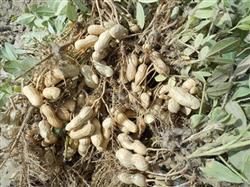 How can peanut yields be increased? Do fellow growers have any technical experience to share?
Zhongdi Network has compiled methods for increasing peanut yields, listed below for fellow growers' reference.
Method 1: Pay attention to crop rotation:
Continuous cropping of peanuts generally shows small plants, yellow leaves, early leaf drop, many pests and diseases, and few and small pods. When peanuts are planted on continuous cropping land, even with additional fertilizer, it is still difficult to achieve the expected yield.
Method 2: Carry out deep plowing:
Peanut is a deep-rooted crop. Generally, deep plowing (26-33 cm) can increase yield by 20% compared with shallow plowing (10-13 cm). Summer-sown peanuts include two types: relay intercropping and sowing after the previous crop. For the former, deep plowing and fertilization should be carried out before sowing the previous crop, and intertillage of the previous crop in the later stage should be strengthened at the same time. For the latter, after the previous crop is harvested, the stubble should be removed in time, and fertilization, plowing and harrowing, and sowing should be carried out promptly.
Method 3: Apply fertilizer skillfully/apply sufficient fertilizer:
Base fertilizer should account for more than 80% of the total fertilizer amount, and the type of fertilizer should be mainly organic fertilizer. Generally, per mu apply 2000 kg of decomposed high-quality human and livestock manure, 15-20 kg of diammonium phosphate or 40-60 kg of superphosphate, 5-6 kg of potassium chloride, and 4-5 kg of urea. Phosphate fertilizer is best applied after being mixed and composted with organic fertilizer at a ratio of 0.5%-1%. In addition, dressing seeds with rhizobium inoculant (3 ml per kg of seeds) can increase effective rhizobia and improve nitrogen fixation; dressing or soaking seeds with 0.2%-0.3% ammonium molybdate or 0.01%-0.1% boric acid solution can supplement the trace elements needed by peanuts; for calcium-deficient soil, generally apply 50 kg of lime per mu, broadcast together with plowing as base fertilizer.
Method 4: Do a good job of seed treatment before sowing:
Sun-drying peanut seeds: Sun-drying the pods before sowing can dry the seeds and promote after-ripening, thereby improving seed viability and making the seeds germinate quickly and emerge uniformly. Especially for seeds with poor maturity and those that have been damp during storage, the effect of sun-drying the pods is even more obvious. Sun-drying the pods is generally carried out 15 days before sowing, choosing sunny midday to sun them for 4-5 hours, for 3-4 consecutive days. But note that the seeds should not be sun-dried directly, so as to avoid the seed coat becoming brittle and cracking, damaging the seeds or causing "oil return," which reduces the seed germination rate.
Shelling peanut seeds: The closer the shelling time is to the sowing period, the better. This is because after shelling, the seeds lose the protection of the pod shell and come into direct contact with moisture and oxygen in the air, making respiration and enzyme activity vigorous, which easily consumes the nutrients in the seeds.
Grading and seed selection of peanut seeds: The nutrients needed before and after peanut emergence are mainly supplied by the two cotyledons, so large and plump peanuts should be selected as seeds. Combined with shelling, the seeds can be graded and selected by size, seed coat color, and plumpness.
Method 5: Sow skillfully:
While sowing at the appropriate time, according to soil texture, climate and soil moisture, master the appropriate sowing depth and the methods of covering soil and pressing after sowing. The sowing depth is generally about 5 cm. If the soil is clayey and moisture is good, sow appropriately shallow; otherwise, sow appropriately deep. Note that shallow sowing should not be shallower than 3.3 cm, and deep sowing should not be deeper than 6.6 cm.
If the soil moisture is slightly poor at sowing or the soil is too sandy, then sow with soil pressed by foot, and press in time after covering with soil. If the moisture is good and the soil is clayey, it is not necessary to press with foot at sowing; after covering with soil, wait until the surface soil is slightly dry, then decide whether to press as appropriate, so as to avoid surface soil crusting and affecting emergence.
If soil moisture is poor, drought-resistant sowing should be carried out in time. To control underground pests, poisoned bait should be applied at sowing to ensure full stands, and seed coating with seed dressing agent can also be used before sowing. The requirement for reasonable close planting of peanuts is "in fertile land the vines do not lodge, in poor land the rows can close" (it is appropriate for the rows to close at the pod-setting stage). The planting density of relay-intercropped peanuts in wheat fields (Weibo) and peanuts after wheat stubble should be slightly greater than that of spring-sown peanuts of the same variety.
Click to get more peanut planting techniques
Click to get more grain crop planting techniques