How to manage honeysuckle after harvesting? A full breakdown of the key technical points
How should honeysuckle be managed after harvest? What should be noted? We hope experienced readers can help explain. Post-harvest management of honeysuckle mainly includes pruning, garden clearing, fertilizer and water management, and pest and disease control. For detailed operations, refer to the following introduction. 1. Honeysuckle pruning: Pruning method one, thinning: Thin out severely...
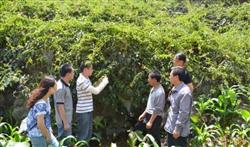 How should honeysuckle be managed after harvest? What should be noted? We hope experienced readers can help explain
Post-harvest management of honeysuckle mainly includes pruning, garden clearing, fertilizer and water management, and pest and disease control. For detailed operations, refer to the following introduction.
1. Honeysuckle pruning:
Pruning method one, thinning:Thin out severely diseased and pest-damaged branches, dead branches, dense weak branches, crossing branches, and water sprouts growing in inappropriate positions. The purpose is to reduce unnecessary nutrient consumption and water evaporation.
Pruning method two, heading back:Cut off part of the current year's branches. Cultivate strong new shoots to make the plant compact and full.
Pruning method three, renewal pruning:A pruning method for perennial branches.
Pruning method four, leaving unpruned:Do not prune the branches of newly planted or young trees; let them grow freely.
2. Honeysuckle garden clearing methods:
Many honeysuckle growers fail to clear and disinfect the garden in time during honeysuckle management, leading to worsened pest and disease problems and reduced yields.
Therefore, it is recommended that growers, after pruning, on the one hand promptly pick out diseased and pest-damaged branches and bury them deeply, and on the other hand pick out dead branches, dense weak branches, crossing branches, and water sprouts growing in inappropriate positions from the garden for disposal.
After clearing the garden, disinfect the whole garden once, using 75% carbendazim or 15% triadimefon per mu diluted with water and sprayed, to reduce disease occurrence.
3. Honeysuckle fertilizer and water management methods:
1. Cultivation and weeding: After harvest, for plots where no crops have been planted, carry out one round of cultivation and weeding to enhance root vigor and reduce weed growth.
2. Topdressing fertilizer: Since most nutrients are taken away after honeysuckle flowering, in order to quickly restore tree vigor and enhance tree nutrition, one topdressing must be applied, mainly farmyard manure and amino acid compound fertilizer. The amount applied depends on the size of the plant clump. Generally, apply 1 kg of farmyard manure and 2-4 liang of amino acid compound fertilizer per plant. Fertilizer should be applied in a ring-shaped ditch around the plant clump, then covered with soil after application to prevent fertilizer loss.
4. Honeysuckle pest and disease control:
1. Harm of honeysuckle powdery mildew:It mainly harms leaves. The lesions are small white spots, which later expand into white powdery patches, and finally the entire leaf is covered with a white powdery layer. In severe cases, leaves turn yellow, become deformed, and fall off, and flowers become distorted and drop.
Control methods for honeysuckle powdery mildew:
(1) Carry out timely shaping and pruning, and promptly remove diseased branches, diseased leaves, pruned branches, and dead branches and fallen leaves.
(2) From new shoot emergence to before disease onset, use 100 g of 75% Antaisheng powder per mu plus 50-60 kg of water for spray prevention.
(3) In the early stage of disease, use 30 g of 5% flusilazole + 100 g of 75% Antaisheng wettable powder per mu, or 18 mL of 43% Hluk suspension + 100 g of 75% Antaisheng wettable powder, or 40 g of Lüheng 80% Duo.Fu.Xin (No. 2) wettable powder, add 50-60 kg of water and spray, spraying once every 10 days for 2-3 consecutive times. The last application must be 10-15 days before picking; pesticides are prohibited during the flowering and picking period.
2. Harm of honeysuckle brown spot disease:
It mainly harms leaves. In the early stage of disease, small yellow-brown spots appear on the leaves, and later brown round lesions or irregular lesions form. The disease is first seen at the end of April, and is more severe from June to August.
Control methods for honeysuckle brown spot disease:Spray 800-fold solution of 70% thiophanate-methyl wettable powder or 800-fold solution of 70% mancozeb wettable powder per mu for control, spraying once every 7-10 days for 2-3 consecutive sprays. Note to alternate and rotate the pesticides; this has good control efficacy.
3. Harm of scarab beetles (larvae are white grubs, commonly known as old mother worms) to honeysuckle:
Besides biting and feeding on lateral roots and main roots, the larvae cause more severe damage from April to May and from late August to early September.
Control methods for scarab beetles:
(1) Carry out manual capture, light trapping, and avoid applying undecomposed barnyard manure, to reduce the number of eggs laid by adults in the field.
(2) From late March to mid-April and from late August to early September, carry out poisonous soil treatment. Use 500 g of 10% diazinon granules per mu mixed with 20 kg of poisonous soil, or use 200 g of 40% diazinon emulsifiable concentrate per mu mixed with 20-25 kg of fine soil, mix evenly, apply in furrows, then cover.
(3) Root irrigation: In fields where white grubs occur more severely, use 1000-fold solution of 480 g/L Lüheng chlorpyrifos or 1000-fold solution of 40% diazinon emulsifiable concentrate per mu for root irrigation, irrigating 150-250 mL per plant, which can kill larvae near the rhizosphere.
4 Harm of aphids (commonly known as heaven-insect disliked) to honeysuckle:
They mostly begin to occur in early to mid-April, and the infestation is heavier from May to June. They mainly harm honeysuckle new leaves and vine tips, causing curling, affecting growth and leading to low honeysuckle yields.
Control methods for aphids:
(1) Before the plants sprout, spray once with lime sulfur mixture to kill overwintering aphids.
(2) From late April to early May, use 24 mL of 10% pymetrozine suspension per mu, or 70% Admire water-dispersible granules, or 6 g of Lüheng 70% imidacloprid wettable powder, add 50-60 kg of water and spray on the leaves. The last application must be 10-15 days before picking; pesticides are prohibited during the flowering and picking period. You can use 1 kg of laundry detergent with 10 kg of water, or 1 kg of alcohol with 100 kg of water for spraying.
5. Harm of yellow ants to honeysuckle:
From late March to early April, they begin to bite and feed on roots and bark, damaging the trunk, causing yellow leaves, dead branches, and tree death.
Control methods for yellow ants:Spray the root base with 1000-fold solution of 48% chlorpyrifos emulsifiable concentrate per mu.
6. Harm of red spider mites to honeysuckle:
Initial symptoms: leaves lose green color, leaf edges curl upward, then scorch and fall off, causing early shrinking of flower buds, and in severe cases plant death.
Red spider mites occur 7-8 generations per year, begin to cause damage from March to April each year, and cause severe damage from June to July. After the end of April, the plants should be frequently observed and inspected. Under conditions of high temperature, high humidity, and poor ventilation, red spider mites reproduce extremely quickly, and are one of the important causes of plant death.
Control methods for red spider mites:In early to mid-April, spray leaves with 2000-fold solution of 73% propargite emulsifiable concentrate or 2000-fold solution of 5% hexythiazox emulsifiable concentrate per mu.
Click to get more honeysuckle cultivation techniques
Click to get more medicinal herb cultivation techniques