What are the common autumn diseases in Isatis indigotica (woad) cultivation?
What diseases affect Isatis indigotica (woad) in autumn? Please explain and give control methods. Autumn is a period of frequent disease outbreaks in Isatis indigotica, such as downy mildew, root rot, and sclerotinia rot. The following control methods are provided for reference: Downy mildew damages the leaves. The leaves on the lower part of the plant near the ground are affected first, then it gradually spreads to the upper leaves. Once affected...
 What diseases affect Isatis indigotica (woad) in autumn? Please explain and give control methods.
Autumn is a period of frequent disease outbreaks in Isatis indigotica, such as downy mildew, root rot, and sclerotinia rot. The following control methods are provided for reference:
Downy mildew
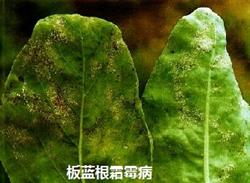
It damages the leaves. The leaves on the lower part of the plant near the ground are affected first, then it gradually spreads to the upper leaves. In the early stage of the disease, only a grayish-white downy mold appears on the underside of the leaves, with no obvious lesions on the leaf surface; the affected parts become uneven, and with further development they form small green round spots that later turn into brown blighted spots. In severe cases, the edges of the diseased leaves turn brown and dry up, until the entire leaf dies. This disease occurs readily when field humidity is high and the temperature is high.
Control methods ① After heavy rain, open ditches promptly to drain water and keep the furrow ditches flowing freely; ② Remove overly dense branches and leaves to maintain ventilation and light penetration in the field; ③ In the early stage of the disease, spray the leaf surface with 1:1:100 Bordeaux mixture or 50% carbendazim 800-fold solution, once every 7 days, for 3 to 4 consecutive sprays.
Root rot
It damages the roots. When it occurs, the fibrous roots and the root tips of the main root are affected first, turning dark brown, until the vascular bundles of the root system show brown lesions. In the later stage, the entire root rots, the aboveground plant wilts, and finally gradually dies. This disease occurs readily in the middle and late stages of growth.
Control methods ① When cultivating and topdressing, apply more decomposed organic fertilizer to enhance the plant's disease resistance; ② In the early stage of the disease, drench the diseased holes once with 5% lime milk, and spray the affected area 1 to 2 times with 50% Tuzet 600-fold solution; ③ When diseased plants are found, pull them out promptly, take them out of the field, and burn them in a concentrated manner or bury them deeply.
Sclerotinia rot
It damages the stems and leaves. When the leaves are affected, water-soaked greenish-brown lesions appear at first, then the entire leaf rots, leaving only the veins. When the stems are affected, the cortex rots, the stems split into a tangled, hemp-like mass covered with mycelium, and black mouse-dropping-shaped sclerotia appear inside and outside the stems and on the leaves, with the most sclerotia on the stem base near the soil surface; in the later stage the whole plant withers, turns yellow, and dies. This disease occurs readily in continuous-cropping fields and dry fields.
Control methods ① Practice crop rotation when sowing to reduce the spread of the pathogen; ② In dry weather, pay attention to timely irrigation, preferably in the morning or evening; ③ In the early stage of the disease, spray the stems and leaves with 50% thiophanate-methyl 800-fold solution or 65% zineb 600-fold solution, once every 5 days, for 3 to 4 consecutive sprays.
Click to get more Isatis indigotica cultivation techniques
Click to get more medicinal herb cultivation techniques