What are the control methods for gray mold of winter melon?
How to control gray mold of winter melon? Please introduce effective control methods. Gray mold of winter melon can be controlled by the following methods: 1. Choose disease-resistant varieties. 2. Select and keep disease-free seeds, making sure to save seeds from disease-free greenhouses and disease-free plants, and use the frozen filter paper method to test whether the seeds carry the fungus. 3. Hot water or...
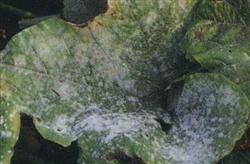 How to control gray mold of winter melon? Please introduce effective control methods
Gray mold of winter melon can be controlled by the following methods:
1. Choose disease-resistant varieties.
2. Select and keep disease-free seeds, making sure to save seeds from disease-free greenhouses and disease-free plants, and use the frozen filter paper method to test whether the seeds carry the fungus.
3. Hot water or chemical seed soaking: soak seeds in constant-temperature water at 55-60°C for 15 minutes, or soak them in a 500-fold dilution of 50% carbendazim wettable powder for 20 minutes, then rinse clean before sprouting, or treat the seeds with 0.3% of 50% carbendazim wettable powder; all of these can achieve good sterilization results.
4. Cover with plastic film, adopt water-saving techniques such as drip irrigation, practice crop rotation, and rotate heavily affected greenhouses (fields) with non-cucurbit crops.
5. Fumigation disinfection: 10 days before planting in greenhouses and plastic tunnels, mix 0.13 kg of sulfur powder and 0.25 kg of sawdust for every 55 cubic meters of space, place the mixture in several spots, light it, and keep the greenhouse sealed for 1 night of fumigation.
6. Strengthen cultivation management: controlling watering especially from after planting to the fruiting stage is very important. In protected cultivation, use ecological control as much as possible, and pay special attention to temperature and humidity management. Use ventilation to remove moisture and control irrigation to lower the humidity inside the greenhouse, reduce dew formation on leaf surfaces, and inhibit fungal germination and invasion. Keep the daytime temperature at 28-30°C and the nighttime temperature at 15°C, with relative humidity below 90%. In greenhouses with moderate temperature and low humidity, an average temperature of 21-25C, or keeping greenhouse humidity above 90% for no more than 8 hours, can reduce disease incidence.
7. From the early stage of disease onset, use dusting or smoke methods: spray 10% Duobai dust or 5% black spot control dust with a duster at 1 kg per mu per application, or apply 45% chlorothalonil smoke agent at 200 g per mu per application, for 3-4 consecutive treatments.
8. In greenhouses or open fields, at the early stage of disease onset, spray 40% Fuxing emulsifiable concentrate at an 8000-fold dilution, or 50% carbendazim wettable powder at an 800-fold dilution plus 70% mancozeb wettable powder at an 800-fold dilution, or 2% Wuyi mycin (BO-10) aqueous solution at a 150-fold dilution plus 50% carbendazim wettable powder at a 600-fold dilution, or 2% Wuyi mycin (BO-10) aqueous solution at a 150-fold dilution, 80% carbendazim wettable powder at a 600-fold dilution, or 75% chlorothalonil wettable powder at a 600-fold dilution, 50% benomyl wettable powder at a 1500-fold dilution, or 80% captafol wettable powder at a 500-fold dilution, spraying 60-65 liters of spray solution per mu, once every 7-10 days, for 3-4 consecutive treatments.
9. Strengthen quarantine to strictly prevent the spread of this disease.
Click to get more winter melon growing techniques
Click to get more vegetable growing techniques