How to prevent and control fruit cracking during wax gourd cultivation?
How to prevent and control fruit cracking in wax gourd? Please explain the methods. Causes of fruit cracking in wax gourd: adverse conditions such as high summer temperatures, blazing sun, drought, heavy rain, and uneven watering are the main causes of fruit cracking in wax gourd and hairy gourd (Benincasa hispida var. chieh-qua). In particular, showers and heavy rain cause physiological dysfunction of the root system and hinder the normal uptake or translocation of boron; after 3 to 6 days, fruit cracking occurs.
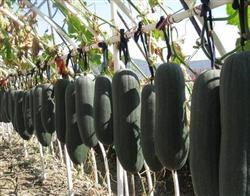 How to prevent and control fruit cracking in wax gourd? Please explain the methods.
Causes of fruit cracking in wax gourd:
Adverse conditions such as high summer temperatures, blazing sun, drought, heavy rain, and uneven watering are the main causes of fruit cracking in wax gourd and hairy gourd (Benincasa hispida var. chieh-qua). In particular, showers and heavy rain cause physiological dysfunction of the root system and hinder the normal uptake or translocation of boron; after 3 to 6 days, fruit cracking occurs.
During fruit development, if the soil or air is dry in the early stage, water inside the fruit is largely lost through transpiration from the leaf surface, and epidermal growth is inhibited. If sudden rainfall or excessive irrigation then occurs, the rind growth cannot keep up with the expansion pressure produced by the swelling of the flesh tissues, causing cracks on the fruit surface; because of excessive water, the cracks enlarge and deepen. Therefore, in production, a large fluctuation between dry and wet conditions during the fruit enlargement stage is the main cause of fruit cracking.
In addition, direct blazing sun on the fruit surface, a rise in fruit surface temperature, over-maturity of the fruit, or aging of the rind can also cause fruit cracking. The degree of cracking is mainly related to the following factors: first, it is related to the strength and extensibility of the fruit epidermis, that is, it is restricted by the thickness of the epidermal parenchyma cell layer of the fruit, and its relationship with fruit firmness and pectinase activity in the flesh is not obvious. Second, it is related to the type and variety of the gourd. Third, it is related to cultivation techniques. In production, in well-managed gourd fields, plants grow vigorously, vegetative growth and reproductive growth are relatively coordinated, and there is little fruit cracking; where plants grow poorly, and the nutritional status of stems, leaves, root system, and the whole plant is poor, fruit cracking is common by the late harvest stage.
Prevention and control methods for fruit cracking in wax gourd:
(1) Select crack-resistant varieties.
(2) In rainy areas or rainy seasons, use deep furrows with high beds, or ridging and trellis cultivation.
(3) Apply more organic fertilizer to increase the soil's water permeability and water-holding capacity, so that the soil supplies water evenly, the root system is well developed, and the branches and leaves are luxuriant; prune in time so that the fruit develops normally, which can reduce fruit cracking.
(4) The top of the fruit and the part touching the ground in wax gourd and hairy gourd have fewer sclerenchyma cell layers in the rind; during cultivation, the fruit can be turned over to promote fruit development.
(5) Harvest at the right time to reduce the number of cracked fruits.
(6) When necessary, spraying 0.1% zinc sulfate or copper sulfate during the fruit enlargement stage can improve heat resistance and enhance cracking resistance. In addition, after the petals fall, spraying 15×10-6 gibberellin or indoleacetic acid, or 30×10-6 naphthaleneacetic acid, once every 7 days for 2 to 3 consecutive times, can also prevent fruit cracking.
Click to get more wax gourd cultivation techniques
Click to get more vegetable cultivation techniques