Why do deformed pods appear in kidney bean cultivation?
Why are kidney beans deformed? Please explain the causes and control methods. Deformed kidney beans mainly show up on the pods, mostly appearing as a "curved hook." The causes of deformed kidney beans are as follows: First, spraying with chemicals to which kidney beans are sensitive. Kidney beans are sensitive to chemicals containing mancozeb, zineb or diethofencarb, such as applying...
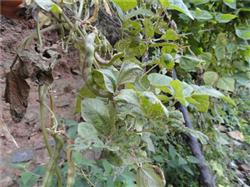 Why are kidney beans deformed? Please explain the causes and control methods
Deformed kidney beans mainly show up on the pods, mostly appearing as a "curved hook." The causes of deformed kidney beans are as follows:
First, spraying with chemicals to which kidney beans are sensitive. Kidney beans are sensitive to chemicals containing mancozeb, zineb or diethofencarb; excessive application can easily bend the pods. Kidney beans are extremely sensitive to oxadixyl, which easily causes phytotoxicity and deformed pods. Some kidney beans also develop phytotoxicity from spraying copper-based preparations or thiophanate-methyl plus thiram, with mild cases showing curved pods and severe cases showing leaf and pod drop.
When controlling diseases such as gray mold and sclerotinia, the relatively safe chemicals for use on kidney beans include iprodione, procymidone, chlorothalonil, vinclozolin, iminoctadine and carbendazim. When using copper-based preparations to control bacterial diseases, the application rate should be halved. Chemicals containing mancozeb, zineb or diethofencarb should be used with caution or not at all, to prevent phytotoxicity that causes deformed kidney beans, affects yield and quality, and leads to unnecessary losses.
Second, boron deficiency. When kidney beans are deficient in boron, pods are difficult to set; even if pods set, the flowers are large and the pods are long and curved, with poor market quality. The solution is to spray 1200-fold Sulubor (Sulubor) before flowering.
Third, excessively high or low temperatures can cause pod curvature. The most suitable temperature for kidney bean growth is 23-25°C during the day and 18°C at night, with the best flowering temperature at 23°C. If daytime temperatures fall below 20°C or rise above 30°C, pod setting will be affected. At noon during the flowering period, be sure to check the temperature in the greenhouse and regulate the greenhouse temperature well. In addition, to ensure that carbon dioxide enters the greenhouse early during the winter closed period and photosynthesis proceeds early, open the ventilation openings as early as possible one hour after sunrise in winter when temperature conditions permit, to increase the carbon dioxide concentration in the greenhouse and maintain normal photosynthesis.
Fourth, adverse environmental effects. Greenhouse soil that is too dry or waterlogged easily causes newly set pods to develop what growers call a "curved hook." This is because soil that is too dry or too wet injures the root system, causing the plants to weaken and affecting flowering and pod setting. To ensure pods do not curve, the first step is to keep the root system growing vigorously. Do not water before flowering. Watering should be determined by soil moisture conditions, and after pod setting, water together with fertilization. From transplanting to before flowering, water four times, with light watering, generally about 20 cubic meters per mu, rather than flood irrigation, to avoid root rot and root damage.
Fifth, excessive use of growth inhibitors. When growers spray excessive growth inhibitors on kidney beans that are growing vigorously but failing to set flowers, such as chlormequat and difenoconazole, it easily causes kidney beans to develop a curved hook. When some growers spray naphthaleneacetic acid to prevent pod drop, excessive concentration causes pod curvature, and this should also draw our attention.
Sixth, excessively high soil solution concentration, excessive chemical fertilizer application or saline-alkali soil can also cause deformed pods. In response, chemical fertilizers should be applied sparingly and humic acid fertilizers applied more. After pods grow to 3-4 cm long, apply 30-60 jin of humic acid fertilizer per mu as a drench to supplement nutrients. Never apply excessive chemical fertilizer, which raises soil solution concentration and causes pod curvature. For planting kidney beans in saline-alkali soil, soilless cultivation is best, to avoid direct contact between the kidney bean root system and saline-alkali soil, which affects root growth.
Click to get more kidney bean cultivation techniques
Click to get more grain and oil crop cultivation techniques