How to grow reishi mushrooms for high yields? A detailed guide to reishi cultivation techniques
How to grow reishi mushrooms for high yields? Please give guidance. To grow reishi well, we must not only study the theory but also pay attention to practice. For example, reishi is an aerobic medicinal fungus; if there is not enough oxygen, it only grows a stem, while with sufficient oxygen it grows a cap. Therefore, to ensure a good shape for the reishi, you must first let it grow a stem in the early stage...
 How to grow reishi mushrooms for high yields? Please give guidance
To grow reishi well, we must not only study the theory but also pay attention to practice. For example, reishi is an aerobic medicinal fungus; if there is not enough oxygen, it only grows a stem, while with sufficient oxygen it grows a cap. Therefore, to ensure a good shape for the reishi, you must first let it grow a stem in the early stage, and then grow a cap. The shape that grows this way is kidney-shaped. For detailed cultivation methods, refer to the following.
First, the preparation of the reishi cultivation substrate:
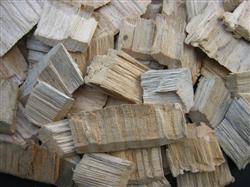
Reishi is a wood-decaying fungus with a strong ability to decompose lignin, so the carbon source materials for cultivating reishi come from a wide range of sources. Such as sawdust, sugarcane bagasse, corncobs, napier grass, corn stalks, etc. Here I do not recommend using cottonseed hulls, because the price is too high.
We should choose materials according to local conditions to reduce production costs. Many people think that herbaceous plants such as sugarcane bagasse and corn stalks make it difficult to grow high-yielding reishi, but the key is simply to match the coarse and fine materials properly, so that the made fungus bags are neither too loose nor too tight, but elastic.
The coarseness of the materials used in different regions is different. For example, sawdust comes in sawdust-like and granular forms, so a formula that others use to grow high-yielding reishi may not necessarily produce high-yielding reishi when you use the same formula. So do not casually adopt other people's formulas. You should find a more suitable formula ratio in your local area.
Second, reishi mycelium cultivation:
Mycelium cultivation is a very critical step. Grasp the characteristics of the variety you are growing and design a set of cultivation methods suitable for it. Regarding this step, I will explain it in detail in a special topic in the future.
Third, after the reishi mycelium has fully colonized the bag, providing it with a maturation period allows it to start fruiting:
Move the reishi to the fruiting room and let it fruit in the way you like, but the mushroom house must be able to control the oxygen level of the air, the light should not be too strong, and it should be cool and moist.
When the reishi is fruiting, just sprinkle water on the floor; do not spray in the air. In dry weather, sprinkling water 1-2 times a day is enough. Water should not be sprayed too frequently, because this will make the moisture in the air alternate between dry and wet, and the reishi will find it very hard to adapt, so it will not grow large. This is called the law of letting nature take its course.
Click to get more reishi cultivation techniques
Click to get more medicinal herb cultivation techniques