What causes hollow radishes?
Why do radishes become hollow? What methods can prevent and control hollow radishes? We also ask experienced netizens to help advise. Zhongdiwang has compiled the causes of hollow radishes and the prevention and control methods, listed below for netizens' reference. 1. Causes of hollow radishes: 1. Hollowing caused by radish variety: Large radishes...
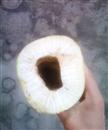 Why do radishes become hollow? What methods can prevent and control hollow radishes? We also ask experienced netizens to help advise.
Zhongdiwang has compiled the causes of hollow radishes and the prevention and control methods, listed below for netizens' reference.
1. Causes of hollow radishes:
1. Hollowing caused by radish variety:Radishes can be roughly divided into three types: large, medium and small. Large varieties go deeper into the soil, their flesh is relatively loose, and their fleshy roots expand faster; when this exceeds the growth rate of the leaves, hollowing easily occurs. Medium and small varieties go shallower into the soil, their flesh is relatively dense, their fleshy roots grow more slowly, and root and leaf growth are relatively balanced, so they are not prone to hollowing.
2. Hollowing of radishes caused by unsuitable sowing time:Sowing should be done at the appropriate time so that radishes grow normally in an environment with higher daytime temperatures, lower nighttime temperatures and a large day-night temperature difference, which makes hollowing less likely. Conversely, sowing too early or too late easily causes hollowing.
3. Hollowing caused by planting radishes too sparsely:If planted too sparsely, nutrients are abundant, the fleshy roots expand too quickly, root and leaf growth become unbalanced, and the nutrients produced above ground cannot meet the nutrients needed for the expansion and growth of the underground fleshy roots, so hollowing easily occurs. They should be planted appropriately densely.
4. Hollowing of radishes caused by improper fertilization:Correctly applying fertilizer and keeping the growth of the above-ground and underground parts balanced is the key to obtaining high-quality, high-yield radishes. Unreasonable fertilization, especially too late topdressing in the later stage or applying too much nitrogen fertilizer, makes the leaf rosette grow too vigorously and easily causes hollowing.
5. Hollowing of radishes caused by improper watering:Radishes have different water requirements at different growth stages, so water should be controlled reasonably. Never let the soil alternate between dry and wet or go unwatered for a long time. Especially during the peak growth period of the fleshy root, soil lacking water not only increases fibrous roots and makes the texture coarse, but also easily causes hollowing.
6. Hollowing caused by improper harvesting of radishes:Harvesting too early gives too low a yield; harvesting too late easily causes hollowing. In addition, if they are left for a long time after harvest, they also easily become hollow.
Prevention and control methods for hollow radishes:
Method 1. Select excellent varieties:Relatively speaking, medium and small varieties with dense flesh are less prone to hollowing.
Method 2.Choose a suitable sowing time, plant reasonably densely, and prevent too sparse or too dense planting, so as to achieve the goal of high quality and high yield.
Method 3. Fertilize scientifically and reasonably:Radish fertilization should be based mainly on base fertilizer, supplemented by topdressing, and attention should be paid to the combination of phosphorus and potassium fertilizers, so as to fertilize reasonably and scientifically. For medium and small varieties with a short growth period, if the base fertilizer is sufficient, less topdressing can be used; for medium and late-maturing large varieties with a long growth period, high yield and large fertilizer demand, in addition to applying enough base fertilizer, topdressing is also needed in stages. In the early stage of taproot growth, apply topdressing lightly to promote leaf and root growth; at the beginning of fleshy root expansion, topdressing should be applied heavily.
Method 4. Reasonably control water:At sowing time, water should be sufficient to achieve rapid rooting and uniform emergence; from the seedling stage to before fleshy root expansion, water less to make the taproot go deep into the soil layer; during the vigorous leaf growth period, water appropriately to ensure leaf growth; during the peak fleshy root expansion period, the water supply should be sufficient, and never let the soil alternate between dry and wet or go unwatered for a long time. Soil moisture should be kept at 70%-80% to prevent hollowing.
Method 5. Use chemical control:In the later stage of growth, spray a 10 mg/kg naphthaleneacetic acid solution once every half month, which can delay maturity.
Click to get more radish growing techniques
Click to get more vegetable growing techniques