What causes black heart in radishes?
What is radish "black heart"? What causes black heart in radishes? What methods can prevent and control it? We also ask netizens to help guide and explain. Radish black rot, commonly known as black heart and rotten heart, is a disease caused by bacteria. Zhongdi Web has compiled the harm, causes and prevention and control methods of radish black rot, as follows...
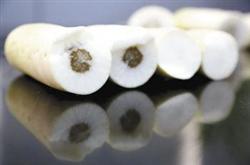 What is radish "black heart"? What causes black heart in radishes? What methods can prevent and control it? We also ask netizens to help guide and explain.
Radish black rot, commonly known as black heart and rotten heart, is a disease caused by bacteria. Zhongdi Web has compiled the harm, causes and prevention and control methods of radish black rot, listed below for netizens' reference.
The harm of radish black rot:
This disease harms the leaves and roots of radishes. When it occurs at the seedling stage, the cotyledons appear water-soaked and the root pith turns black and rots. When leaves are affected, yellow spots appear in multiple places along the leaf margins, later forming V-shaped lesions; the veins turn black and net-like, the leaf margins turn yellow, and later the whole leaf turns yellow and dries up.
The pathogen of radish black rot develops along the leaf veins and vascular bundles toward the root. When the root is affected, the vessels turn black, the internal tissue becomes dry-rotted, and the appearance often shows no obvious symptoms, but the pith mostly becomes black and dry-rotted, finally forming cavities. When this disease rots, it does not smell, which distinguishes it from soft rot. However, sometimes soft rot can occur together with it in the field, showing a rotting appearance.
Causes of radish black rot:
The suitable temperature for the onset of radish black rot is 25°C-30°C. The disease is severe under high temperature and heavy rain, continuous cropping or early sowing, low-lying terrain, excessive irrigation, poor drainage, little fertilizer or immature fertilizer, and many artificial wounds and insect injuries. It is severe in rainy years. In serious cases, the diseased plant rate can reach 100%, and the death rate can reach more than 30%, causing relatively large losses in yield and quality.
It is caused by sowing bacteria-carrying seeds. The young buds can become infected in the soil, causing the seedlings to fail to emerge; although some can emerge, they die soon after emergence. In the field, it spreads through irrigation water, rainwater, insect injuries and wounds caused by farming operations.
Prevention and control methods for radish black rot:
Method one,Select disease-tolerant varieties, such as Fengguang No. 1 radish, Shijiazhuang white radish, etc.
Method two,Sow at the right time, not too early; appropriately late sowing within the suitable sowing period can reduce the occurrence of the disease. Strengthen cultivation management, control seedling growth at the right time, water lightly and frequently at the seedling stage, lower the soil temperature, and thin and finalize seedlings in time. Avoid excessive drought or waterlogging. Rotate crops, and adopt formula fertilization techniques.
Method three,Disinfect the seeds before sowing. You can dress the seeds with 0.2% of 50% thiram wettable powder or 35% metalaxyl seed dressing agent, or soak the seeds in warm water at 50°C for 25 minutes, then immediately move them into cold water to cool, dry them and sow, or dry-heat sterilize at 60°C for 6 hours, or soak the seeds in 1000-fold streptomycin solution before sowing.
Method four,For severely continuous-cropped diseased fields, the soil can be treated. Before sowing, use 750 grams of 50% thiram wettable powder per mu, mix with 10 kg of water, then mix into 100 kg of fine soil and scatter it into the sowing holes.
Method five,In the early stage of black rot, promptly pull out the central diseased plants, and spray 500-fold 50% DT solution mixed with 2000-fold agricultural streptomycin; you can also spray 500-fold 77% copper hydroxide wettable powder or 4000-fold 72% agricultural streptomycin sulfate wettable powder, once every 7-10 days, for 2-3 consecutive treatments.
Click to get more radish growing techniques
Click to get more vegetable growing techniques