What causes flower and fruit drop in eggplants?
What causes flower and fruit drop in eggplants? What methods can prevent and control flower and fruit drop in eggplants? Experienced friends are also asked to share their guidance. In eggplant production, flower and fruit drop is usually severe, restricting yield improvement. Zhongdiwang has compiled the causes and control methods for eggplant flower and fruit drop, listed below for netizens...
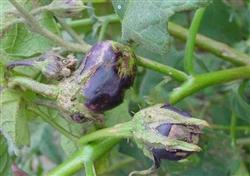 What causes flower and fruit drop in eggplants? What methods can prevent and control flower and fruit drop in eggplants? Experienced friends are also asked to share their guidance.
In eggplant production, flower and fruit drop is usually severe, restricting yield improvement. Zhongdiwang has compiled the causes and control methods for eggplant flower and fruit drop, listed below for netizens' reference.
Causes of flower and fruit drop in eggplants:
Cause 1.Unsuitable temperature. Eggplants require a relatively high temperature during the fruiting period. The optimum temperature during the fruiting period is between 25-30°C, and the nighttime temperature should be between 15-20°C. When the temperature is below 15°C or above 35°C, growth is slow and flower drop is severe, which in production manifests as fewer fruits in the early stage and in summer.
Cause 2.Poor flower development. When eggplant flowers develop well, the flowers are large in shape and deep in color, and at flowering the style is longer than or equal to the anthers, which favors pollination and fertilization and results in good fruit set. When development is poor, the style is shorter than the anthers, pollination is difficult to achieve, and most flowers drop.
Cause 3.Nutrient deficiency. When fertilizer and water are lacking, the plant grows thin and weak, nutrients are used to maintain growth, reproductive capacity is low, and fruit set is poor.
Cause 4.Topdressing not timely or at improper times is also unfavorable for fruit set. It generally manifests as topdressing too early, causing excessive vegetative growth and shedding of flowers and fruits. When topdressing is not timely, the plant declines prematurely and production capacity decreases, which is also unfavorable for fruit set.
Cause 5.Improper fertilization ratio causes the plant to become excessively vegetative or weak, so the ratio between vegetative growth and reproductive growth becomes unbalanced, and fruit set is also difficult.
Cause 6.Poor light. Photosynthetic capacity is low, flower quality is poor, and flowers easily drop. Eggplant is a light-loving crop and has strict requirements for light duration. When light is weak, plant growth and development slow down, fewer flowers form, and flower bud quality is poor.
Cause 7.Pests and diseases reduce the plant's photosynthetic capacity, which is unfavorable for the accumulation of photosynthetic products and also unfavorable for flower formation and fruit set. The main pests and diseases damaging eggplants include Verticillium wilt, aphids, red spider mites, and others.
Verticillium wilt generally does not occur at the seedling stage. It mostly occurs during the fruit-setting period, developing from the bottom upward or from one side to the whole plant. Leaves turn yellow at the leaf margins and between the veins, then develop to half a leaf or the whole leaf turning yellow. Photosynthetic capacity decreases, nutrient accumulation is reduced, and the fruit-setting rate decreases.
Aphids mostly gather in groups to cause damage, using needle-like piercing-sucking mouthparts to suck host sap, causing leaves to turn yellow, shrink, deform, and wither.
Red spider mites, whether adult mites or nymphs, can feed on plant sap, causing leaves to discolor or dry up, leading to reduced leaf photosynthetic capacity and unfavorable fruit set.
Control measures for flower and fruit drop in eggplants:
Method 1.Pay attention to promoting the growth of long-styled flowers and reducing the proportion of short-styled flowers to help increase the fruit-setting rate. The key measure to apply in production is to strengthen temperature management during the flowering and fruiting period. Within the temperature range for the fruiting period, keep the temperature slightly lower, controlling it at around 25°C during the day and between 15-20°C at night, so that flower bud differentiation is slightly delayed. This favors the formation of long-styled flowers and can effectively control the proportion of short-styled flowers.
In addition, in production, planting rotations should be arranged reasonably so that during the fruiting period the daytime temperature is above 25°C and the nighttime temperature is between 15-20°C. During summer high-temperature periods, attention should be paid to watering to lower the temperature. If continuous high-temperature weather occurs, a sunshade net can be used to build a shade shelter to lower the temperature and help increase the fruit-setting rate.
Method 2.Strengthen fertilizer and water management, keep plant growth moderate, and balance the relationship between vegetative growth and reproductive growth to help increase the fruit-setting rate. In particular, the first topdressing should be applied at the right time, preferably when the first layer of fruit is 3 cm in diameter. Apply topdressing at the appropriate time to prevent fertilization too early, which leads to flower and fruit drop. After that, apply topdressing once after each fruit harvest to supplement nutrients and prevent premature plant decline, which leads to reduced production capacity. In addition, attention should be paid to ensuring the fertilization ratio is appropriate to prevent unbalanced fertilization from causing an imbalance between vegetative growth and reproductive growth. In particular, attention should be paid to preventing excessive nitrogen application, which leads to excessive vegetative growth. Generally, in eggplant production, the suitable ratio of nitrogen, phosphorus, and potassium is 2:1:1.7. In production, observe plant growth and adopt the method of promoting weak plants and controlling vigorous ones to balance plant growth.
Method 3.Strengthen plant architecture adjustment to ensure good air and light penetration for the plant and favor fruit set. In production, attention should be paid to timely removal of old branches and old leaves. Because eggplants generally form flowers and set fruit at branching points, production should focus on promoting branching. Generally, the fruits set at the first, second, and third branching points are mostly effective flowers that can develop and set fruit well. After the fourth branching point, flower bud differentiation is poor, the fruit-setting rate is low, and most are ineffective flowers. Therefore, in production, attention should be paid to removing branches after the fourth branching point to control the amount of branches in the field, concentrate nutrient supply, and favor fruit set.
Method 4. Strengthen pest and disease control:In production, control of Verticillium wilt, red spider mites, and aphids should be strengthened. Before sowing, soak seeds for 1 hour in 50% carbendazim wettable powder at 0.2% of seed weight, or soak seeds in 55°C warm water for 15 minutes, then cool in cold water and germinate. In the planting field, broadcast carbendazim per mu to disinfect the soil. At the early stage of Verticillium wilt occurrence, drench the roots with 50% mixed sulfur suspension concentrate or 50% carbendazim wettable powder at 500 times dilution, applying 500 ml per plant.
After red spider mites occur, spray 1.8% Nongkeman emulsifiable concentrate at 2000 times dilution or 2.5% Tianwangxing at 3000 times dilution for control. At the early stage of aphid occurrence, spray 50% pirimicarb wettable powder at 2000-3000 times dilution, or 21% miexabi at 3000-4000 times dilution, or 10% imidacloprid at 3000 times dilution for control.
For plants damaged by pests and diseases, promptly spray the foliage with Yemianbao, Zhibaosu, 0.5% urea + 0.5% potassium dihydrogen phosphate for foliar topdressing, supplement nutrients, improve leaf photosynthetic capacity, increase the accumulation of photosynthetic products, and thereby increase the fruit-setting rate.
Method 5.Spray chemical substances to preserve flowers and fruits. 1-2 days before flowering, apply 30-40 ml/kg of 2,4-D to the calyx or fruit stalk. After the first layer of fruit has set, spray 120 mg/kg or 180 ml/kg, 200 ml/kg of sodium bisulfite, which can effectively increase matter accumulation and improve the fruit-setting rate.
Click to get more eggplant cultivation techniques
Click to get more vegetable cultivation techniques