How to grow autumn kidney beans? Planting methods and key technical points
How to grow autumn kidney beans? Here is a detailed introduction to the methods. To grow autumn kidney beans, you can refer to the following methods: 1. Variety selection. For autumn kidney beans, choose varieties that are heat-tolerant, disease-resistant, highly adaptable, and have a high pod-setting rate, such as the new high-yield, high-quality dwarf kidney bean varieties - Didouwang No. 1, Fengshou No. 1, Japanese Small White Seed, and other climbing kidney beans.
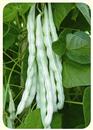 How to grow autumn kidney beans? Here is a detailed introduction to the methods.
To grow autumn kidney beans, you can refer to the following methods:
1. Variety selection
For autumn kidney beans, choose varieties that are heat-tolerant, disease-resistant, highly adaptable, and have a high pod-setting rate, such as the new high-yield, high-quality dwarf kidney bean varieties - Didouwang No. 1, Fengshou No. 1, Japanese Small White Seed, and other climbing kidney beans.
2. Timely sowing
For autumn kidney beans, it is important to sow at the appropriate time. If sown too early, the flowering period encounters high temperatures, making flowers and pods prone to dropping, and rust disease becomes severe; if sown too late, the growing period is short and yields are low. Generally, climbing kidney beans are best sown from late June to early July, while dwarf kidney beans have a shorter growing period and can be sown a few days later.
3. Reasonable close planting
In the early growth stage of autumn kidney beans, the temperature is relatively high, the main vine grows quickly, and the internodes are long; later, as the temperature gradually drops, fewer side branches form. When direct sowing, planting can be appropriately dense to increase the number of plants per unit area and raise yields. The row spacing is generally 60 cm, with a hole spacing of about 20 cm, sown in holes on raised ridges, with 2-4 seeds per hole.
4. Training vines onto trellises
In summer and autumn, temperatures are high and stems and leaves grow rapidly, so climbing kidney beans should be trellised in time to train the vines, which helps ventilate and cool the field.
5. Fertilizer and water management
The seedling stage of autumn kidney beans occurs during the high-temperature season, when evaporation is high and water demand is great, so they should be watered in time to retain moisture and lower the temperature. After rain, water once with clean water in time to lower the soil temperature, replenish oxygen in the soil, and be careful to drain away standing water. In the early flowering stage of autumn kidney beans, water should be appropriately controlled, and after pods set, the amount of watering can be increased. Along with watering, apply a phosphorus-potassium compound fertilizer as a top dressing, using about 10 kg per mu.
6. Pest and disease control
The main diseases are anthracnose and rust. Rust mainly occurs in the middle and late stages of kidney bean growth, mainly infecting leaves, and in severe cases stems, vines, petioles, and pods can all be affected. When leaves and stems are infected, small yellow-green spots with indistinct edges first appear, 0.5-2.5 mm in diameter. When pods are infected, raised blister-like spots form on the epidermis; after the epidermis ruptures, brown spore powder is released, namely telial piles and teliospores.
For anthracnose, spray alternately with 80% Carbendazim-Thiram wettable powder at 600 times dilution and 70% mancozeb wettable powder at 500 times dilution for control, once every 7 days, spraying 2-3 times consecutively; for rust, use 25% triadimefon wettable powder at 2000 times dilution and 50% carboxin emulsifiable concentrate at 800 times dilution for control. To control aphids and red spider mites, spray 40% dimethoate emulsifiable concentrate at 1500 times dilution.
7. Harvesting
After direct sowing in the open field, dwarf kidney beans begin harvesting tender pods after about 40 days, while climbing kidney beans begin harvesting tender pods after 40-60 days. Harvest promptly for market.
Click to get more kidney bean growing techniques
Click to get more grain and oil crop growing techniques