How to prevent and control sclerotinia rot in sunflower cultivation?
How to prevent and control sunflower sclerotinia rot? Please explain the causes and control methods. Sunflower sclerotinia rot can occur from the seedling stage until before the flower head forms. In the seedling stage, the disease mainly occurs at the base of the stem, forming water-soaked lesions around the stem; in humid conditions, white cottony mycelium grows, and after drying the diseased part shrinks and becomes thin, with black scler...
 How to prevent and control sunflower sclerotinia rot? Please explain the causes and control methods
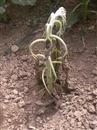
Sunflower sclerotinia rot can occur from the seedling stage until before the flower head forms. In the seedling stage, the disease mainly occurs at the base of the stem, forming water-soaked lesions around the stem; in humid conditions, white cottony mycelium grows, and after drying the diseased part shrinks and becomes thin, with black sclerotia forming inside the stem, and the plant withers and dies in a damping-off manner. In the adult plant stage, the disease also mainly affects the base of the stem, showing light brown moist lesions that gradually expand to the entire stem of the plant; in the later stage, the lesions dry up and turn grayish-white with brown edges, and the epidermis cracks. Because the vascular tissue inside the stem is damaged, affecting the transport of nutrients, the leaves begin to turn yellow from the bottom upward, wither and drop off, and finally the entire plant dies.
This disease is most severe after the flowering stage. When the flower head is affected, water-soaked lesions appear on its back, and the receptacle turns brown and softens. In rainy weather, the lesions expand rapidly and can penetrate the flower head, spreading from the back to the front, producing a kind of white mycelium, causing the flower head to rot so that the seeds cannot mature; in severe cases, it can cause the seed kernels to rot or the seeds to drop off on their own.
Control methods for sunflower sclerotinia rot:
I. Use physical control methods
When diseased plants are found, they must be pulled up and destroyed immediately to prevent spread. Sclerotia can survive in the soil for several years, and generally lose most of their viability after 3 years. Adopting crop rotation of sunflower with gramineous crops can reduce the incidence of the disease. The longer the rotation period, the better the effect; it cannot be rotated with crops such as legumes and crucifers.
II. Use chemical control methods
1. Use a 40% validamycin A 800-1000 times dilution, and spray the lower part of the plant and the back of the flower head 1-2 times before sunflower bud formation or during the full flowering stage.
2. Use a 50% thiophanate-methyl wettable powder 1000 times dilution, and spray 1-2 times before sunflower bud formation or during the full flowering stage.
3. Use a 50% procymidone 500-1000 times dilution, and spray during the seedling stage or flowering stage; the control effect can reach more than 80%.
4. When the temperature reaches 18-20°C, the water content of the surface soil at a depth of 0-5 cm is above 11%, and the apothecia begin to emerge, this is the best period for applying chemicals to the ground. For each hectare, 30-45 kg of 70% quintozene can be used, plus 150-225 kg of moist fine soil, mixed evenly and spread in the field; this can inhibit the germination of sclerotia and kill the newly germinated young germ tubes, with an inhibition rate of up to 91.3% and a control effect of more than 78.5%.
III. Drip irrigation control
1. Use drip irrigation to control water volume. Use drip irrigation under film to regulate the water supply, avoiding low-lying water accumulation and controlling field humidity, thereby reducing the occurrence of sunflower sclerotinia rot.
2. Use drip irrigation for fertigation. Drip irrigation under film improves the disease resistance of crops, and can also achieve timely and appropriate application, saving about 20% of fertilizer. Drip irrigation under film saves 50% of water, reduces deep leakage, and can relatively well prevent secondary soil salinization. Applying fertilizer and pesticides with water through drip irrigation not only saves chemical fertilizers and pesticides, but also reduces pollution of the soil and environment.
Click to get more sunflower cultivation techniques
Click to get more grain crop cultivation techniques