What pests and diseases need to be controlled when growing sunflowers?
What pests and diseases need to be controlled when growing sunflowers? Please give an introduction. The main insect pests of sunflowers are: wireworms, white grubs, cutworms, meadow moths, scarab beetles, and sunflower moths. For soil-dwelling pests, omethoate can be used to prepare poison bait for control. Meadow moths and scarab beetles damage stems and leaves, and sodium fluorosilicate can be sprayed. If they damage the seed kernels, it can be applied in the tube...
 What pests and diseases need to be controlled when growing sunflowers? Please give an introduction
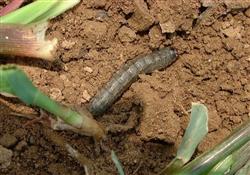
The main insect pests of sunflowers are: wireworms, white grubs, cutworms, meadow moths, scarab beetles, and sunflower moths. For soil-dwelling pests, omethoate can be used to prepare poison bait for control. Meadow moths and scarab beetles damage stems and leaves, and sodium fluorosilicate can be sprayed. If they damage the seed kernels, omethoate can be sprayed on the flower disc when the tubular florets wither.
The main pests and diseases of sunflowers are: rust, sclerotinia rot, and broomrape. Rust can cause damage from the seedling stage to maturity. Control methods generally include selecting disease-resistant varieties, crop rotation, increasing potassium fertilizer, or treating stems and leaves with a 25% carboxin 2000-fold solution. Sclerotinia rot, commonly known as rotten head, damages stems and flower discs, and can be controlled by seed dressing with "Leiduomei" or by treating stems and leaves. Broomrape is a flowering parasitic plant that parasitizes sunflower roots and absorbs sap. Damage is most severe in dry and hot conditions. The best way to eliminate broomrape is timely hoeing in the field.
1. Sunflower sclerotinia rot
The harm of sunflower sclerotinia rot:It can cause sunflower stem breakage, flower disc and seed kernel rot, and poses a great threat to sunflower production. The common types are root rot, stem rot, leaf rot, and flower rot, 4 types in total, among which root rot and flower rot cause severe damage.
Flower rot disease appears as follows: after the flower disc is damaged, water-soaked lesions appear on the back of the disc, later turning brown and rotting, with white mycelium growing and spreading between the achenes and the receptacle, forming black sclerotia. The flower disc rots and falls off, and the achenes cannot mature. On lightly damaged flower discs, the seeds produced are small, lusterless, bitter, and have peeling seed coats, and most seeds cannot germinate.
Control methods for sunflower sclerotinia rot:In the early stage of disc formation, agents such as procymidone, dimethachlon, vinclozolin, validamycin, or carbendazim can be selected for spray control, with emphasis on protecting the back of the flower disc. Because sunflower plants are tall in the later stage, spraying is relatively difficult, so the method of going into the field after rain to knock down stalks and reduce humidity can also be adopted.
2. Control methods for sunflower brown spot disease
1) Crop rotation: carry out crop rotation with gramineous crops for more than three years.
2) Strengthen cultivation management: sow early at the appropriate time, plant at a reasonable density, cultivate and weed in time, and increase fertilizer application to improve plant disease resistance. When water accumulates in the field, drain it promptly. For lower leaves that become diseased early, remove them manually and bury them deeply in a centralized manner to reduce sources of reinfection.
3) Chemical control: the agents used to control sunflower sclerotinia rot are all effective against this disease, with the same dosage. In order to control both diseases with one application, spray both the flower disc and the middle and lower leaves, for 1-2 applications.
3. Sunflower moth
The harm of sunflower moth adults and larvae:The peak occurrence period of adults is from late July to early August. At night from 8 p.m. to 9 p.m., adults gather in sunflower fields to feed and lay eggs. In early August, the eggs hatch into larvae, which feed on seeds, often biting the flower disc into many tunnels and spinning silk webs; when it rains, they often cause the flower disc to rot, reducing sunflower yield and quality.
Control measures for sunflower moth:During the full flowering stage of sunflowers and before the larvae bore into the seeds, spray trichlorfon, with a control effect of over 90%, but it is harmful to bees and causes many empty shells, so it should be used with caution, or use 5% chlorfluazuron (teflubenzuron) emulsifiable concentrate at 0.375-0.45 L per hectare, or 35% thiodan (endosulfan) emulsifiable concentrate at 1.5-2.5 L, mixed with 300-450 L of water, and spray the flower disc.
Biological agents can also be selected, such as BT emulsion diluted and sprayed on the flower disc. In areas with severe damage, focus on controlling adults and combine it with larval control. In late July and early August during the peak occurrence of adults, use dichlorvos fumigation or release dichlorvos smoke agents.
Click to get more sunflower cultivation techniques
Click to get more grain crop cultivation techniques