How to prevent lodging in barley? Tips for preventing lodging in barley cultivation
How to prevent lodging in barley? Everyone, please share methods for preventing it. When barley is planted at high density, with large nitrogen fertilizer application, and with high temperatures during the overwintering period, lodging can become severe, leading to reduced yield and quality and increased harvest difficulty. 1. Causes of barley lodging: 1...
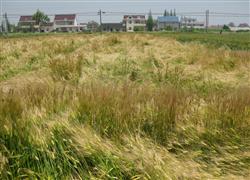 How to prevent lodging in barley? Everyone, please share methods for preventing it
When barley is planted at high density, with large nitrogen fertilizer application, and with high temperatures during the overwintering period, lodging can become severe, leading to reduced yield and quality and increased harvest difficulty.
1. Causes of barley lodging:
1. Barley has an underdeveloped and shallow root system, long stem nodes, thin stem walls, and soft stems; the flag leaf and second leaf from the top are large and curved downward, so rain easily makes the top heavy and the bottom light, causing lodging.
2. Excessive planting density and an overly large field population lead to poor ventilation and light penetration, thin and elongated stems, and soft stems without toughness, making lodging easy.
3. Excessive fertilizer application, especially excessive nitrogen fertilizer, causes excessive growth and an overly large field population, resulting in lodging.
4. High temperatures during the overwintering period accelerate the growth process of malting barley, cause rapid seedling growth, lead to an overly large field population, and advance entry into the jointing stage, making lodging easy later on.
2. Methods to prevent barley lodging:
Timely hoeing and compaction to promote roots and strengthen stems to prevent lodging.
Deep plowing to cut roots: generally, from the regreening stage to the upright stage of malting barley, deep plow 9-10 cm between rows, then compact the soil and water it, in order to inhibit excessive seedling growth and the occurrence of ineffective tillers.
Reasonable dense planting to promote robust individual growth; in production, promptly thin seedlings in fields where growth is excessive.
Scientific fertilization with combined application of nitrogen, phosphorus, and potassium. In fertilizer management, control the amount of nitrogen fertilizer and increase the application of phosphorus and potassium fertilizers to prevent lodging and improve malting barley quality. The general combined ratio of nitrogen, phosphorus, and potassium fertilizers is 1:1.5-2:0.5, and in actual production it should be reasonably adjusted according to the local soil fertility level.
For strong seedlings, vigorous seedlings, and wheat fields tending toward excessive growth, do not apply topdressing at the regreening stage and upright stage; instead, delay nitrogen fertilizer application until the jointing stage, in order to promote effective tiller growth, increase the earing rate, and promote large ears and large grains.
For fields with tall plants, high planting density, excessive plant growth, and thin weak stems, at the initial heading stage of barley (when 5% of plants have headed), spray 50 grams of Xishibao per mu mixed with 25 kg of water.
Click to get more barley cultivation techniques
Click to get more grain crop cultivation techniques