What causes empty and shriveled seeds in sunflowers?
Why do sunflowers produce empty and shriveled seeds when planted? Please explain the reasons. The main reasons sunflowers produce empty and shriveled seeds when planted can be summarized as follows: 1. Empty and shriveled seeds caused by drought: Sunflower is a crop with relatively strong drought resistance and adaptability. However, from flower disc formation to the end of flowering, its water demand is greatest, accounting for about 60% of the water requirement of the entire growth period....
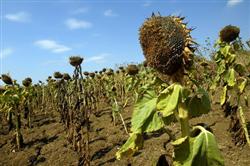 Why do sunflowers produce empty and shriveled seeds when planted? Please explain the reasons.
The main reasons sunflowers produce empty and shriveled seeds when planted can be summarized as follows:
1. Empty and shriveled seeds caused by drought:Sunflower is a crop with relatively strong drought resistance and adaptability. However, from flower disc formation to the end of flowering, its water demand is greatest, accounting for about 60% of the water requirement of the entire growth period. A water shortage during this period will increase the number of empty shells and shriveled seeds, causing severe yield reduction. In production, drought stress and the lack of supplemental irrigation from water sources are important factors leading to an increase in empty and shriveled seeds.
2. Empty and shriveled seeds caused by temperature:Sunflower has strong adaptability to temperature, liking warmth and tolerating drought, and it has relatively strong low-temperature tolerance from seed germination to the seedling stage. Seeds can germinate at 4°C, emerge at 5°C, and 8-10°C can meet the needs of normal emergence. The suitable temperature for germination is 31-37°C, and the maximum temperature is 38-44°C. In production, improper sowing dates and unsuitable temperatures after sowing hinder sunflower development, affecting the coordinated development of vegetative growth and reproductive growth.
3. Empty and shriveled seeds caused by light:Sunflower is a short-day crop, and its young leaves, leaves and flower disc all have strong phototropism. With sufficient sunlight, seedlings grow robustly, the middle growth stage can promote vigorous stem and leaf growth, normal flowering and pollination, and improve the seed-setting rate; the late growth stage can promote full and plump grains. In production, however, climatic factors affect light intensity, causing poor flowering and pollination and an increase in the empty and shriveled seed rate.
4. Empty and shriveled seeds caused by continuous cropping:Repeatedly planting sunflowers on the same plot leads to yield reduction due to damage from diseases, pests and weeds and an imbalance in the proportions of soil nutrients.
5. Empty and shriveled seeds caused by excessive density:Because sunflower varieties differ in type, density requirements vary greatly. Generally, edible-type varieties have tall plants and are suitable for sparse planting; oil-type varieties have short plants and are suitable for dense planting. In production, in pursuit of high yield, people blindly increase density, causing an unreasonable population structure, prominent conflicts over water, fertilizer and light, reduced light energy utilization, and an increase in empty and shriveled sunflower seeds, lower yield and lower quality.
6. Empty and shriveled seeds caused by fertilization reasons:Sunflower is a fertilizer-loving crop, and cultivation must include sufficient base fertilizer and timely topdressing. According to reports, producing every 100 kg of sunflower seeds requires 4.4-6.5 kg of pure nitrogen, 1.5-2.5 kg of pure phosphorus and 6-18 kg of pure potassium, 1-2 times more than cereal crops.
7. Empty and shriveled seeds caused by poor pollination:Sunflower is a cross-pollinated crop. There are 1000-3000 fertile florets in the flower disc. Generally, the seed-setting rate of self-pollination is extremely low, while the seed-setting rate of cross-pollination is relatively high. Moreover, the normal fertilization process depends on suitable temperature, light, atmospheric humidity, insect activity, wind and other conditions. The hot, dry weather in June-July can easily weaken the viability of pollen, affect the activity of bees and other insects, affect normal fertilization, and cause sunflowers to have a lower seed-setting rate and a higher empty and shriveled seed rate due to poor pollination.
Click to get more sunflower cultivation techniques
Click to get more grain crop cultivation techniques