Summer Management Methods and Key Technical Points for Achyranthes bidentata Cultivation
How to manage Achyranthes bidentata well in summer during cultivation? Please provide methods. For cultivating Achyranthes bidentata in summer, you can refer to the following methods for management and pest and disease control: Routine management: 1. Seedling preservation: After sowing, maintain a certain level of moisture in the field; seedlings will emerge in 7-10 days. If drought weather occurs, water promptly to preserve seedlings. 2. Thinning: When seedlings are 10...
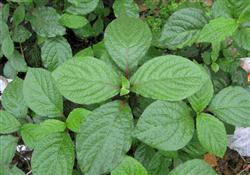 How to manage Achyranthes bidentata well in summer during cultivation? Please provide methods.
For cultivating Achyranthes bidentata in summer, you can refer to the following methods for management and pest and disease control:
Routine management:
1. Seedling preservation: After sowing, maintain a certain level of moisture in the field; seedlings will emerge in 7-10 days. If drought weather occurs, water promptly to preserve seedlings.
2. Thinning: When seedlings reach 10-15cm in height, thinning should be carried out, removing weak seedlings and keeping strong ones. Generally, keep 1-2 healthy seedlings at a spacing of about 15cm between plants. If there are gaps, promptly transplant seedlings on a cloudy day to fill them.
3. Topdressing: About 1 month after thinning, the first topdressing should be carried out together with intertillage and weeding. Apply 1500kg per mu of a mixed fertilizer of human and livestock manure water mixed with soil and miscellaneous fertilizer; the second topdressing should be in September-October during the vigorous growth period, applying 1000kg per mu of human and livestock manure water in furrows between rows, then cover with soil.
4. Flower stalk removal: When Achyranthes bidentata plants reach about 50cm in height, promptly remove the flower stalks growing from the top in batches, so that nutrients are concentrated in root growth.
5. Drainage and irrigation: During the seedling stage, water use should be controlled to encourage the main root to grow downward, which benefits root growth. After October, the main root no longer elongates, and irrigation can be increased to promote thick and strong main root development. During the rainy season and after heavy rain, pay attention to promptly clearing ditches for drainage.
Pest and disease control:
The main diseases are leaf spot and root rot. They mostly occur during the rainy season, when pathogens harm leaves and roots, causing plants to wither and die. Control methods:
1. Promptly clear ditches for drainage to reduce field humidity;
2. Spray diseased leaves with 1:1:100 Bordeaux mixture or 65% zineb 500-fold solution;
3. Drench holes with 50% carbendazim 1000-fold solution or 5% lime milk.
The main insect pest is nematode disease. When it occurs, it causes tumor-like galls on roots, which lose the function of transporting nutrients, affecting yield and quality. Control methods: Disinfect the soil before sowing; apply 3% isofenphos-methyl 5kg per mu, spread it on the ground, then turn it into the soil. For pests such as inchworms, red spiders, and stink bugs, spray with 90% trichlorfon 1000-fold solution or 40% dimethoate 1000-fold solution to kill them.
Click to get more Achyranthes bidentata cultivation techniques
Click to get more medicinal herb cultivation techniques