What are some practical ways to increase potato yield?
What methods can increase potato yield? We invite netizens with potato growing experience to help introduce how potatoes have anti-aging benefits. They are rich in B vitamins such as vitamin B1, B2, B6 and pantothenic acid, as well as a large amount of high-quality fiber, and also contain trace elements, amino acids, protein, fat and high-quality starc...
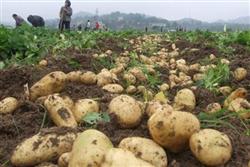 What methods can increase potato yield? We invite netizens with potato growing experience to help introduce
Potatoes have anti-aging benefits. They are rich in B vitamins such as vitamin B1, B2, B6 and pantothenic acid, as well as a large amount of high-quality fiber, and also contain trace elements, amino acids, protein, fat and high-quality starch and other nutrients. They are a common dish on the table, so Zhongdi Network has compiled several planting and management methods that can increase potato yield, listed in detail below for netizens' reference.
First, remove the tail buds of potatoes:
Tests have shown that after tail buds of potatoes grow into plants, the yield is only 1/3 of that from plants grown from terminal buds or side buds, so when cutting seed potatoes, the tail buds should be discarded and not used.
Second, use high-ridge cultivation for potatoes:
Using high-ridge cultivation with soil hilled up on both sides can increase the plow layer, and the soil around the roots and stems is loose. This not only helps the stems extend, but also raises soil temperature and meets the temperature needed for early root and stem development.
Third, carry out formula fertilization:
Because potatoes need a large amount of nutrients throughout their growth and development period, formula fertilization must be used to meet the crop's demand for nitrogen, phosphorus, potassium and trace elements during growth and development, especially during tuber enlargement, which can greatly increase yield.
Fourth, remove potato flower buds:
Because the usable part of the potato is the underground tuber, budding and flowering consume a large amount of nutrients. To obtain high yield, buds must be pinched off as soon as they are seen, in order to save nutrients and promote tuber growth.
Fifth, weed potatoes reasonably:
The fleshy roots of potatoes that can form tubers grow horizontally in the soil. Often, when weeding, the probing shovel cuts the extended fleshy roots, artificially causing yield reduction. Therefore, after the first pass, only hoe lightly without cutting, and combine covering weeds with soil and hand pulling to prevent weed overgrowth, which can effectively increase yield.
Sixth, supplement magnesium for potatoes:
Studies have shown that during the growth of potatoes, especially during tuber enlargement, if magnesium fertilizer is sufficient, not only is the yield high, but starch accumulation is also greater and quality is better. Therefore, when the plants are 45 cm tall, dissolve magnesium sulfate in water and apply it as a top dressing.
Seventh, apply foliar fertilizer to potatoes:
Under the condition of applying sufficient base fertilizer, starting from potato leaf expansion, spray the leaves once every 10 days with a mixture of 0.1% magnesium sulfate, 0.3% monopotassium phosphate and 1000-fold triacontanol, spraying 3 to 5 times in succession, which can significantly increase yield.
Eighth, select potato sprouts:
Before planting potatoes, sun the seed potatoes, keep only one strong sprout per plant, break off small seedlings to fill gaps and ensure a full stand, and other measures can further increase yield.
What are virus-free potatoes
Potato cutting method