How to earth up ginger? Detailed explanation of planting techniques
How should ginger be earthed up during planting? How many times does planting ginger require earthing up? Experienced netizens are asked to help explain. Earthing up ginger is an important measure that determines ginger yield and quality. Only with proper earthing up can ginger grow robustly and produce high yields. This is because the rhizome of ginger needs to grow in a dark, moist environment, and stops growing when exposed to light...
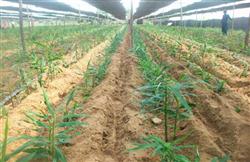 How should ginger be earthed up during planting? How many times does planting ginger require earthing up? Experienced netizens are asked to help explain
Earthing up ginger is an important measure that determines ginger yield and quality. Only with proper earthing up can ginger grow robustly and produce high yields. This is because the rhizome of ginger needs to grow in a dark, moist environment, and stops growing when exposed to light. Therefore, earthing up should be carried out as the ginger grows. If earthing up is not done in time, the rhizome of the ginger is exposed to the air, which seriously affects the quality and yield of the ginger. Generally, earthing up ginger 3 times is appropriate. Therefore, Zhongdi Network has compiled the methods and key points of earthing up ginger three times, listed in detail below for netizens' reference.
The first earthing up of ginger:
Begin when the rhizome of the ginger has 3~5 branches but has not yet emerged from the soil surface, and earth up about 2 cm thick. At this time, simply use small hoes or hooks and other farm tools to draw the ridge soil 4~5 cm wide on both sides of the ginger planting furrow (generally the ridge is 25~30 cm wide) down along the ridge edge into the planting furrow, then water. This can both prevent weed growth and help the ginger rhizome expand. The first earthing up must not be too thick, otherwise it easily affects soil aeration, causing the growth of new ginger sprouts to be hindered, the rhizome branches to decrease, and growth to slow down, affecting both yield and quality.
The second earthing up of ginger:
This earthing up should be carried out 20 days after the first earthing up, with a soil thickness of 2~3 cm. At this time, the ridge soil on both sides of the ginger planting furrow can be leveled into the ginger planting furrow with small hoes or hooks and other farm tools. This earthing up also must not be too thick, otherwise it easily makes the ginger rhizome difficult to grow and affects yield.
The third earthing up of ginger:
This earthing up is also called "large earthing up" and is carried out 15 days after the second earthing up, with a thickness of 7~8 cm being appropriate. At this time, all the soil on the original ridges needs to be earthed up into the planting furrows, so that the furrows where the ginger originally grew become ridges, and the original ridges become furrows. This earthing up is very important and is the key to determining the growth and development of the ginger rhizome. If the earthing up is shallow, the ginger pieces will be short and thick; if the earthing up is thick, the ginger pieces will be slender and long. Afterward, if any ginger sprouts are found to be exposed, they should also be earthed up in time to ensure the normal growth of the ginger rhizome.
Key points for earthing up ginger:
Each earthing up must be combined with fertilization and watering; fertilizer should be applied first, then earth up, then water. Before the first and second earthing up, 5 kg of compound fertilizer and 40 kg of bio-organic fertilizer can be applied per mu, applied in a band about 15 cm from the base of the plants; compound fertilizer must not be applied at the base of the plants, so as to avoid burning the seedlings. After application, earth up and water. The last earthing up should increase the amount of fertilizer, as this is precisely the period when the ginger rhizome grows and develops fastest and the fertilizer demand is large; 50 kg of compound fertilizer and 75 kg of bio-organic fertilizer can be applied per mu.
How to prevent premature aging of ginger
Can ginger that has sprouted still be eaten?