Causes and Control Methods of Ginger Bacterial Wilt
What causes ginger bacterial wilt? How do you control ginger bacterial wilt? We ask knowledgeable readers to help explain. Ginger bacterial wilt mainly damages the rhizome, and in most cases the disease first appears at the stem base near the ground and in the upper half of the underground rhizome. The diseased part is initially water-soaked, yellowish-brown, loses its luster, and softens and rots. Only the outer skin remains. The rotting...
 What causes ginger bacterial wilt? How do you control ginger bacterial wilt? We ask knowledgeable readers to help explain.
Ginger bacterial wilt mainly damages the rhizome, and in most cases the disease first appears at the stem base near the ground and in the upper half of the underground rhizome. The diseased part is initially water-soaked, yellowish-brown, loses its luster, and softens and rots. Only the outer skin remains. The rotting tissue turns into a white, sticky fluid and gives off a foul odor.
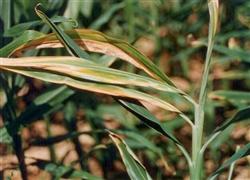
The affected parts of the ginger stem turn dark purple, then yellowish-brown, and the internal tissue turns brown and rots. During the rotting process, because the rhizome loses its ability to absorb water, the leaves at the upper end of the stem and the harvested leaves show yellowing symptoms. In severe cases, the leaves wilt and curl, the leaf color changes from yellow to withered brown, and finally the stems and leaves die.
After ginger bacterial wilt occurs, yields generally drop by 20%-30%, and in severe cases by 60%-80%, or even result in total crop failure. Therefore, Zhongdiwang has compiled the causes and control methods of ginger bacterial wilt, listed in detail below for readers' reference.
Causes of ginger bacterial wilt:
Cause 1: Infected ginger seed spreads the disease:
The main source of infection for this cause is the pathogen in diseased seed ginger; the soil, fertilizer and water do not carry the pathogen, and the seed ginger was saved from fields with scattered disease in the previous year. Soaking the seed in formalin for disinfection achieved a control effect of over 90%. Trials show that strictly controlling pathogen carryover in seed ginger is extremely important in new ginger areas.
Cause 2: Infected field plots suffer more severe disease:
Fields with a history of bacterial wilt and surrounding plots that also have a disease history, together with continuous ginger cropping, cause bacterial wilt to occur early and cause severe damage, with incidence rates all above 50%. If one plot had the disease the previous year, it also affected the occurrence of the disease in several surrounding plots that year.
In particular, in most severely affected plots, diseased remnants, diseased plants and rotting ginger tubers were thrown onto field ridges and into surrounding field ditches; with rainwater, the pathogen flowed into surrounding and lower-lying plots, causing severe disease recurrence the following year. It can thus be seen that pathogens and diseased residues in the soil of old ginger areas are one of the important sources of infection.
Cause 3: Disease spread by fertilizer and irrigation water:
Fertilizers contaminated by diseased residues, such as composted manure, unfermented compost, and undecomposed human and livestock manure and other organic fertilizers, can all lead to disease of varying degrees. When higher plots upstream have the disease, the diseased water flows directly into lower plots downstream and causes disease, and can also cause the disease to spread rapidly.
Investigations found that in diseased fields the pathogen can spread and expand with flowing water. Flood irrigation and sequential irrigation are among the important factors accelerating the epidemic, especially when there are scattered diseased plants in the field; after irrigation, blocks of diseased plants often appear, which is the result of the pathogen spreading with water and reinfecting.
Therefore, once a central diseased plant is found in a ginger field, shallow furrow irrigation or watering can should be used, and flood irrigation and sequential irrigation must be avoided. At the same time, use clean water free of the pathogen, such as well water or river water.
Cause 4: Influence of temperature:
Besides the pathogenicity of the pathogen, the main factors affecting the occurrence and epidemic of bacterial wilt are temperature, humidity and rainfall. The optimum temperature for the pathogen of bacterial wilt is 28-30°C. According to field observations: the disease occurs when the daily average temperature is above 20-30°C, and the optimum temperature for disease occurrence is 28-35°C.
Ginger bacterial wilt begins in late June to early July, peaks from late July to early September, and gradually stops in mid-to-late September. Because from July 20, 2003 to early September there was continuous high temperature for more than 40 days, and the temperature during the hot weather was all above 35°C, the disease spread quickly and the condition was severe.
The level of temperature can directly affect the speed of the disease epidemic; high temperature increases the pathogen's multiplication rate, shortens the incubation period, and increases the number of reinfections. Systematic surveys show that at 20-25°C it takes 15-18 days from disease onset to plant death, while above 35°C it takes 6-8 days from disease onset to death.
Cause 5: Influence of rainfall and humidity:
Rainfall directly affects the occurrence and epidemic speed of ginger bacterial wilt. Based on comprehensive analysis of meteorological data and actual field disease conditions: in our city from early May to late September 2003, the daily average temperature throughout the ginger growing period was above 20°C, basically meeting the temperature requirements of the disease. Thus, whether the disease occurs early or late mainly depends on the rainfall in June-July and the ratio of rainy to sunny days; the severity of the disease mainly depends on the rainfall in the early stage of disease occurrence and the temperature and humidity conditions in the peak stage.
Cause 6: Influence of ginger varieties:
Variety comparison trials show that the differences in resistance to bacterial wilt among varieties are not obvious. Seven varieties introduced from other regions - Shucheng Yellow Ginger, Jinzhai Ginger, Qianshan Monkey Ginger, Jiangxi Xingguo Ginger, Zhejiang Wuzhiyan Ginger, Shandong Large Ginger and Shandong Laiwu Small Ginger - were tested in the field for disease resistance together with Tongling White Ginger (as the control). The result was that varieties from all regions showed scattered disease with no obvious differences, and the disease resistance among varieties still needs further study.
Cause 7: Disease caused by other factors:
For example, when there are many underground pests in the field, they damage the rhizome and create insect wounds, which facilitate pathogen invasion and also tend to worsen the disease.
Ginger growers also have the habit of peeling old ginger, which increases mechanical wounds and facilitates pathogen infection. Survey results show that peeling old ginger led to disease onset 7-10 days earlier, with an incidence rate of 46.7%, while the incidence rate without peeling old ginger was 21.5%; plots where old ginger was peeled had more severe disease than plots where it was not peeled.
Control methods for bacterial wilt:
Method 1: Carry out crop rotation:
Crop rotation is one of the important measures to address soil-borne pathogens. Rotation must be at least 4 years, and a paddy-upland rotation works better. The previous crop should preferably be a new plot or rice field, and a plot with high, dry terrain and good drainage should be chosen. For slightly acidic soil, spread quicklime at 100-150 kg/667 sq m, or disinfect the soil with a 1000-fold dilution of 50% dexon.
Method 2: Select excellent ginger seed:
Establish a sterile seed-saving base, breed sterile ginger seed, harvest and store it separately, and store it in separate compartments; for stored ginger, use 40% formalin fumigation for disinfection. Select and keep disease-free ginger seed. In late September each year, conduct field observations and choose fields with absolutely no pathogen infection - including no diseased plants in surrounding and upstream higher-elevation plots - as seed-saving fields.
Method 3: Disinfect the ginger seed:
Before sowing ginger, disinfect the ginger seed with formalin solution; in pathogen-free plots, the control effect can be above 80%. Therefore, soak in a 100-fold dilution of 40% formalin for 30 min, then keep the seed covered for 3-6 h (hours).
Method 4: Water with clean water and apply uncontaminated fertilizer:
Irrigate with well water, mountain spring water or river water not contaminated by the pathogen, and do not use field ditch water that has flowed through diseased fields. After central diseased plants appear, eliminate flood irrigation and sequential irrigation, and use sprinkler irrigation, shallow furrow irrigation or splashing irrigation instead. Applying clean fertilizer is still an important disease-control measure; organic fertilizer used in ginger fields must be fully decomposed, and should be piled and composted at high temperature for sterilization before use. Bleaching powder can be used to disinfect fertilizer and water.
Increase the application of phosphorus and potassium fertilizer in the base fertilizer, which can enhance the resistance of ginger. In winter, deep-plow the soil for freezing and maturation, and measures such as burying raw material under mature soil all help reduce disease.
Method 5: Promptly remove diseased bacterial wilt plants:
Digging out central diseased plants can effectively control the spread of the disease and reduce damage. The key is to remove them promptly, thoroughly, completely and cleanly. When digging out central diseased plants, neighboring healthy plants should also be dug out, taken out of the field, and buried deep. At the same time, apply 5% bleaching powder or fresh quicklime into the diseased holes, or drench with a 3000-4000-fold dilution of 72% agricultural streptomycin sulfate.
Method 6: Use chemical control:
From late June to early July, when the hot, humid and rainy season begins, bacterial wilt enters its onset period and may break out into disaster. Go to the field often to observe; once scattered disease is found, apply chemicals to the whole field at the early stage of disease onset. Through field trials, the more ideal chemicals that can be selected include 50% Miejunwei, 70% Genfuling, 20% Subu, 50% dexon, 3% Kejunkang, 73% Keshade and other bacteria-killing, pollution-free vegetable chemicals for root drenching control.
Can sprouted ginger still be eaten?
How do you earth up ginger during cultivation?