What are the common diseases of mung bean? Read this article to understand
What diseases affect mung bean? What are the main harms? How to prevent and control them? We also invite knowledgeable readers to help explain. The main diseases of mung bean are viral disease, leaf spot disease and root rot. Zhongdiwang has compiled the harms and control methods of the above diseases, listed below for readers' reference. Harm of mung bean viral disease:...
 What diseases affect mung bean? What are the main harms? How to prevent and control them? We also invite knowledgeable readers to help explain
The main diseases of mung bean are viral disease, leaf spot disease and root rot. Zhongdiwang has compiled the harms and control methods of the above diseases, listed below for readers' reference.
Harm of mung bean viral disease:
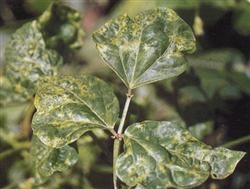
Viral disease occurs more often at the seedling stage. In the field it mainly shows as mosaic mottling, crinkled mosaic, and so on. In mild cases, plants show mosaic and mottling symptoms at the seedling stage. In severe cases, seedlings appear as crinkled, small-leaved, clustered mosaic plants, with deformed, crinkled leaves and raised leaf mesophyll forming blister-like spots, showing obvious crinkled mosaic with alternating yellow and green.
Causes of mung bean viral disease:
Cause one: Sowing diseased seeds causes direct onset of the disease.
Cause two: A large number of aphids in the mung bean field leads to severe disease.
Cause three: Wind and rain cause friction between plants, aggravating transmission.
Control methods for mung bean viral disease:
Method one: Select disease-free or disease-tolerant varieties, and control aphids.
Method two: At the early stage of the disease, choose 20% Bingdubi or 20% Bingdu A 500-fold solution for spray control, spraying once every 7-10 days, generally 2-3 sprays.
Harm of mung bean leaf spot disease:
When mung bean is affected, water-soaked small spots first appear on the leaves, then expand into round or irregular brown blighted spots, and later become large necrotic spots, causing drying or leaf drop.
Under conditions of 85%-90% relative humidity and a temperature of 25-28°C, the conidia of the leaf spot pathogen germinate fastest; when the temperature reaches 32°C, the mycelium grows most vigorously and the disease develops fastest. Generally, the disease is more severe during the mung bean flowering stage and after rain with high temperatures.
Control methods for mung bean leaf spot disease:
Method one: Select disease-resistant varieties, plant at a reasonable density, and ensure good ventilation in the field.
Method two: Strengthen field management, and pay attention to draining or dispersing soil moisture after heavy rain.
Method three: At the early stage of the disease, choose 70% mancozeb 500-fold solution, or 41% Texiao Shajun Wang 2000-fold solution, or 20% Landi 500-fold solution for spray control. Spray once every 7-10 days, for 2-3 consecutive sprays, which can effectively control the spread of the disease.
Harm of mung bean root rot:
At the early stage of mung bean root rot, the heart leaves turn yellow. If the root system is pulled out for observation, the lower part of the stem and the upper part of the main root can be seen to be dark brown and slightly sunken. When the stem is cut open, the vascular bundles turn dark brown. When most of the root has rotted, the plant withers and dies.
Control methods for mung bean root rot:
Method one: Choose disease-resistant varieties and carry out crop rotation with non-legume crops for more than 3 years.
Method two: Cultivate in time, drain after rain, and raise soil temperature.
Method three: At the early stage of the disease, choose 75% chlorothalonil 600-fold solution, or 15% Fulingling 600-fold solution, or 70% thiophanate-methyl 1000-fold solution for spraying, once every 7-10 days, for 2-3 consecutive sprays. If the above agents are used for irrigation, the effect is even better.
Click to get more mung bean cultivation techniques
Click to get more grain crop cultivation techniques