What preparatory work is there before sowing cotton?
What preparation should be done before sowing cotton? Can any netizen help explain? Zhongdi Network has put together the preparatory work needed before sowing cotton, listed in detail below for netizens' reference. Preparation 1: Store up good subsoil moisture in the cotton field: Because winter and spring precipitation is relatively low and the climate is dry, the soil moisture condition of cotton fields ready for sowing is generally relatively...
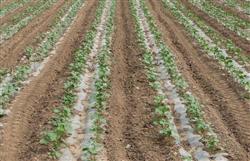 What preparation should be done before sowing cotton? Can any netizen help explain?
Zhongdi Network has put together the preparatory work needed before sowing cotton, listed in detail below for netizens' reference.
Preparation 1: Store up good subsoil moisture in the cotton field:
Because winter and spring precipitation is relatively low and the climate is dry, the soil moisture condition of cotton fields ready for sowing is generally poor. Therefore, before sowing cotton, soil moisture should be built up at the right time, attention should be paid to preserving moisture, and it is necessary to ensure sufficient subsoil moisture and good surface moisture, with the top loose and the bottom firm. For cotton fields that have already been irrigated in winter and have good moisture, harrow and level the soil to preserve moisture or cover with plastic film to reduce water evaporation; for cotton fields with poor moisture, irrigate promptly to expand the area with built-up soil moisture.
If watering is done 20 days before sowing cotton, sprinkler irrigation can be used, watering thoroughly, then plowing and harrowing to preserve moisture until sowing; if watering is done close to sowing, water lightly, and after the moisture connects from top to bottom, harrow and level promptly, then sow shortly after.
Preparation 2: Preparation of cotton seed:
According to recent years' production practice and trial results, ordinary cotton fields are generally best planted with excellent high-yield varieties. The main suitable varieties include Kaimian No. 5, Zhongmiansuo No. 23, Luyanmian 21, etc. In areas where Fusarium and Verticillium wilt generally occur, especially heavily diseased fields, it is best to plant Zhongzhimian No. 2.
For commercial cotton seed, high-quality seed supplied by formal seed departments should be selected, with standardized labeling, good purity, high germination rate, and guaranteed quality. For coated seed, the seed purity is required to be no less than 95%, the cleanliness no less than 99%, and the germination rate above 85%. If self-retained fuzzy seed is used, it should be sun-dried before sowing to promote post-ripening of the cottonseed, increase the germination rate, and enhance germination vigor. After sun-drying, carefully carry out seed selection by grain, keeping plump, strong, and uniformly sized seeds.
Before sowing, warm-water seed soaking and chemical seed dressing should also be carried out. For chemical seed dressing, it is advocated to mix an insecticide and a fungicide for dressing; the method is to first dress with the insecticide, then with the fungicide. For the insecticide, 70% Gaoxiao is better, using 10 grams of the product, mixed with 1.5-2 kg of water, to soak 2 kg of cotton seed. For the fungicide, 50% Dexon or 70% Thiophanate-methyl or 50% Carbendazim can be selected, with the dosage being 0.3% of the seed amount.
Preparation 3: Apply sufficient base fertilizer to the cotton field:
Fertilizing before sowing is very important for promoting early emergence and normal development of cotton seedlings. A scientific formula should be used according to the principle of increasing organic fertilizer, stabilizing nitrogen and phosphorus, and supplementing potassium and microelements (boron, zinc), with balanced fertilization. Generally, apply 2500-3000 kg of high-quality farmyard manure or 50-75 kg of cake fertilizer, 10-15 kg of urea, 20-25 kg of diammonium phosphate, and 25 kg of silicon-calcium-magnesium-potassium fertilizer per mu.
Preparation 4: Leveling of the cotton field:
In combination with fertilization, further prepare the land well. The quality requirements for land preparation are top loose and bottom firm, reaching the standards of neat (planned neatly, with no blank strips left at the field edges or in the middle during mechanical operations such as plowing and harrowing), level (after plowing, harrowing, manual leveling, and other operations, the ground surface is flat, with no ridges or obvious pits on the soil surface), loose (the soil plow layer is loose, top loose and bottom firm, the soil is finely broken, and there are no clods with a diameter exceeding 2 cm on the surface), moisture (plowing should be done when the soil moisture is suitable; at this time the soil is loose and land preparation is easy, and at the same time it can keep appropriate water content in the soil at sowing, which is beneficial to seed germination and drought prevention and moisture preservation), and clean (no crop stubble, weeds, or waste plastic film in the field).
Land preparation of the cotton field is best completed 3-5 days before sowing.
Click to get more cotton planting techniques
Click to get more grain crop planting techniques