What is the effect of spraying foliar fertilizer on cotton in the late stage?
What is the effect of spraying foliar fertilizer on cotton in the late stage? How should foliar fertilizer be sprayed on cotton? We ask experienced netizens to help explain. Zhongdi Web has compiled the effects and operating methods of spraying foliar fertilizer during cotton cultivation, listed in detail below for netizens' reference. 1. Spraying nitrogen fertilizer on cotton can prevent premature aging: in the late stage of cotton...
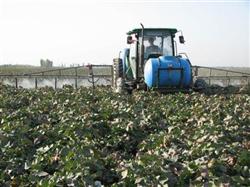 What is the effect of spraying foliar fertilizer on cotton in the late stage? How should foliar fertilizer be sprayed on cotton? We ask experienced netizens to help explain.
Zhongdi Web has compiled the effects and operating methods of spraying foliar fertilizer during cotton cultivation, listed in detail below for netizens' reference.
1. Spraying nitrogen fertilizer on cotton can prevent premature aging:
In the late stage of cotton, spraying nitrogen nutrition on the leaves can keep cotton leaves green, enhance photosynthesis, and prevent nitrogen loss and premature aging. When nitrogen fertilizer is mixed with "regulator 802", the effect of enhancing cotton's late growth vigor is more obvious, and the yield increase effect is better. From late August to early September, spray a mixed solution of 100-fold urea solution and 4000-fold "regulator 802" solution, spraying once every 5 days--7 days, for 2--3 consecutive sprays, with 75 kg of fertilizer solution per mu each time.
2. Spraying potassium fertilizer on cotton can prevent disease:
When cotton lacks potassium, red leaf stem blight (wilt disease) is likely to occur during the flowering and boll-setting stage. Cotton leaves turn red or yellow, become thick, shrunken, and brittle, and finally fall off, causing premature aging of the cotton plant and serious yield reduction. While preventing drought, spraying potassium on the leaves can reduce or inhibit the disease. Use a 0.3% potassium dihydrogen phosphate solution, 2% potassium nitrate solution, 1% potassium chloride solution, or 5% wood ash soak (24 hours) filtrate for foliar spraying, spraying once every 7 days--10 days, for 2--3 consecutive sprays.
For cotton fields where red leaf stem blight caused by potassium deficiency has already occurred, spray a 3% potassium nitrate solution on the leaves in time, or a mixed solution of 0.3% potassium dihydrogen phosphate and 100-fold urea, spraying once about every 5 days, for 3 consecutive sprays, which can make the cotton leaves turn green quickly. Spray 75 kg of fertilizer solution per mu each time, and be careful to wet the whole plant.
3. Spraying phosphorus fertilizer on cotton can promote early maturity:
Spraying phosphorus fertilizer on cotton in the late stage can make the seeds plump, increase boll weight, and promote earlier boll opening. Generally starting from late August, use 75 kg per mu each time of 2% superphosphate soak (24 hours, stirring frequently) filtrate, or combine it with potassium supplementation by spraying a 0.3% potassium dihydrogen phosphate solution.
4. Spraying boron fertilizer on cotton can help cotton bolls enlarge:
When cotton lacks boron, side branches increase, fruit branch node positions are high, leaves become thick, and buds and flowers easily fall off, resulting in "buds but no flowers" or "flowers but no fruit", with few flowers, sparse bolls, and low yield.
Spraying boron fertilizer in time can reduce flower and boll shedding and help set more bolls and larger bolls. Generally starting from boll setting, spray once every 15 days, for 2--3 consecutive sprays, with 75 kg of 0.2% borax solution per mu each time. Adding 0.5% urea when spraying boron gives an even better effect. First dissolve the borax with a small amount of warm water, then dilute with cool water before spraying.
5. Spraying zinc fertilizer on cotton can effectively improve quality:
Cotton is a crop sensitive to zinc. In recent years, with the increased application of nitrogen and phosphorus fertilizers in cotton fields, the ratio of major elements to the trace element zinc has become imbalanced. Available zinc in the soil cannot be replenished in time, affecting the growth and development of cotton and limiting the improvement of cotton yield and quality.
Increasing zinc fertilizer application is beneficial to chlorophyll synthesis and growth, can promote cotton's absorption of nutrients, coordinate nutrient transport, and enhance photosynthesis. Spraying zinc fertilizer on the leaves during the flowering and boll-setting stage of cotton can increase outer bolls, extend the life of functional leaves, increase lint percentage, raise yield, and improve quality. Spray a 0.2% zinc sulfate solution on the leaves, generally for 2--3 sprays, with 75 kg of fertilizer solution per mu each time.
Matters needing attention when spraying foliar fertilizer on cotton:
Foliar fertilizer should be sprayed before 9 a.m. or after 5 p.m. on sunny days, to extend the moist time of the fertilizer solution on the leaves and help leaf absorption. Spray finely and evenly, with special attention to spraying the underside of cotton leaves, to promote absorption and enhance fertilizer efficiency. To save steps and give play to the combined effects of various nutrient elements, the above fertilizers can be mixed according to specific conditions, and can also be mixed with pesticides for pest and disease control, so that one spray has multiple effects. Foliar fertilizer should not be mixed with alkaline pesticides, wood ash should not be mixed with other alkaline-sensitive foliar fertilizers, and phosphorus fertilizer should not be mixed with zinc fertilizer.
Click to get more cotton cultivation techniques
Click to get more grain crop cultivation techniques