How to grow Angelica dahurica for high yield? Detailed explanation of key planting techniques
How can Angelica dahurica be planted for high yield? What pests and diseases need to be controlled? We ask knowledgeable netizens to help explain. Zhongdiwang has compiled the planting methods for Angelica dahurica and the control of common pests and diseases, listed in detail below for netizens' reference. 1. Site selection and land preparation for Angelica dahurica: Angelica dahurica is a deep-rooted plant, so...
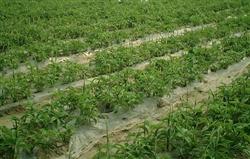 How can Angelica dahurica be planted for high yield? What pests and diseases need to be controlled? We ask knowledgeable netizens to help explain
Zhongdiwang has compiled the planting methods for Angelica dahurica and the control of common pests and diseases, listed in detail below for netizens' reference.
1. Site selection and land preparation for Angelica dahurica:
Angelica dahurica is a deep-rooted plant, so it is best to choose deep soil with medium fertility and good drainage, sandy loam for planting. For every 1000 sq m, apply 4000 kg to 5000 kg of farmyard manure, together with 80 kg of superphosphate, deep plow 30 cm, rake fine and level, and make flat beds 1.5 m wide.
2. Propagation methods for Angelica dahurica:
If propagated by seed, direct sowing is mostly used. For autumn sowing, generally sow in September to October. For drilling, open shallow furrows at a row spacing of 35 cm and sow; for hole sowing, open holes at a hole spacing of (15-20) cm X 30 cm and sow. After sowing, cover with thin soil and press firm. Seedlings can emerge 15-20 days after sowing. Seed amount per 1000 sq m: about 2 kg for drilling; about 1 kg for hole sowing.
If before sowing the seeds are sprayed with a 2% potassium dihydrogen phosphate aqueous solution, stirred, and left to moisten for about 8 hours before sowing, emergence can be earlier and the emergence rate greatly increased.
3. Daily field management of Angelica dahurica:
Management method 1, thinning and final thinning of Angelica dahurica:
In the following spring, when the seedlings are about 5 cm tall, begin thinning, generally carried out 2 times. When the seedlings are 15 cm tall, do final thinning. For drilling, thin to a plant spacing of 12 cm to 15 cm; for hole sowing, keep 1-3 strong seedlings per hole. At the same time, remove excessively large seedlings to prevent early bolting.
Management method 2, intertillage and weeding:
Each time thinning is done, it should be combined with intertillage and weeding. The first time, only loosen the surface soil shallowly, and gradually deepen afterward. After the plants close the rows, stop intertillage.
Management method 3, topdressing methods for Angelica dahurica:
Angelica dahurica is generally topdressed 3-4 times. This is often done after thinning, after final thinning, and before row closure. The fertilizers are mainly decomposed human manure and urine, cake fertilizer, etc., first light and then concentrated. After the last topdressing before row closure, earth up in time to prevent lodging.
Management method 4, water management for Angelica dahurica:
After sowing, if the soil is dry, water once. Afterward, keep the bed surface moist before the seedlings emerge to facilitate emergence. After final thinning, water less and intertill more to promote downward root growth. Pay attention to drainage after rain.
4. Control of common pests and diseases of Angelica dahurica:
1. Spot blight: mainly damages leaves. Control methods: remove diseased and residual tissues and burn them centrally; in the early stage of the disease, spray with 1:1:100 Bordeaux mixture or polyoxin 100-200 units.
2. Yellow swallowtail butterfly: the larvae damage leaves. In addition, aphids, red spiders, and root-knot nematode disease also damage the aboveground parts and roots, so timely choose the appropriate pesticides for control.
Click to get more Angelica dahurica planting techniques
Click to get more medicinal herb planting techniques