How to prevent and control pests and diseases on honeysuckle? A detailed guide to practical methods
What pests and diseases affect honeysuckle? How do you prevent and control pests and diseases on honeysuckle? We ask knowledgeable readers to help explain. Honeysuckle is one of China's major exported medicinal herbs, and domestic demand is also increasing year by year, but honeysuckle often suffers reduced yields due to brown spot disease, aphids, and the coffee tiger longhorn beetle. The following is compiled by Zhongdiwang...
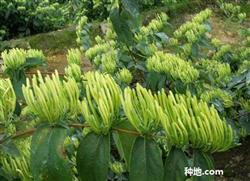 What pests and diseases affect honeysuckle? How do you prevent and control pests and diseases on honeysuckle? We ask knowledgeable readers to help explain
Honeysuckle is one of China's major exported medicinal herbs, and domestic demand is also increasing year by year, but honeysuckle often suffers reduced yields due to brown spot disease, aphids, and the coffee tiger longhorn beetle. The following prevention and control methods for the above pests and diseases are compiled and listed by Zhongdiwang for readers' reference.
I. Damage caused by honeysuckle brown spot disease:The pathogen is a deuteromycete fungus. It damages leaves and is more severe in summer. When the disease occurs, irregular dotted brown spots appear on the leaves, brown in the center, dark brown at the edges, and covered with dark brown mold-like growth. In severe cases, the entire leaf turns yellow, withers, and falls off.
Prevention and control methods:1. After harvesting honeysuckle, clean the garden, remove diseased and dead branches and plants, and burn them in a centralized manner.
2. Spray with 65% zineb at 600 times dilution or with Bordeaux mixture at 1:1.5:300 once every 7 to 10 days, for 2 to 3 consecutive sprays.
II. Damage caused by aphids to honeysuckle: Aphids generally appear in early to mid-April, and reproduce fastest at 15°C to 25°C. They mainly pierce and suck the plant's sap, causing leaves to turn yellow, curl, and shrivel; in severe cases, they can cause total crop loss.
Prevention and control methods:1. Clear weeds in and around the honeysuckle planting area to prevent the migration of aphids from outside.
2. Before honeysuckle sprouts, spray once with 0.2 degree Baumé lime sulfur mixture, then spray once each at Qingming, Guyu, and Lixia. This can completely control aphids and also control several other pests and diseases. 3. From late March to early April, when the leaves unfold and aphids begin to appear, spray with 40% omethoate at 1500 to 2000 times dilution, once every 5 to 7 days, for several consecutive treatments. Do not use chemicals during the flower-picking period; instead, spray with 1 kg of laundry detergent mixed with 10 kg of water or 1 kg of alcohol mixed with 100 kg of water.
III. Damage caused by the coffee tiger longhorn beetle to honeysuckle: The coffee tiger longhorn beetle generally lays eggs on young stems in mid to late May, and the larvae bore into and damage the woody stems, causing the entire plant to die.
Prevention and control methods:1. During the egg-laying period of the coffee tiger longhorn beetle, spray with 50% parathion emulsifiable concentrate at 600 to 1000 times dilution or 50% phosphamidon emulsifiable concentrate at 1500 times dilution, once every 7 to 10 days, for several consecutive sprays;
2. Cut off about 20 cm of young stems damaged by longhorn beetle larvae and remove dead plants, then burn them in a centralized manner.
Honeysuckle cultivation techniques video
Honeysuckle winter pruning methods