The Correct Methods for Watering and Fertilizing Garlic
How should garlic be watered and fertilized? What should be noted? We ask experienced readers to help explain. Because garlic has a long growing period and has relatively low water requirements but a high fertilizer requirement, Zhongdi Network has compiled the methods for watering and fertilizing during garlic cultivation. These are listed in detail below for readers' reference...
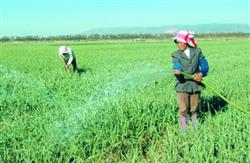 How should garlic be watered and fertilized? What should be noted? We ask experienced readers to help explain.
Because garlic has a long growing period and has relatively low water requirements but a high fertilizer requirement, Zhongdi Network has compiled the methods for watering and fertilizing during garlic cultivation. These are listed in detail below for readers' reference.
I. Watering Garlic:
Although garlic leaves are fairly drought-tolerant, the root system is shallow and has weak absorption capacity, so garlic requires relatively high soil moisture, and different growth stages have different requirements for soil moisture.
1. After garlic is sown, maintain relatively high soil moisture. If it is too dry, water in advance so as to sow at suitable soil moisture. Generally do not irrigate before winter; promote root growth and restrain seedling growth.
2. After applying the greening fertilizer to garlic the following year, irrigate for the first time. This is the key to increasing the yield of garlic scapes and garlic bulbs.
3. During the garlic seedling stage, keep the soil alternately dry and moist, which can promote root development and growth.
4. After the garlic seedling stage, the requirement for soil moisture gradually increases. During the scape-elongation stage and bulb-swelling stage, the requirement for soil moisture reaches its peak. This is what the farming proverb "If you want to eat garlic, mix it in mud" means.
5. In the late stage of garlic bulb development, the water requirement decreases rapidly. Watering should be controlled to promote bulb maturity and improve the storability of the garlic bulbs.
II. Fertilizing Garlic:
Garlic can be fertilized according to its growth and development and its fertilizer requirement and absorption characteristics. The fertilization principle for garlic should be mainly organic fertilizer with chemical fertilizer as a supplement, and mainly base fertilizer with topdressing as a supplement, so as to maximize the satisfaction of garlic's nutrient element needs during growth and development. Garlic fertilization is generally divided into two types: base fertilizer and topdressing. A detailed introduction follows.
1. Base fertilizer for garlic:
The base fertilizer for garlic is best based mainly on organic fertilizer. Common organic fertilizers include barnyard manure, chicken manure, duck manure, stable manure, compost, cake fertilizer, and so on. Whether the base fertilizer application rate is sufficient directly affects the marketability of the garlic bulbs and the overwintering performance of the plants, so sufficient base fertilizer should be applied in production.
The application rate of base fertilizer should be determined comprehensively by considering multiple factors such as the target yield of garlic and the fertilizer requirement per unit area for yield. Where conditions permit, cake fertilizer such as cottonseed cake may be applied at 50-100 kg. The chemical fertilizers usually applied together with organic fertilizer as base fertilizer include superphosphate, nitrogen-phosphorus compound fertilizer, nitrogen-potassium compound fertilizer, or ternary compound fertilizer, etc. Apply about 75 kg of standard nitrogen fertilizer per 667 sq m. Two-thirds of the nitrogen chemical fertilizer should be applied as base fertilizer, and one-third as topdressing. The vast majority of phosphorus and potassium fertilizers should be applied as base fertilizer. For phosphorus fertilizer, use about 30 kg of superphosphate. When phosphorus fertilizer is applied as base fertilizer, whether it is superphosphate or calcium magnesium phosphate, it must be mixed with organic fertilizer and shallowly plowed into the plow layer. For the application amount of potassium fertilizer, generally apply about 30 kg of potassium sulfate per 667 sq m.
For base fertilizer application, generally half of the organic fertilizer is applied before plowing, evenly broadcast on the soil surface, and turned into the ground in combination with plowing; the other half is applied in concentrated furrows at sowing, mixed with soil, and then sowing is carried out. If ammonium bicarbonate or organic fertilizer is used as base fertilizer, it should be buried in furrows or applied with irrigation water, and after application it should be mixed evenly with soil in combination with land preparation. For phosphorus fertilizer, it is best to apply it shallowly, in a concentrated way, or in layers. One portion may be applied before plowing, and another portion may be applied when planting garlic after plowing, or shallowly applied 6-10 cm underground after land preparation, so as to facilitate absorption and utilization by seedlings, cultivate strong seedlings, and increase the seasonal utilization rate of phosphorus fertilizer. Potassium fertilizer may be broadcast as the field is plowed and turned into the ground.
2. Topdressing for garlic:
From the garlic seedling stage to each growth stage before bulb harvest, fertilization carried out in stages according to its growth and development and fertilizer requirement and absorption characteristics is topdressing.
Garlic topdressing is generally based mainly on nitrogen fertilizer. When needed, nitrogen, phosphorus, and potassium fertilizers and various elements should be applied in combination, which is beneficial to the normal growth and development of garlic, helps promote the absorption and utilization of nutrients, and improves quality. Nitrogen fertilizer has a significant yield-increasing effect on garlic.
When topdressing garlic with nitrogen fertilizer, attention should be paid to possible adverse effects. In addition, according to experiments, the effect of nitrogen topdressing is closely related to the size of the seed garlic cloves. The smaller the seed garlic cloves, the greater the yield increase from nitrogen application. Therefore, when using small-clove garlic as seed garlic, the nitrogen fertilizer application rate should be appropriately increased.
Topdressing garlic with phosphorus and potassium fertilizers can improve the balanced absorption and utilization of nitrogen fertilizer, promote garlic growth and development, and increase the yield of garlic scapes and garlic bulbs. In the later stage, garlic not only needs nitrogen topdressing but also needs phosphorus and potassium topdressing. Nitrogen, phosphorus, and potassium fertilizers should be applied in combination at a ratio of 2:1:1, or compound fertilizer should be applied. This is beneficial for preventing premature aging of garlic leaves in the later stage and promoting the transport of leaf nutrients to the bulbs, and can significantly increase the yield of garlic scapes and garlic bulbs.
The topdressing periods can generally be divided into pre-winter topdressing, greening-stage topdressing, scape-elongation-stage topdressing, and bulb-growth-stage topdressing.
Topdressing garlic before overwintering:Pre-winter topdressing is mainly to promote normal germination and emergence of garlic and cultivate strong seedlings. The appearance of strong seedlings before winter is: 5 leaves, plant height about 25 cm, fresh weight per plant about 10 g, uniform root system, about 30 roots. For autumn-sown garlic, generally 7-9 days after sowing, the seedlings can emerge completely. To improve the safe overwintering performance of garlic, apply seedling-promoting fertilizer. Seedling-promoting fertilizer generally accounts for about 25% of the total topdressing amount. For varieties prone to outer-layer cross growth, seedling-promoting fertilizer should be applied less or not at all.
When garlic enters the overwintering period, overwintering fertilizer, namely la fertilizer, may be applied. La fertilizer commonly uses compost, soil-and-miscellaneous manure, or horse manure, etc., spread as a cover, to thicken the protective layer for the root system during overwintering, improve the overwintering performance of seedlings, and ensure safe overwintering. At the same time, it also helps early greening and rapid growth the following year.
Topdressing garlic at the greening stage:When the average daily temperature in spring reaches 7°C, garlic seedlings begin to turn green and grow. At this time, remove the covering in time, expose the seedlings for 2-3 days, and before the plants begin to grow around the Spring Equinox, apply 1 greening fertilizer. Generally, apply 1000-1500 kg of organic fertilizer per 667 sq m, or 10-15 kg of standard nitrogen chemical fertilizer. If seedling-promoting fertilizer and overwintering fertilizer have already been applied, topdressing may be omitted at the greening stage, or the greening fertilizer may be postponed and applied together with the scape-promoting fertilizer.
Topdressing garlic during the scape-elongation stage:Topdressing during the garlic scape-elongation stage refers to topdressing from the beginning of garlic clove differentiation to before scape removal. This period is when garlic scapes and garlic bulbs grow simultaneously. In Shandong, it is generally late March to early April, that is, before Qingming, when garlic enters the scape and clove differentiation stage, and May 20, that is, around Xiaoman, when it enters the scape-emergence stage.
Because the elongation of garlic scapes overlaps with the early growth of garlic bulbs, it is in a period of vigorous growth. At this time, all leaves have grown out, the aboveground growth of the plant reaches its maximum, the yield of underground garlic bulbs has formed nearly 50%, the root system actively expands laterally, and growth and absorption gradually reach their peak, so the topdressing amount should account for about 40% of the total topdressing amount. Increase the application of compound fertilizer and potassium fertilizer to promote garlic scape emergence and bulb swelling.
Topdressing garlic during the bulb growth stage:Because before garlic scapes are harvested, garlic bulb growth is mainly increasing in volume, and after garlic scapes are harvested, garlic bulb growth is mainly increasing in weight, with an average daily weight increase of about 1 g and a daily diameter increase of about 0.06 cm. During the garlic bulb growth stage, quick-acting nitrogen fertilizer should be the main fertilizer, combined with phosphorus and potassium fertilizers. The amount of this topdressing should account for 25%-30% of the total topdressing amount.
Topdressing methods for garlic:Generally, band application, application with irrigation water, or buried application is used. When applying soil-and-miscellaneous manure, open furrows along the rows and scatter it in strips; when applying chemical fertilizer, generally open furrows and broadcast it or apply it in holes, then cover with soil and water, or apply it with irrigation water, or broadcast it during rain. Attention should be paid to strengthening intertillage and weeding, keeping the soil loose and preserving soil moisture, so as to speed up the root system's absorption and utilization of nutrients.
III. Foliar fertilization of garlic:
Because foliar fertilization allows nutrients to enter the plant body from the leaves and directly participate in the plant's metabolic processes and the synthesis of organic matter, the effect of foliar fertilization responds more quickly than soil fertilization. After experiments applying Suanzhuangsu to garlic, the enzyme activity in the roots, stems, and leaves of garlic seedlings increased by 15%-31%, and yield increased by 12%-14%.
To spray Suanzhuangsu on garlic leaves, dilute it with clean water. Each time use about 125-150 g of stock solution per 667 sq m, add 50 L of water. The spraying periods can be once each during the garlic growth period (March), the scape differentiation stage, the bulb growth stage, and 2-3 days after garlic scape harvest. When spraying, both the front and back of the leaves should be sprayed. It is best to spray after 4 p.m., and the weather should be clear when spraying. If it rains within 24 h after spraying, then respray.
Reasons for Garlic Bulbs Loosening
Management Methods for Garlic in the Late Planting Stage