How should ginger be planted so it grows well?
How is ginger best planted? What should be noted during the ginger growing process? We also ask experienced readers to share how ginger is used for seasoning in soups, meats, poultry, seafood, vegetables, rice, pasta, tofu, braising liquid, sauces, fruit, cakes and drinks; ginger can also be made into jam and candy...
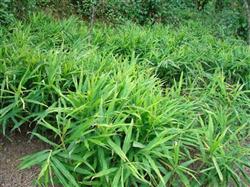 How is ginger best planted? GinWhat should be noted during the ginger growing process? We also ask experienced readers to share
Ginger is used for seasoning in soups, meats, poultry, seafood, vegetables, rice, pasta, tofu, braising liquid, sauces, fruit, cakes and drinks, and ginger can also be made into jam and candy, so the market demand for ginger is very large. Therefore, Zhongdi Network has compiled the ginger growing method, listed in detail below for readers to refer to.
Step 1: Preparing the ginger planting site:
Ginger is planted on the bed surface in two furrows 180 cm wide and 10 cm deep; livestock and poultry manure is laid at the bottom of the furrows, 75 kg of cake fertilizer is applied per 667 sq m, and 15-20 kg of compound fertilizer should also be applied as base fertilizer; after application, soil should be covered 3-4 cm deep, and then wait to plant.
Step 2: Ginger planting density:
Ginger planting density must be determined by comprehensively considering all factors. Based on the production experience and test results of readers in various places, and considering factors such as ginger field fertility, seed ginger size and management level, ginger planting density is generally divided into the following three types:
1. For low-fertility, low-water ginger fields with seed ginger pieces smaller than 50 g, a row spacing of 48-50 cm and a plant spacing of 14-15 cm can be used, with about 9,000 plants per 667 sq m and a yield of about 1,500 kg.
2. For medium-fertility, medium-water ginger fields with ginger pieces of 50-75 g, a row spacing of 50 cm and a plant spacing of 16-17 cm can be used, with about 8,000 plants per 667 sq m and a yield between 1,500-2,250 kg.
3. For high-fertility, high-water ginger fields with ginger pieces of 50-75 g, a row spacing of 50 cm and a plant spacing of 19 cm can be used, with 7,000 plants per 667 sq m and a yield above 2,250 kg.
Among the above three types, if any one factor fails to meet the requirements, the planting density should be increased accordingly.
Step 3: Ginger planting method:
Ginger cultivation can be divided into open-field cultivation, which includes three forms: flat-bed planting, pit planting and ridge planting, or small arch shed cultivation; plastic film mulching cultivation can also be used.
Plastic film mulching cultivation is recommended, because it has the effects of increasing temperature, preserving fertilizer and water, and loosening the soil, prompting ginger to emerge early, with uniform and strong seedlings and vigorous growth, and can increase yield by more than 30%-50%.
Key points to note when planting ginger:When planting, it is best for the ginger buds to face the same direction, with each row forming a straight line; when placing the ginger, the ginger buds should face upward to facilitate rapid emergence; after the seed ginger is put into the ground, cover it with base fertilizer, preferably so it is level with the furrow or slightly higher; if there is not much base fertilizer, soil can be used instead.
How to earth up ginger when growing it
Methods for preventing and controlling ginger blast