Ginger Cultivation Techniques: How to Fertilize Large Ginger Properly?
How to fertilize properly when growing large ginger? What other micronutrients does ginger need? We would also like experienced readers to share their advice. According to the summary of several readers, producing 1000 kg of fresh ginger requires roughly 6.3 kg of nitrogen, 1.3 kg of phosphorus and 11.2 kg of potassium. It is said that fertilization is the primary method for increasing ginger yields, so Zhongdi Network has compiled the ginger...
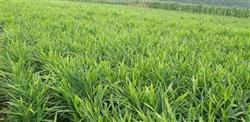 How to fertilize properly when growing large ginger? FreshWhat other micronutrients does ginger need? We would also like experienced readers to share their advice.
According to the summary of several readers, producing 1000 kg of fresh ginger requires roughly 6.3 kg of nitrogen, 1.3 kg of phosphorus and 11.2 kg of potassium. It is said that fertilization is the primary method for increasing ginger yields, so Zhongdi Network has compiled the fertilization methods for ginger, listed in detail below for readers' reference.
Fertilization principles for ginger:
Because heavy ginger plants grow slowly during the seedling stage and have a small amount of growth, the seedlings also absorb relatively little nitrogen, phosphorus and potassium. However, once ginger reaches the three-branch stage, the plants grow faster, the number of branches increases, the leaf area expands rapidly and the rhizomes grow vigorously, so the fertilizer requirement increases rapidly.
Base fertilizer for ginger:
The base fertilizer for ginger can be applied together with deep plowing and land preparation: 3000-4000 kg of high-quality decomposed chicken manure per mu, or 4000-5000 kg of high-quality barnyard manure, 50 kg of pure sulfur-based compound fertilizer, 1-2 kg of zinc sulfate and 1 kg of borax.
Top dressing for ginger:
1. Strong-seedling fertilizer for ginger: in early to mid-June, when the seedlings have grown 1-2 branches, apply a second fertilizer by flushing with irrigation water, at an interval of 10-15 days, each time flushing 15-20 kg of high-nitrogen compound fertilizer per mu.
2. Jointing fertilizer for ginger: also called the turning-point fertilizer (around the Beginning of Autumn), at the three-branch stage, when ginger enters the vigorous growth period; this is the key period for top dressing, applying 70-80 kg of high-nitrogen compound fertilizer per mu.
3. Foliar feeding for ginger: carried out during the tuber expansion period, in mid-September when the plants have 6-8 branches, flushing about 50 kg of high-nitrogen-potassium compound fertilizer per mu, applied in two doses at an interval of about 15 days.
Trace elements that ginger cultivation needs to supplement:
Throughout its entire growth process, ginger not only needs to absorb large amounts of the three major elements nitrogen, phosphorus and potassium from the soil, but also absorbs calcium, magnesium, zinc, boron and other secondary and trace elements. During the whole growth period of ginger, potassium is the element ginger absorbs the most, followed by nitrogen, and then the other secondary and trace elements calcium, magnesium, zinc and boron.
Calcium is mainly distributed in the side branches and side-branch leaves, followed by the rhizomes, and less in the main stem and main-stem leaves. Magnesium is mainly distributed in the rhizomes; the content of magnesium in the side branches and side-branch leaves is also relatively high, while it is less distributed in the main stem and main-stem leaves.
As the ginger plant continues to grow, its absorption of zinc gradually increases. Zinc plays an important role throughout the entire growth period of ginger.
Ginger's absorption of boron is roughly the same as its absorption of zinc; as the plant grows, the amount of boron absorbed gradually increases, and the amount absorbed during the period of rapid rhizome expansion accounts for about 66% of the boron uptake and utilization over the entire growth period.
Zinc fertilizer and boron fertilizer can usually be applied as base fertilizer or as foliar top dressing. When applied as base fertilizer in ginger fields lacking zinc and boron, generally 1-2 kg of zinc sulfate and 0.5-1 kg of borax per mu are used, mixed evenly with fine soil or organic fertilizer, and applied in the sowing furrow at sowing time and mixed evenly with the soil. If used as top dressing or foliar spray, 0.05%-0.1% borax can be used at 50-70 liters per mu, sprayed three times respectively at the seedling stage, the branching stage and the rhizome expansion stage.
How to earth up ginger plants
How to prevent premature aging of ginger