Eggplant Cultivation Techniques Video and Picture Detailed Guide
Eggplant is a typical vegetable, and depending on the variety, it has many uses. Eggplant has quite high value for recovery from illness, and the suitable growing temperature for eggplant is 20-30°C, so in the south it can be grown all year round. Therefore, Zhongdi Web has compiled eggplant cultivation techniques and videos, listed in detail below for netizens' reference...
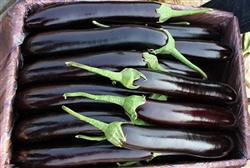 Eggplant is a typical vegetable, and depending on the variety, it has many uses. Eggplant has quite high value for recovery from illness, and the suitable growing temperature for eggplant is 20-30°C, so in the south it can be grown all year round. Therefore, Zhongdi Web has compiled eggplant cultivation techniques and videos, listed in detail below for netizens' reference.
Step 1. Select excellent eggplant seeds:
At present, the eggplant varieties suitable for cultivation in the Guangdong region are mainly those that are resistant to bacterial wilt and disease, tolerant of heat and rain, with purple-red skin, white flesh, and long club-shaped fruit. Varieties with fruit about 30 cm long include Hongfeng, Changfeng, Zaofeng, Nongyou Long Eggplant, and Guilin Long Eggplant; those with fruit about 25 cm long include Yueqie No. 2, Yuefeng, and Shijie Red Eggplant. Among them, Hongfeng has large, uniform fruit and an attractive appearance. Yueqie No. 2 is a variety with high resistance to bacterial wilt and verticillium wilt; Yuefeng and Shijie Red Eggplant have a deep color and very good gloss; Guilin Long Eggplant has high yield and disease resistance, but its flesh is greenish.
Step 2. Soil treatment for the eggplant field:
The eggplant seedbed and planting site should be chosen as plots whose previous crop was not a solanaceous crop, preferably paddy fields, with deep plowing and sun exposure, and raised beds more than 30 cm high. Bed width including ditches: 1.7 m for double-row planting, 1 m for single-row planting. In the seedbed, 7-10 days before sowing, spray with quintozene or dexon at 500 times plus dichlorvos at 800 times and cover with plastic film for disinfection.
Step 3. Base fertilizer for eggplant:
The eggplant planting site must be given sufficient base fertilizer. Generally, per mu, apply 1000-1500 kg of fully decomposed pig, cattle, and chicken manure, 80 kg of peanut meal, 50 kg of superphosphate, and 80 kg of lime, applied when the beds are made. One to two days before sowing, apply per mu fully decomposed finely crushed farmyard manure plus 20 kg of compound fertilizer as base fertilizer and mix thoroughly with the topsoil.
Step 4. Sowing and transplanting time for eggplant:
Generally, the suitable sowing period for spring eggplant is late October to November, with a seedling period of 60-70 days. The suitable sowing period for autumn eggplant is June to July, with a seedling period of 25-30 days. In cool regions, off-season cultivation can be sown in March to April and transplanted in May. Generally, the seeding rate per mu is 15-20 grams.
Step 5. Raising eggplant seedlings:
Before sowing, the seeds must be disinfected and treated to break dormancy. The disinfection method is: soak the seeds in 10% trisodium phosphate or 0.1% potassium permanganate solution for 20 minutes, then remove and rinse with clean water for about 30 minutes so that the seed surface is clean and free of mucus; or soak the seeds in warm water at 55°C for 30 minutes. The dormancy-breaking method is: mix 1 gram of gibberellin (920) with 2 kg of water to make a solution, place the seeds in this solution and soak for 4-5 hours, rinse with clean water for 10 minutes, drain, and then sow.
When sowing, the soil should be relatively dry and crumbly. For even sowing, the seeds can be mixed with dry sand or dry burned soil, and after sowing, cover with dry sand or dry burned soil to a thickness of about 0.5 cm. Spring sowing has low temperatures, so after sowing use a plastic film arch tunnel to keep warm; for summer and autumn sowing, use black shade netting to cool down, keeping the temperature inside the tunnel at 15-20°C and maintaining soil moisture.
After sowing, check frequently and remove weeds. After emergence, spray pesticide once every 7-10 days. When the seedlings grow 2-3 true leaves, move the overcrowded seedlings to places where seedlings are sparse or missing, so as to ensure robust seedling growth. When they have 6-7 true leaves, they can be planted out; 7 days before planting out, open the film or arch tunnel to harden the seedlings.
Step 6. Planting out eggplant:
For double-row planting, the row spacing is 50-60 cm and the plant spacing is 50 cm, with 1000-1200 plants per mu. For single-row planting, the plant spacing is 40 cm, with 800 plants per mu. After planting out, water thoroughly to settle the roots. After a week of recovery, a small amount of water-soluble fertilizer can be applied. At the same time, pay attention to checking for damage by cutworms and the occurrence of damping-off, and replant missing seedlings promptly.
Step 7. Pruning eggplant:
When flower buds appear on the eggplant plant, begin hilling soil. After hilling, insert bamboo stakes appropriately, tie the vines, and prune. The first flower on the main stem (the root eggplant flower) should be removed. Except for keeping the first lateral branch below the root eggplant, all other lateral branches on the lower part of the main stem should be removed.
For large-fruited varieties, besides keeping one lateral branch below each flower cluster on the upper branches, the remaining lateral branches can also be removed. For plants that are growing too vigorously or planted too densely, some leaves should be removed to ensure normal fruit growth and fresh, tender color.
Step 8. Fertilizer and water management for eggplant:
Eggplant has a well-developed root system and vigorous growth. It has relatively high requirements for fertilizer and water, is tolerant of fertilizer, not tolerant of drought, and not tolerant of waterlogging, so fertilizer and water management must be strengthened. Apply less nitrogen fertilizer before fruit set, and topdress heavily after fruit set. When hilling, apply per mu 50 kg of compound fertilizer plus urea, 25 kg of decomposed peanut meal, and 50 kg of superphosphate plus potassium chloride, applied between two plants. Topdressing is generally applied once every 5-7 days, or once after each fruit harvest. Each topdressing uses 40 kg of compound fertilizer and 20 kg of potassium chloride per mu, or drench with human and livestock manure and urine. After fruit set, spray foliar fertilizer such as 2% monopotassium phosphate, which can promote dark green leaf color, improve fruit quality, extend the harvest period, and increase yield.
Step 9. Thin flowers and fruits of eggplant:
Because eggplant has both primary flowers and secondary flowers, the secondary flowers must be removed to ensure that the primary flowers set fruit, so that nutrients are used in a concentrated way and single fruit weight is increased. If there is no time to remove the secondary flowers, then promptly remove the fruits set by the secondary flowers.
Step 10. Pest and disease control for eggplant:
Common eggplant diseases generally include: bacterial wilt, phytophthora fruit rot, verticillium wilt, brown spot, damping-off, seedling blight, sclerotinia rot, early blight, etc. The main insect pests include red spider mites, tea yellow mites, eggplant yellow borer, etc. To obtain high quality and high yield, attention must be paid to pest and disease control. Crop rotation can reduce damage. Apply sufficient base fertilizer, increase phosphorus and potassium fertilizer, plant at a reasonable density, drain standing water promptly, lower field humidity, remove diseased leaves and fruits promptly, and apply lime at disease outbreak points to prevent the spread of disease.
For wilt-type diseases of eggplant such as verticillium wilt, fusarium wilt, root rot, and bacterial wilt, timely control is needed. Verticillium wilt mostly begins to show symptoms after fruit set, developing from the bottom upward or from one side to the whole plant. The leaves first turn yellow at the leaf margins and veins, then develop to one half and eventually the whole leaf turning yellow. In the later stage, diseased leaves turn from yellow to brown, and finally wilt, droop, and fall off.
Fusarium wilt can occur from the seedling stage to the mature plant harvest stage. The leaves of diseased plants turn yellow and wilt from the bottom upward.
Root rot mostly occurs after planting out. At the initial stage, leaves wilt during the day and can recover in the morning and evening. After this repeats for many days, the leaves turn yellow and dry up.
At the early stage of bacterial wilt, only one or several leaves on individual branches become lighter in color, showing localized wilting and drooping, then it spreads to the whole plant, and finally turns brown. These are all soil-borne diseases. Chemical control: for the early stages of eggplant verticillium wilt, fusarium wilt, and root rot, drench the roots with 40% wettable powder Genfuning at 800-1000 times or 50% wettable powder carbendazim at 500-800 times; for bacterial wilt, drench the roots with Jiadaning or copper ammonia complex or Qingkujing.
Eggplant phytophthora fruit rot is favored by high temperature and high humidity, continuous cropping land, and low-lying waterlogged land. It mainly damages the fruit, causing large numbers of rotten fruits. At the initial stage, the lesions are water-soaked and round, rapidly expanding to cover the whole fruit. The lesions are brown or dark brown, gradually shrinking and softening. When humidity is high, the diseased area becomes covered with cottony white mycelium, and finally the diseased fruit rots or becomes a mummified fruit. Chemical control: at the initial stage, choose 25% metalaxyl 800 times solution, or 58% metalaxyl mancozeb 500 times solution, or Previcur 700 times solution, spraying once every 7 days for 3-4 consecutive times.
Eggplant brown spot is prone to occur under high temperature and high humidity conditions. In the field, it mostly starts from the lower leaves. At first, pale white water-soaked small spots appear, then they turn into brown round lesions. In the later stage, they become irregular large lesions with dark brown edges. When there are many lesions, they merge into one patch, crack and perforate, and finally the leaves wither and die. Lesions on fruit are round or oval, with the diseased area slightly sunken, brown, and showing concentric rings. The inside of the diseased fruit rots in a spongy manner. The lesions can further expand to cover the entire fruit, often causing fruit drop. Chemical control: at the initial stage, choose 75% chlorothalonil 800 times solution, or 70% mancozeb 500 times solution, or 70% thiophanate-methyl 800 times solution for spraying, once every 5-7 days for 3-4 consecutive times.
How to increase the fruit set rate of eggplant
Causes of eggplant flower and fruit drop