How can fertilization be done effectively during pumpkin cultivation?
How should pumpkin be fertilized for good results? What are the fertilizer requirements of pumpkin? We also ask experienced gardeners to help explain. Eating pumpkin can help eliminate carcinogens and prevent cancer, because pumpkin contains a large amount of zinc, which benefits skin and nail health, and the antioxidant beta-carotene has eye-protecting and heart-protecting effects...
 How should pumpkin be fertilized for good results? What are the fertilizer requirements of pumpkin? We also ask experienced gardeners to help explain
Eating pumpkin can help eliminate carcinogens and prevent cancer, because pumpkin contains a large amount of zinc, which benefits skin and nail health, and the antioxidant beta-carotene has eye-protecting and heart-protecting effects, and can also effectively eliminate the mutation of nitrosamines and stop the appearance of cancer cells. Thus pumpkin is generally welcomed by a wide range of consumers, so Zhongdi Web has compiled the fertilization methods and fertilizer requirements of pumpkin, listed in detail below for gardeners' reference.
1. Base fertilizer for pumpkin:
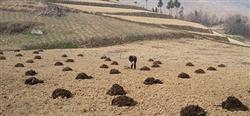
Because pumpkin has a well-developed root system and strong fertilizer absorption capacity, it is necessary to plow 30 cm deep before winter and plow a second time the following spring. Apply 75000 kg of decomposed high-quality organic fertilizer per hectare, broadcast it before the second plowing or apply it concentrated in the sowing beds. After plowing and leveling, make sowing beds or planting beds, with about 4500 plants per hectare. (One hectare is approximately equal to 15 mu)
2. Pumpkin vine-growth fertilizer:
After pumpkin transplanting and seedling recovery, if the seedlings are weak and the leaf color is pale and yellowing, a vine-growth fertilizer can be applied along with watering, applying 3750-4500 kg of diluted manure water per hectare.
3. Pumpkin fruit-setting fertilizer:
When the plant enters the middle growth stage and 1-2 young fruits have set, a heavy fruit-setting fertilizer should be applied before the rows close, generally applying 15000-22500 kg of decomposed diluted manure water or cake fertilizer water per hectare. If it is dry during this period, it can be combined with watering, and 225-300 kg/ha of compound fertilizer can be applied with the water.
4. Later-stage topdressing for pumpkin:
After the fruits begin to be harvested, to prevent premature aging of the plants and increase later yield, a small amount of organic fertilizer can also be applied. If tender pumpkins are not harvested and the main goal is to harvest mature pumpkins, there is no need to topdress later; only watering or drainage is needed. In the middle and late stages, 0.2%-0.3% potassium dihydrogen phosphate can also be sprayed, once every 7-10 days, for 2-3 consecutive sprays.
Fertilizer requirements of pumpkin:
Pumpkin prefers organic fertilizers, and the amount of fertilizer and nutrient combination should be determined according to plant growth and soil fertility. If the growing point of the vine is thick and turned upward and the leaves are dark green, it is not suitable to fertilize, to prevent excessive growth and fruit abortion; if the leaves are light green or yellowing, fertilizer should be applied in time.
Control methods for pumpkin gray mold
Control methods for pumpkin Phytophthora blight