How to grow sweet corn for high yields? A detailed explanation of the key cultivation techniques
How can sweet corn be grown for high yields? Are there any good methods? Netizens who know about this are asked to share their advice. Zhongdi Web has compiled the key points for growing sweet corn, listed below for netizens to refer to. Key point one: Select improved sweet corn varieties: According to local natural conditions, select high-yield, high-quality, multi-resistant corn...
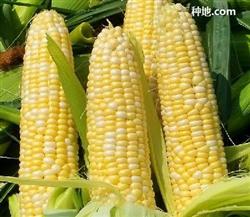 How can sweet corn be grown for high yields? Are there any good methods? Netizens who know about this are asked to share their advice.
Zhongdi Web has compiled the key points for growing sweet corn, listed below for netizens to refer to.
Key point one: Select improved sweet corn varieties:
According to local natural conditions, select high-yield, high-quality, multi-resistant improved corn varieties. For processing into canned products, choose standard sweet corn varieties; for harvesting fresh ears, choose supersweet corn varieties.
Note that early-, mid-, and late-maturing varieties should be planted in combination so they can be brought to market in batches and economic returns can be improved. Sweet corn varieties suitable for planting in the Tongshan area include Miyu No. 4, Tianyu No. 2, Huaitian No. 6, Jingtian No. 8, and others.
Key point two: Isolation from other corn varieties:
There are two methods: spatial isolation and temporal isolation. The former requires sweet corn fields to be more than 400 m away from corn fields of other varieties; the latter involves sowing at different times to stagger the tasseling and flowering periods of the two corn varieties. Generally, spring sowing requires an interval of more than 40 days, and summer sowing requires an interval of more than 20 days.
Key point three: Sow at the right time:
Sweet corn is suitable for sowing when the air temperature steadily exceeds 13°C and the soil temperature at a depth of 5 cm is steadily above 11°C. Generally, sowing is done around April 20; with plastic film mulching cultivation, sowing can be 5-10 days earlier to bring the crop to market earlier.
For summer sowing, the earlier the better, to make full use of temperature and light resources. On the basis of finely prepared soil, choose seeds with a high germination rate and sow relatively shallowly; sowing depth should not exceed 4 cm, and sandy soil should be sown deeper than clay soil, with 3500-3800 plants per mu. Apply large-granule corn-specific fertilizer together with sowing, 3-4 granules per hole, using 4-8 kg per mu.
Key point four: Fertilization and watering:
If conditions permit, sweet corn can be applied with 2000 kg of organic fertilizer, 17-18 kg of pure nitrogen, 4-5 kg of phosphorus pentoxide, and 5-7 kg of potassium oxide per mu. All of the organic fertilizer and phosphorus and potassium fertilizers are applied as base fertilizer; 60% of the nitrogen fertilizer is applied as base fertilizer and 40% as topdressing.
Topdressing for sweet corn is mainly jointing fertilizer and ear fertilizer; the former is applied at the 7-8 leaf stage, and the latter is applied 10 days before heading, with each application accounting for half of the total amount.
A relative soil moisture content of 60% is favorable for the growth and development of sweet corn. Keep the soil moist before emergence to promote germination; during the seedling stage, do not water unless the soil is dry. Sweet corn has the greatest water demand around tasseling and flowering, so pay attention to watering. Improve the ditch system so that irrigation is possible in drought and drainage is possible in waterlogging; when waterlogging occurs, drain and reduce waterlogging promptly.
Key point five: Field management:
Because sweet corn has relatively strong tillering ability, excess tillers should be removed, and care should be taken to avoid damaging the main stem during the operation. Before the plants close the rows, carry out intertillage and weeding 3-4 times. The intertillage depth should follow the principle of "shallow, deep, shallow": shallow intertillage at the seedling stage, deep intertillage combined with earthing up at the mid-growth stage, and shallow intertillage at the late growth stage.
Key point six: Harvesting sweet corn:
The harvest time can be determined by observing changes in the silks, pinching the tender kernels by hand, and tasting for sweetness. Generally, harvest with leaves 22-30 days after the ears silk, and bring them to market as soon as they are harvested. If harvested too early, the kernels have little contents, low sugar content, and poor flavor; if harvested too late, the pericarp becomes thick and the flavor is poor.
Video on growing fruit corn
Control methods for corn armyworm