Management Methods for Cotton After Rain During the Boll-Opening Stage
How should cotton be managed when it rains during the boll-opening stage? Are there any good methods or suggestions? We ask experienced readers to share their advice. Rain during the cotton boll-opening stage is very unfavorable to normal boll opening, so Zhongdiwang has compiled five management methods for rain during the cotton boll-opening stage. These are listed in detail below for readers' reference....
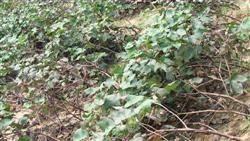 How should cotton be managed when it rains during the boll-opening stage? Are there any good methods or suggestions? We ask experienced readers to share their advice.
Rain during the cotton boll-opening stage is very unfavorable to normal boll opening, so Zhongdiwang has compiled five management methods for rain during the cotton boll-opening stage. These are listed in detail below for readers' reference.
Method 1: Drain waterlogging promptly to prevent cotton lodging:
Because August and September fall right in the cotton boll-opening stage, if some areas receive more rainfall, for cotton fields with standing water, the accumulated water should be drained out of the field promptly after rain to prevent yellowing leaves and root rot caused by waterlogging damage;
For cotton fields that have no standing water but have heavy clay soil and show waterlogged damage, ditches can be dug in the wide rows of the cotton field to let water seep away, reducing the moisture in the surface layer of the cotton field and improving the growing environment. After heavy rain, hilling soil must be done promptly to prevent cotton lodging.
Method 2: Tidy up cotton branches promptly to prevent boll rot:
After rain, the humidity in the cotton field is high. If the cotton branches and leaves are too dense and closed in, the middle and lower bolls are prone to turning black and rotting. Buds formed after "Beginning of Autumn," flowers formed after "White Dew," surplus buds, empty branches, and yellow old leaves should also be removed early to improve ventilation and light penetration in the cotton field and reduce boll rot.
For lower bolls that have been in the boll stage for more than 40 days, whose boll shells have faded, turned yellow, or begun to develop black spots, they should be picked promptly. After dipping them in a 1% ethephon solution, dry them in the sun to obtain seed cotton with better boll opening.
Method 3: Apply foliar topdressing to cotton to prevent premature aging:
In the late growth stage of cotton, root vitality weakens and nutrient uptake capacity decreases, making cotton prone to premature aging in the late stage; foliar topdressing gives better results. Per mu, spray 50-60 kg of a mixed solution of 0.2% potassium dihydrogen phosphate, or 2% potassium chloride plus 2% superphosphate extract with 1% urea, evenly as a foliar spray, once about every 7 days, for 3 consecutive sprays. This has a good effect on preventing premature aging, increasing boll weight, and promoting more autumn bolls, especially in cotton fields that are short of nutrients due to waterlogging, where the effect is even more obvious. Spray in the afternoon after 4 p.m. or on cloudy days.
Method 4: Carry out timely prevention and control of pests and diseases:
If there is continuous rainy weather and the temperature is relatively low, it is very easy to trigger pests and diseases such as cotton red-leaf stem blight, cotton Fusarium and Verticillium wilt, boll rot, cotton bollworm, pink bollworm, tobacco cutworm, and tobacco whitefly (also called cotton whitefly).
Cotton red-leaf stem blight is a physiological disease. In combination with preventing premature aging in cotton, spray potassium dihydrogen phosphate aqueous solution for early prevention.
For cotton Fusarium and Verticillium wilt and cotton boll rot disease, a 30% hymexazol 1000-fold solution or an 80% ethylicin aqueous solution 1000-fold solution can be compounded with a 70% thiophanate-methyl wettable powder 1000-fold solution or a 70% chlorothalonil wettable powder 800-fold solution, etc., and sprayed evenly for control.
For cotton bollworm, pink bollworm, tobacco cutworm, etc., a 20% methomyl emulsifiable concentrate 1500-fold solution or a 2.5% cyhalothrin emulsifiable concentrate 1000-fold solution can be sprayed for control.
For tobacco whitefly, yellow sticky boards can be used for trapping and killing, or a 10% imidacloprid 1000-fold solution or a 1.8% abamectin 1500-fold solution can be sprayed for control.
Method 5: Spray ethephon to promote timely boll opening in cotton:
In cotton fields with late maturity or a large proportion of autumn bolls, the cotton cannot mature normally or open bolls smoothly before frost. Spraying ethephon at the right time and in the right amount can make cotton bolls open earlier and increase yield and quality.
When using ethephon for ripening, it should not be applied too early. Generally, in early October, choose a sunny day with a daily maximum temperature above 20°C. Use 150-200 ml of 40% ethephon aqueous solution per mu, mix with 50 kg of water, and spray the whole cotton plant, focusing on the upper late-autumn bolls. This can promote early maturity and reduce boll rot. To ensure efficacy, it should be mixed and used immediately, and it must not be mixed with alkaline pesticides for spraying.
How to Choose and Buy Cotton Seeds
What Preparations Are Needed Before Sowing Cotton
Click to Get More Cotton Planting Techniques
Click to Get More Grain Crop Planting Techniques