What are the common diseases of cotton? A must-read for growers
What are the common diseases of cotton? What harm do they cause? We welcome knowledgeable readers to share their insights. The common diseases in cotton cultivation mainly include damping-off, Fusarium wilt, black rot, viral disease and stem blight; Zhongdiwang has compiled the harm and control methods of the above cotton diseases, listed below for readers' reference. Cot...
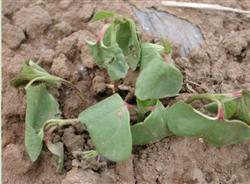 What are the common diseases of cotton? What harm do they cause? We welcome knowledgeable readers to share their insights
The common diseases in cotton cultivation mainly include damping-off, Fusarium wilt, black rot, viral disease and stem blight; Zhongdiwang has compiled the harm and control methods of the above cotton diseases, listed below for readers' reference.
The harm of cotton damping-off:Cotton damping-off, commonly known as root rot or black root disease, occurs in all cotton-growing regions across the country. After cotton seedlings are affected, yellow-brown lesions appear at the base of the stem near the ground, later turning dark brown and gradually becoming sunken and rotted; in severe cases the diseased part narrows, and the diseased seedlings wither and die or topple over. After the cotyledons are affected, irregular yellow-brown lesions form, which later break open and fall off, leaving a perforated appearance. After adult plants are affected, brown spots appear on the leaves, which later fall off and leave holes.
Control methods for damping-off:1. Reasonable crop rotation: rotate with gramineous crops for more than 2 to 3 years.
2. Reasonable fertilization: prepare the land carefully and apply more decomposed organic fertilizer or 5406 bacterial fertilizer.
3. Improve sowing quality: for spring cotton, the suitable sowing time is when the soil temperature at a depth of 5 cm reaches 14°C, and generally sowing at a depth of 4 to 5 cm is appropriate.
4. Strengthen seedling-stage management: thin the seedlings appropriately early, cultivate frequently, reduce soil moisture, raise the soil temperature and cultivate strong seedlings.
5. Chemical seed dressing: select seeds carefully and dress them with 50% carbendazim at 0.5 to 0.8% of the seed weight, or 50% thiophanate-methyl at 0.6% of the seed weight.
The harm of cotton Fusarium wilt:Fusarium wilt, also called the cancer of plants, is a major enemy of cotton production, and in recent years it has spread rapidly. The characteristics of Fusarium wilt are: stunted plants, grayish-green leaf color, brittle and hard texture, bent stems, shortened internodes, sunken growing points, and vascular bundles inside the stem turning gray-brown or light black. Disease conditions: high temperature and high humidity, continuous cropping, and sunny days after rain can cause death in rows and in patches.
Control methods for Fusarium wilt:1. Soil improvement: on the basis of applying organic fertilizer, nitrogen, phosphorus and potassium, add 0.5 kg of continuous-cropping agent per mu, then plow the soil. This can kill most of the pathogens in the soil, increase soil aeration, eliminate nitrite content in the soil, break up compaction, improve saline-alkali soil, enhance plant disease resistance and reduce the harm of Fusarium and Verticillium wilt.
2. Water at the right time: when the average number of bolls per cotton plant reaches two and the weather is dry, apply the first irrigation; watering too early will promote disease occurrence;
3. During the seedling stage, bud stage and flowering and boll stage, regularly spray Kuhuang Jijiu 2 to 4 times, or hymexazol and similar products, to control Fusarium and Verticillium wilt.
4. For plants that have already developed the disease, surgical treatment can be used: make a 2 to 3 cm vertical cut with a small knife at 5 to 6 cm on the base stem of the cotton plant, and insert two sections of matchstick soaked for more than 4 hours in Kuhuang Jijiu stock solution. The above method can effectively control cotton Fusarium wilt and can also control Fusarium wilt of other crops.
The harm of cotton black rot:In cotton black rot, the root epidermis turns black and is slightly raised, with no new roots growing; the plants are stunted, the leaves are soft, and growth is slow. The plants are prone to dying under high temperatures, and after death the plants appear black and withered but remain upright without falling over, and the affected area appears in patches. This disease is likely to occur in plots with long-term waterlogging after rain, low-lying terrain, relatively heavy salinity or alkalinity, or a large amount of nitrogen fertilizer applied, where intertillage is not timely, and where the previous crop was sweet potato, sugar beet, Chinese cabbage, cabbage or radish.
Control methods for black rot:1. Level the land, prevent water accumulation and drain promptly.
2. After rain, carry out timely intertillage to loosen the soil and improve aeration, enhancing root activity.
3. Apply an additional 15 kg of lime powder per mu, 10 kg of ferrous sulfate, or apply continuous-cropping agent, which can reduce and control the occurrence of this disease. 4. Apply more organic fertilizer and phosphorus-potassium fertilizer, and control and apply nitrogen fertilizer in appropriate amounts;
5. During the disease period, use 20 g each of Kuhuang Jijiu and Fulansukang, add 15 kg of water, and spray on the leaves or drench the roots, either of which can effectively control black rot.
The harm of cotton viral disease:Cotton viral diseases mainly include small-leaf viral disease, mosaic viral disease, leaf-curling and vein-distortion viral disease, and purple-leaf viral disease with leaf drop, flower drop and boll drop. Viral disease is called the AIDS of plants; it spreads quickly, causes serious harm, and reduces yield invisibly, making it the number one enemy of plants.
Control methods for viral disease:In the early stage of cotton growth, Bingdu Yisheng, Kangdusu, Bingdu Limie or Kubingling can all be used for control.
The harm of cotton stem blight:Cotton can be affected from the seedling stage to the boll-setting stage. In the early stage it damages cotyledons, true leaves, stems and growing points, causing seed rot, leaf spots, stem blight, broken tops and fallen leaves, and even the death of the whole plant. In the later stage it infects bracts and green bolls, causing leaf drop and hard, unopened bolls. Cotyledons and true leaves initially develop small yellow-brown round spots with purplish-red edges, which later expand into nearly round or irregular brown spots with many small black dots scattered on the surface (pathogens). When the stem and petiole are affected, small reddish-brown spots appear first, later expanding into dark brown spindle-shaped canker spots with sunken centers and purplish-red surroundings. When the disease is severe, the diseased parts break apart and fall off, and the stems and branches die.
Control methods for stem blight:1. Reasonable crop rotation, reasonable close planting, and improved ventilation and light conditions.
2. Seed dressing: after sulfuric acid delinting of cottonseed, dress with a seed coating agent of carbofuran and carbendazim in a ratio of 1:0.5, which both prevents disease and can also control aphids at the same time.
3. Spraying: when disease occurs at the seedling stage or adult plant stage, spray with 65% zineb 800-fold solution, or 70% thiophanate-methyl 1000-fold solution for control.
What to do if it rains during the cotton boll-opening period
What preparations should be made before sowing cotton
Click to get more cotton cultivation techniques
Click to get more grain crop cultivation techniques