Doing these things well in late-stage peanut management gives you a better guarantee of a high yield
How can peanuts be managed in the late stage to achieve a high yield? Is there a good method that can make it happen? We also ask experienced netizens to help explain. The late growth stage of the peanut plant runs from the appearance of full pods to the maturation and harvest of most pods. During this period, the peanut's vegetative growth gradually declines and stops, the pods gradually fill out and become plump, and the increased pod weight generally accounts for...
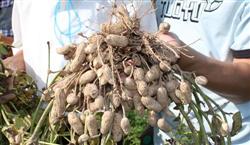 How can peanuts be managed in the late stage to achieve a high yield? Is there a good method that can make it happen? We also ask experienced netizens to help explain
The late growth stage of the peanut plant runs from the appearance of full pods to the maturation and harvest of most pods. During this period, the peanut's vegetative growth gradually declines and stops, the pods gradually fill out and become plump, and the increased pod weight generally accounts for 500%-70% of the total pod weight, making it the main period for pod yield formation. Therefore, Zhongdi.com has compiled the four key management points for the late growth stage of peanuts, listed in detail below for netizens' reference.
Key point one: Carry out foliar feeding to protect peanut leaves:
In the late growth stage of peanuts, the uptake of the three elements nitrogen, phosphorus and potassium accounts for 6.3%, 5.3% and 0.75% of the total uptake across the whole growth period respectively. Although the nutrients peanuts need during this period are relatively few, they have a great impact on yield formation and on improving pod plumpness.
The absorption capacity of the peanut root system weakens in the late stage. To make up for insufficient fertilizer supply, starting from the late pod-setting stage, spray the leaves with a 1%-2% urea and 2%-3% calcium superphosphate aqueous solution 2-3 times every 7-10 days, at 50 kg per mu each time, to extend the functional period of the top leaves and increase the plump pod rate.
Key point two: Water peanuts at the right time:
In the late growth stage of peanuts, the suitable soil moisture is 50%-60% of the field maximum water-holding capacity. If drought occurs during this period, the root system is prone to decline, and this quickly causes the top leaves to drop and the stems and branches to wither, reducing the plump pod rate and leading to reduced yield.
Therefore, when soil moisture is below 40%, water immediately to protect the roots and leaves and increase the plump pod rate. When watering, use small furrow irrigation or sprinkler irrigation, and by no means use flood irrigation.
Key point three: Drain promptly on rainy days to prevent peanut pod rot:
In the late growth stage of peanuts, if there is too much autumn rain and drainage is poor, it easily causes root rot, and in severe cases the pods will rot or sprout. Therefore, when there is too much rain in the late growth stage, ditches should be cleared promptly to remove standing water and waterlogging, so as to ensure good quality and high yield.
Key point four: Peanut pest and disease control:
The main disease in the late growth stage of peanuts is leaf spot, whose peak incidence is 20-30 days before peanut harvest, with more severe occurrence under high temperature and high humidity or continuous overcast and rainy weather. You can choose 75% chlorothalonil wettable powder at 600 times dilution or 70% thiophanate-methyl wettable powder at 1000 times dilution for spray control, spraying once every 10-15 days for 2-3 consecutive sprays.
For fields with severe white grub occurrence, you can use 50% phoxim emulsifiable concentrate at 1500 times dilution to drench the mounds for control, using 50 grams of liquid per hole; watering after drenching gives better control. In addition, special attention should be paid to the fact that peanuts are an oil crop, so when controlling white grubs, it is strictly forbidden to use systemic highly toxic pesticides such as 3911, methamidophos and 1605, so as not to affect human health.
Peanut planting technique video
What to spray on peanuts to increase yield
Click to get more peanut planting techniques
Click to get more grain crop planting techniques