Key Management Points and Precautions for the Peanut Seedling Stage
What should be paid attention to during the peanut seedling stage? We also ask experienced netizens to help explain. The peanut seedling stage is the period from the emergence of the peanut seedling and the appearance of two true leaves to the beginning of flowering and the main stem having 7-8 true leaves. Zhongdiwang has compiled the matters that should be noted during the peanut seedling stage, listed below for netizens...
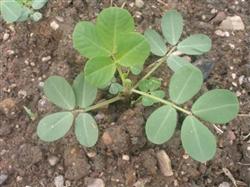 What should be paid attention to during the peanut seedling stage? We also ask experienced netizens to help explain.
The peanut seedling stage is the period from the emergence of the peanut seedling and the appearance of two true leaves to the beginning of flowering and the main stem having 7-8 true leaves. Zhongdiwang has compiled the matters that should be noted during the peanut seedling stage, listed below for netizens' reference.
1. Temperature during the peanut seedling stage:
During the peanut seedling stage, the most suitable air temperature for the branching and growth of stems and branches and the growth of leaves is 20-22°C. An average temperature above 25°C can shorten the seedling stage, cause excessive growth of stems and branches, and elongate the basal internodes, which is not conducive to seedling restraint. An average temperature below 19°C causes slow branching of stems and branches, slow flower bud differentiation, delayed initial flowering, and the formation of "small old seedlings."
2. Moisture during the peanut seedling stage:
During the peanut seedling stage, the plant's water requirement is the lowest, accounting for about 3.4% of the total for the whole period. At this time, the most suitable soil moisture content is 45%-55% of the field maximum water-holding capacity. Below 35% of the maximum water-holding capacity, new leaves do not unfold, flower bud differentiation is inhibited, and initial flowering is delayed; above 65% of the maximum water-holding capacity, it easily causes excessive growth of stems and branches, elongation of basal internodes, slow root development and shallow rooting, which is not conducive to the formation of flower organs.
3. Light during the peanut seedling stage:
During the peanut seedling stage, the most suitable daily sunshine duration is 8-10 hours. If the sunshine duration is more than 10 hours, stems and branches grow excessively and flowering is delayed; if less than 6 hours, stem and branch growth is slow and flowering is advanced. Peanuts require a relatively large range of light intensity variation. The most suitable light intensity is 51,000 lux/m2; less than 10,200 lux/m2 or more than 82,000 lux/m2 both affect leaf photosynthetic efficiency.
Peanut planting technique video
How to manage peanuts for high yield