Complete Collection of Honeysuckle Planting Techniques with Pictures and Videos
Honeysuckle (Lonicera japonica Thunb.) is a perennial semi-evergreen climbing plant of the genus Lonicera in the Caprifoliaceae family, also known as Japanese honeysuckle. Its vines can reach 8-9 m in length, with hollow stems. The simple leaves are opposite, entire, and ovate. The flowers are borne in pairs in the leaf axils, with a common peduncle and leaf-like bracts; the corolla is two-lipped, with the upper lip 4-lobed and upright, and the lower lip recurved; ...
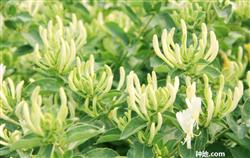
Honeysuckle (Lonicera japonica Thunb.) is a perennial semi-evergreen climbing plant of the genus Lonicera in the Caprifoliaceae family, also known as Japanese honeysuckle. Its vines can reach 8-9 m in length, with hollow stems. The simple leaves are opposite, entire, and ovate. The flowers are borne in pairs in the leaf axils, with a common peduncle and leaf-like bracts; the corolla is two-lipped, with the upper lip 4-lobed and upright, and the lower lip recurved; the flowers are white when they first open and gradually turn golden yellow, and during the flowering period the flowers of different ages on the same vine create a contrast of yellow and white, which is how it got the name "honeysuckle" (jin yin hua, meaning "gold and silver flower"); the flowering period is from May to July. The berries are spherical and black when mature; the fruiting period is from August to October, with 4-7 seeds per berry, and the 1000-seed weight is 3-5 grams.
Honeysuckle has strong cold resistance and heat tolerance, prefers light but can also tolerate shade, has extremely strong drought resistance, and is not demanding about soil, being able to grow in slightly acidic or somewhat alkaline soil. Therefore, it is widely distributed within China, from Jilin and Liaoning in the north, to Shaanxi in the west, and to Fujian in the south, and is found on hillsides and wasteland at altitudes of 200-1000 m.
What are the uses of honeysuckle:
1. Medicinal value of honeysuckle:
The flower buds of honeysuckle contain effective medicinal components such as flavonoids, inositol, saponins, tannins and chlorogenic acid, and the fresh vines and leaves contain tannins and flavonoids. These effective medicinal components give honeysuckle heat-clearing and detoxifying effects and broad-spectrum antibacterial action, and clinically it is mainly used to treat respiratory diseases such as tonsillitis, pharyngitis and pneumonia, as well as dysentery, sores and ulcers and other conditions.
2. Health benefits of honeysuckle:
The flower buds, stems and leaves of honeysuckle contain various amino acids (total content 8%), carbohydrates (above 18%) and 8 trace elements essential to the human body (iron, zinc, manganese, chromium, copper, nickel, cobalt, silicon), and have relatively high nutritional value and the effect of strengthening the body's defense functions. At the same time, because it has effective medicinal components such as antibacterial and antiviral substances, it has now been widely used in the production of various health products, such as honeysuckle tea, honeysuckle wine, beverages, candies, toothpaste, etc.
3. Ornamental value and soil and water conservation of honeysuckle
Honeysuckle has a relatively long flowering period, and when in bloom the yellow and white contrast with each other, the fragrance is pleasant, the vines twine, and the branches and leaves are lush. It is a good material for vertical greening and beautification in gardens, suitable for decorating pergolas, rockeries, etc. In addition, after pruning, its branches and stems can also be used for stump bonsai.
Honeysuckle has a well-developed root system with many fibrous roots. According to surveys, its roots can penetrate more than 9 m down along rock crevices in mountain bodies, and can extend more than 12 m outward; its stems and leaves are dense and have strong shading and covering ability, with powerful abilities for slope protection, soil fixation, water conservation and water retention, making it an excellent soil and water conservation plant.
Honeysuckle propagation methods:
1. Seed propagation
From August to October, collect fully mature fruits from robust, pest- and disease-free plants or branches. After collection, rub and wash the fruits, rinse away the skin and flesh with water, dry them in the shade and remove impurities, then stratify the clean seeds obtained at 0-5°C until sowing in March-April of the following year. Before sowing, first soak the seeds in warm water at 25-35°C for 24 h, then mix them with wet sand at room temperature to promote germination. When 30%-40% of the seeds have cracked, they can be sown. For sowing in the seedbed, 100 grams per square meter is appropriate.
2. Cutting propagation
Honeysuckle cutting propagation can be carried out in spring, summer and autumn, and in autumn it is suitable from early September to mid-October. The nursery site should be selected as flat terrain with deep soil and convenient drainage and irrigation, on sandy loam or loam soil. Before propagation, apply 3-5 cubic meters of decomposed organic fertilizer per mu and 50 kg of superphosphate or calcium magnesium phosphate fertilizer; after plowing, promptly harrow level and fine, and prepare the land into beds.
Cuttings should be selected from robust, well-developed 1-2 year old branches. According to the length of the cuttings used, they can be divided into short-branch cuttings and long-branch cuttings. Short-branch cuttings are often used for mass propagation of seedlings, while long-branch cuttings are often used for direct establishment of plantations or for propagating semi-finished large seedlings.
Long-branch cuttings are 30-40 cm long, and short-branch cuttings are about 25 cm long. The thickness of the cuttings is 0.5-1.5 cm, and each should have at least 3 nodes. Remove the lower leaves and keep 2-4 leaves at the top. Cut the lower end near a node into a smooth slanted surface. Tie every 50-100 cuttings into a small bundle, dip the slanted lower end of the honeysuckle cuttings in 500 ppm indolebutyric acid solution for 5-10 seconds, let them dry slightly, and then immediately insert them into the leveled and finely harrowed cutting bed.
For long-branch cutting propagation, open furrows at a row spacing of 30 cm and a furrow depth of 25 cm. Every 3-5 cm, use a small wooden stick or bamboo chopstick to make guide holes on the bed surface, then insert more than 2/3 of the cutting length obliquely into the holes, press firm and compact. This method can raise about 11,000 seedlings per mu. Short-branch cutting propagation is roughly the same as the above method, and the row and plant spacing can be reduced to 15-20 cm, raising about 18,000 seedlings per mu. On the day of cutting or the next day, water thoroughly once to keep the soil moist, promote rooting and sprouting, and promptly carry out intertillage and weeding. Roots and sprouts appear in about 20 days. Seedlings raised by summer and autumn cuttings are transplanted in the following spring.
3. Layering propagation
Layering propagation is often carried out in summer and autumn. Select 3-4 year old honeysuckle that has already flowered, grows robustly and has high yield as the mother plant. Bend a 1-year-old branch near the ground and bury it in the soil. Wound the part of the branch entering the soil, cover it with 10-15 cm of fine fertile soil, and be careful to keep the soil at the buried part moist. Then fix and press it firmly with forked branches, leaving the branch tip exposed above the ground.
If the branch is relatively long, it can be bent and pressed into the soil continuously. After layering, water and fertilize frequently. In the following spring, the rooted layered seedlings can be cut away from the mother plant and planted separately. Compared with traditional vine-cutting propagation, this method can not only advance flowering by 2-3 years and maintain stable yield and promote increased yield, but also has the advantages of being easy to operate and having a high survival rate.
4. Division propagation
This can be carried out in early spring or late autumn. Since division will inhibit the growth of the mother plant to a certain extent, it should be used only when a small amount of propagation is needed for excellent wild varieties.
Honeysuckle transplanting:
When the seedlings are 1 year old, they can be lifted and transplanted from the Spring Equinox to Grain Rain, or during the dormant period in autumn and winter. On the prepared planting site, dig holes at a row spacing of 150 cm and a plant spacing of 120 cm, with holes 60-70 cm wide and 40-50 cm deep. Apply 5 kg of farmyard manure in each hole and mix it evenly with the subsoil, then plant 1 robust seedling, fill with fine soil, press firm and tread compact, and water thoroughly to settle the roots. After survival, through shaping and pruning, the creeping vines are made into upright, small, single-plant shrubs, which can increase branching, expand the crown, and change from 1 crop of flowers per year to 3-4 crops per year, greatly increasing yield.
Honeysuckle management methods:
1. Intertillage and weeding. Carry out intertillage and weeding 3-4 times each year. The first time is in spring when buds sprout and new leaves appear; the second time is in June; the third time is in July-August; and the fourth time is in late autumn and early winter. After intertillage and weeding, earth up around the base of the plants to help them overwinter. During intertillage, keep it shallow around the plant roots and slightly deeper farther away to avoid damaging the roots. After the third year, according to weed growth, appropriately reduce the number of intertillage and weeding operations.
2. Fertilizer and water management for honeysuckle:
After sprouting in early spring and after each harvest of flower buds, apply topdressing once. In spring and summer, apply decomposed human and livestock manure water or nitrogen fertilizers such as ammonium sulfate and urea, spreading them in shallow furrows beside the plants, then cover with soil; in winter, apply 5-10 kg of decomposed barnyard manure or compost, 100 grams of ammonium sulfate, and 200 grams of superphosphate per clump, applying them in a ring-shaped furrow around the flower clump, then cover with soil and earth up, with a soil layer 5 cm thick.
If drought or excessive rain occurs during the flowering period, it will cause a large amount of flower drop, flower rot, and cracking of young flowers. Therefore, irrigation and drainage work should be done promptly.
3. Shaping and pruning of honeysuckle:
After transplanting and survival, keep only 1 robust seedling per hole, and prune and train it into an umbrella-shaped upright small shrub. The specific shaping and pruning method is as follows: within 1-2 years after planting, the main task is to cultivate an upright, thick main trunk. When the main trunk height is 30-40 cm, select and keep 4-5 robust branches as main branches, arranged in two layers. In winter, from the first-order branches growing from the main branches, retain 5-6 pairs of buds and cut off the upper part.
Afterward, from the flowering branches growing from the first-order branches, remove the hooked tender tips. If there are no hooked tender tips, do not remove them. Generally, after the beginning of spring, young branches with short, dense nodes and fine leaves that sprout from second-order branches or from the original old flowering branches are all flowering branches and should be retained.
Through shaping and pruning, honeysuckle changes from its original twining growth to a corymb-shaped shrubby flower clump with open branches, even distribution, ventilation and light transmission, and a thick, upright main trunk. Because honeysuckle has the characteristic that newly grown branches of the current year can develop into flowering branches, the above pruning measures can promote more new branches and more flower bud formation, thereby achieving the goal of increasing yield.
According to experiments, after "winter pruning," honeysuckle yield can increase by 50-60%. Winter pruning is carried out each year from after Frost's Descent to before the ground freezes. Dead old branches, diseased and pest-infested branches, thin and weak branches, and long branches that cross and disrupt the tree shape should also be cut off, so that nutrients are concentrated on producing new branches and forming flower buds.
After each crop of flowers is harvested, summer pruning is likewise carried out. After each pruning, topdressing should be applied once.
Honeysuckle pest and disease control:
1Aphids
Symptoms: They occur in early to mid-April and reproduce fastest at 15°C-25°C. They mainly suck plant sap, causing leaves to turn yellow, curl and shrivel, and in severe cases can cause total crop failure.
Control measures: Remove weeds. Before the plants sprout, spray once with 0.2 degree Baumé lime sulfur mixture, then spray once each at Qingming, Grain Rain and Start of Summer, which can thoroughly control aphids and also control various pests and diseases. From late March to early April, when leaves unfold and aphids begin to appear, spray 40% omethoate 1500x-2000x solution, once every 5-7 days, for several consecutive times. Do not use chemicals during the flower-picking period; you can use 1 kg of washing powder mixed with 10 kg of water, or 1 kg of alcohol mixed with 100 kg of water, for spraying.
2. Control methods for the coffee tiger longhorn beetle:
Control measures: During the egg-laying period, spray 50% parathion emulsifiable concentrate 600x-1000x solution or 50% phosphamidon emulsifiable concentrate 1500x solution, once every 7-10 days, for several consecutive sprays. Cut off about 20 cm of the damaged young stems and remove dead plants, then burn them in a centralized manner.
3. Damage and control methods of the honeysuckle looper:It occurs from June to September, and the larvae bite and eat the leaves. Control methods: clean the field in winter; when larvae are found, immediately spray 80% dichlorvos emulsifiable concentrate 1000x solution or 95% trichlorfon crystal 800-1000x solution.
4. Damage and control methods of honeysuckle brown spot disease:It occurs from June to September, and is especially severe when temperature is high and humidity is high, damaging the leaves. Control methods: frequently remove diseased branches and fallen leaves; apply more phosphorus and potassium fertilizer to improve the plant's disease resistance; in the early stage of the disease, spray 1:1:200 Bordeaux mixture or 65% zineb wettable powder 500x solution.
5. Damage of powdery mildew to honeysuckle:It mainly damages leaves, and sometimes also stems and flowers. The spots on the leaves are initially small white dots, then expand into white powdery patches, and later the entire leaf is covered with a white powdery layer; in severe cases the leaves turn yellow, become deformed, and even fall off; the upper part of the stem has brown, irregular spots with white powder on them; the flowers become twisted and in severe cases fall off.
Characteristics of powdery mildew occurrence: The pathogen overwinters as ascocarps on diseased residues, and the following year the asci release ascospores for primary infection; after the disease occurs, conidia are produced on the diseased parts for secondary infection. It is prone to occur in warm, dry conditions or when plants are shaded. Excessive nitrogen fertilizer application and alternating wet and dry conditions lead to severe disease. According to an investigation by the plant protection station, it began to appear on April 28 in Zhongling; on May 18 the average diseased plant rate of powdery mildew was 8.9%, with a maximum of 40.0%; on May 30 the average was 17.0%, with a maximum of 20%.
Control methods for powdery mildew:
1. Select and breed disease-resistant varieties (varieties with thick branches, dense and short nodes, dark green and thick leaves, and dense fine hairs are mostly varieties with strong disease resistance);
2. Reasonable close planting, shaping and pruning, and improving ventilation and light conditions can enhance disease resistance;
3. Apply less nitrogen fertilizer and more phosphorus and potassium fertilizer; 4. In the early stage of the disease, spray 15% triadimefon 1500x solution or 50% metalaxyl mancozeb 1000x solution or 75% chlorothalonil wettable powder 800-1000x solution for control, once every 7 days, for 2-3 consecutive sprays.
6. Damage of honeysuckle rust disease:
After being affected, small tea-brown or dark brown spots appear on the underside of the leaves; some also show nearly round spots on the leaf surface, with 1 small blister in the center, and in severe cases the leaves can die.
Control methods for honeysuckle rust disease:
① After collecting flowers, remove dead plants and diseased leaves and burn them in a centralized manner;
② In the early stage of the disease, spray 50% dinitro dispersion 200x solution or 25% triadimefon 1000x solution, once every 7 to 10 days, for 2 to 3 consecutive sprays.
Honeysuckle harvesting:
1. Flower-picking time: The flower-picking time is from 9 to 12 in the previous year; it is not suitable to pick when there is dew or on rainy days, though if there is drying equipment it can also be picked. Flowers picked in the morning are greenish-white, heavy, easy to dry, rich in aroma, high in product yield, and good in quality.
Flowers picked after noon and on cloudy days are poorer in quality and low in processing rate. From the perspective of flower development, they are customarily divided into several stages: green bud, green-white, large white needle, silver flower, and golden flower withered flower. Those with the upper part of the bud swollen, grown into a rod shape, and greenish-white are considered good, customarily called large white needle. At this time the flowers are about to open, and it is the best picking time, allowing the processing of high-quality commercial products.
2. Picking method: When picking, use bamboo baskets or rattan cages. Do not use cloth bags, plastic bags, or paper boxes, to prevent heat buildup and moisture, fermentation of enzymes and proteins inside the body, discoloration and mold. The flower buds and flower tissues are very tender, so they must be picked and placed gently. Avoid pulling, pinching and pressing with the hands, so as not to affect quality.
3. Air-drying and drying: Dry immediately after picking, and air-dry on sunny days. Spread thinly for air-drying on bamboo mats or straw mats, with a thickness of 1 cm, and do not turn them too much. When 70% dry, place them in a bright place to dissipate heat and sweat, then dry again in the sun until dry. The standard is reached when the flowers do not become brittle and broken. On cloudy and rainy days, they must be dried at slight warmth. First dry at 35°C-40°C for 2-3 hours, then raise the temperature to 50°C and dry until 90% dry, without damage. Large planting areas and production regions should build drying rooms to strictly prevent mold and improve commodity quality. Generally, 6-7 kg of fresh flowers dry into 1 kg of commodity.
Honeysuckle grading:
First grade: dry goods, flower buds held-shaped, thick at the top and thin at the bottom, slightly curved, surface greenish-white, corolla thick and slightly hard, with a firm feeling when held; aroma clear and fragrant, taste sweet and slightly bitter. Open flowers, cracked flower buds and yellow strips not exceeding 5%. No black strips, black heads, branches and leaves, impurities, insect damage, or mold;
Second grade: basically the same as first grade, except open flowers not exceeding 5%. Cracked flower buds and yellow strips not exceeding 10%;
Third grade: dry goods, flower buds rod-shaped, thick at the top and thin at the bottom, slightly curved, surface greenish-white or yellowish-white, corolla thick and hard in texture, with a firm feeling when held. Aroma clear and fragrant, taste sweet and slightly bitter. Open flowers and black heads not exceeding 30%. No branches and leaves, impurities, insect damage, or mold;
Fourth grade: dry goods. Flower buds or open flowers may both be present, with no distinction in color. Branches and leaves not exceeding 3%, no impurities, insect damage, or mold.
Honeysuckle overwintering:
Honeysuckle can overwinter naturally in most areas of China, but in cold regions such as Jilin, attention must be paid to protecting old branches for overwintering when planting honeysuckle. If the old branches freeze to death, new branches will regrow the following year, with fewer flowers and lower yield. The specific method is: before the ground freezes, lay the old branches flat on the ground, cover with 6 to 7 cm of wormwood grass, and then cover the grass with soil, so they can overwinter safely; before sprouting in the following spring, remove the covering.
Honeysuckle winter pruning methods
Honeysuckle pest and disease control methods