How should field management be carried out after planting Paris polyphylla?
How should Paris polyphylla be managed after planting? What pests and diseases of Paris polyphylla need to be controlled? We also ask experienced readers to help share their knowledge. Zhongdiwang has compiled the management methods and pest and disease control measures after planting Paris polyphylla, and they are listed in detail below for readers' reference. Management after planting Paris polyphylla: Management point one, thinning of Paris polyphylla seedlings...
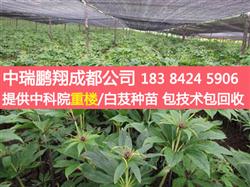 How should Paris polyphylla be managed after planting? What pests and diseases of Paris polyphylla need to be controlled? We also ask experienced readers to help share their knowledge
Zhongdiwang has compiled the management methods and pest and disease control measures after planting Paris polyphylla, and they are listed in detail below for readers' reference.
Management after planting Paris polyphylla:
Management point one, thinning and filling in of Paris polyphylla seedlings: For Paris polyphylla, thinning is generally carried out in direct-sown plots in mid to late May, and at the same time gaps are checked and filled. Before thinning, water the plot first, lift the seedlings with a wooden pry, and when filling in seedlings, water with rooting water, making full use of small seedlings to ensure a full stand and sufficient density.
Management point two, intertillage and weeding of Paris polyphylla: Paris polyphylla requires loose soil, and the aboveground part grows weakly, so special attention should be paid to loosening the soil and weeding. Generally from late May to early June there is a lot of heavy rain, and the soil tends to become compacted, so drainage should be timely to prevent waterlogging. Frequent intertillage and shallow soil loosening are needed, and weeds should be removed at all times.
Management point three, Paris polyphylla needs shade: Paris polyphylla likes shade and fears strong light, and throughout the whole growth period a light transmittance of 40--50% is best. Therefore, after emergence and transplanting, shading measures should be taken. Where conditions permit, shade nets are best; where conditions do not permit, inserting branches for shade can be used, and intercropping or relay intercropping with corn for shade can also be tried, but attention should be paid to density and the intercropping or relay intercropping method.
Management point four, topdressing and earthing up of Paris polyphylla: Paris polyphylla usually has the growth pattern that the tubers below swell while it flowers above. Generally, growth is fastest from mid to late June to the end of August, so heavy topdressing must be applied in early June. Use 2000-3000 kg of cattle and sheep barnyard manure or farmyard manure per mu, and 20-30 kg of ordinary calcium superphosphate applied to the root area, then combine with cleaning the furrows and earth up heavily. The soil on the ridge must be loose, the bed surface should be maintained, and there should be no standing water at the bottom of the furrows.
Pest and disease control methods for Paris polyphylla:
Control of black spot disease of Paris polyphylla: The disease starts from the leaf tip or leaf base and produces round or nearly round lesions. Sometimes the disease spreads to the flower axis, causing leaf blight and stem blight. Control measures: pay attention to drainage and reducing moisture, lower air humidity, and reduce disease occurrence; in the early stage of the disease, spray 1% Fanduqing aqueous solution at 300-500 times dilution, or 50% thiophanate-methyl suspension at 1500-2000 times dilution, or 50% procymidone wettable powder at 1000-1500 times dilution; choosing any 1 of these gives good results.
Control of stem rot of Paris polyphylla: This disease occurs mostly at the seedbed stage, and is more serious in the field stage under high temperature and high humidity. First, yellow-brown lesions appear at the stem base. After the lesions expand, the leaf tips lose water and droop, and in severe cases the stem base becomes wet and rots, causing the plants to collapse. Control measures: rotate with gramineous crops for more than 3 years; before transplanting, spray the seedbed with 50% carbendazim wettable powder at 1000 times dilution as a "send-off medicine"; remove diseased seedlings; in the early stage of field disease, drench the planting holes with 95% dexon wettable powder at 1000 times dilution, once every 10 days, for 2-3 consecutive drenches.
Control of scarab beetles in Paris polyphylla: Adult scarab beetles (fried-bean beetles) damage leaves, and larvae (white soil grubs) bite the stems, affecting the growth of Paris polyphylla. Control measures: at night, use torches to trap and kill adults, or spray trichlorfon on fresh vegetable leaves and place them on the bed surface to trap and kill larvae; when preparing the land and making beds, broadcast 1.5-2 kg of 5% phoxim granules per mu, or 2--3 kg of 3X carbofuran granules.
Propagation methods for Paris polyphylla
Growing environment for Paris polyphylla
Click to get moreParis polyphylla cultivation techniques
Click to get moreMedicinal herb cultivation techniques